
The Complete Guide to Performance Reviews: Types, Topics, Scoring
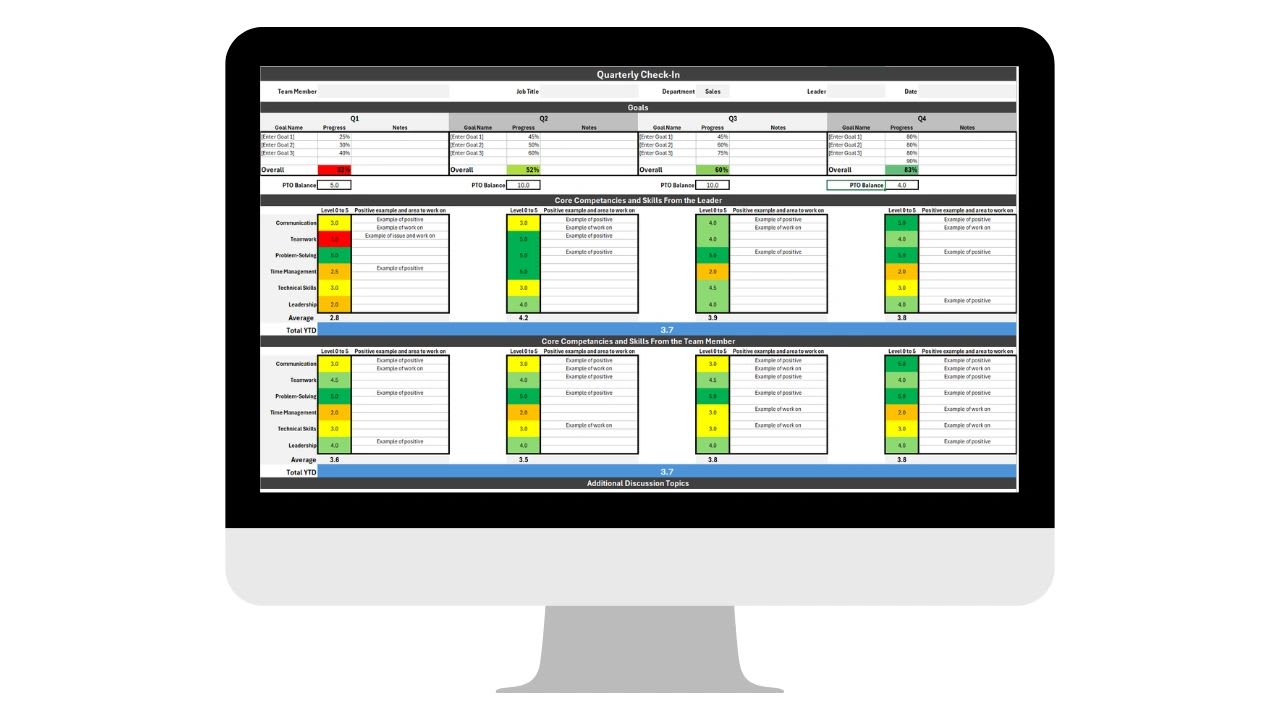
Performance reviews are a critical part of managing a successful workforce. When they are done well, they increase engagement, improve productivity, and connect each person's work to the goals of the business. When they are done poorly, they become a dreaded annual ritual that nobody learns anything from.
Many organizations struggle with reviews in one of two ways. Some run them inconsistently, so different managers use different standards. Others focus so heavily on evaluation that they forget the real purpose, which is development.
This guide walks through everything you need to know: what a performance review is, the five main types, how the process works step by step, what to talk about, how to score performance fairly, and how to give feedback that actually helps. It also includes a free weighted scorecard you can use in your next review.
What Is a Performance Review?
A performance review is a formal assessment of an employee's work over a set period, commonly a quarter, half a year, or a full year. It looks back at what the employee accomplished and forward at what comes next.
A good review does four things. It evaluates performance against agreed goals and KPIs. It identifies strengths and opportunities for growth. It sets clear expectations and objectives for the next period. And it recognizes achievements and contributions, which people remember long after the scores.
Reviews are often associated with HR, but they are just as important for managers and team leaders, who use them to guide development and build engagement. Over the years, I have heard plenty of debate about what to call them. Everyone knows what a performance review is, but if you prefer less corporate language, I have seen teams succeed by calling them goal meetings or "connect and reflect" sessions. The name matters less than the conversation.
Types of Performance Reviews
There are five common types of performance reviews, and most organizations combine two or three of them. The table compares them at a glance.
| Type | How often | Best for | Watch out for |
|---|---|---|---|
| Annual review | Once a year | A complete summary of the year's results | Feedback arrives too late to act on |
| Continuous reviews | Weekly, monthly, or quarterly | Real-time coaching and course correction | Requires steady manager time |
| 360-degree review | Once or twice a year | A full view, including leadership and teamwork | Time-consuming and needs anonymity |
| Self-assessment | Alongside other reviews | Reflection and ownership of growth | Subjective, so compare with the manager's view |
| Project review | After a project or milestone | Timely, specific feedback | Misses long-term trends |
1. Traditional or Annual Performance Reviews
The annual review is the classic format, held once a year. It is a summary evaluation that looks at performance across the whole year, which gives a complete picture of achievements and results.
Its weakness is timing. Feedback about something that happened in February does not help much in December. On its own, an annual review is too backward-looking to drive real improvement, so it works best as the capstone to more frequent conversations. Our guide on how to write a year-end performance review covers this format in depth.
2. Continuous or Ongoing Reviews
Continuous reviews replace one big conversation with regular check-ins, weekly, monthly, or quarterly. The focus is real-time feedback and coaching, so problems are corrected early and wins are recognized while they are fresh.
My preference is a combination: quarterly reviews for the more complete conversation, so there are never any surprises, and brief weekly check-ins to make sure things are on track. The trade-off is that continuous reviews take more manager involvement and consistent tracking, which is much easier with a system than with memory.
3. 360-Degree Reviews
A 360-degree review collects feedback from everyone around the employee: their manager, peers, direct reports, and sometimes customers. They are usually held once or twice a year.
The strength of a 360 is its complete view of performance, especially interpersonal and leadership skills that a manager may not see directly. The challenges are time and trust. Gathering input takes effort, and responses need careful anonymization so people feel safe being honest. Our article on 360 performance reviews explains how to run one.
4. Self-Assessments
In a self-assessment, employees evaluate their own performance, accomplishments, and development areas. Self-assessments usually accompany another review type rather than standing alone.
They encourage reflection and give employees ownership of their growth. They also reveal how an employee sees their own work, which is valuable in itself. Because they are subjective, compare them with the manager's assessment. Large gaps in either direction are worth a conversation.
5. Project-Based or Task Reviews
Project reviews happen after a major project or milestone and evaluate the employee's contributions, collaboration, and the project's results. They are timely and specific, and they build accountability at the project level. Their limitation is scope, since one project does not show long-term performance trends. They work best as input to a quarterly or annual review.
How Performance Reviews Work
Whatever type you use, an effective review follows four steps.
Step 1: Preparation
Good reviews are won before the meeting starts. Review the employee's goals, KPIs, and past performance data, along with notes from check-ins during the period. If you are using 360-degree feedback, gather input from peers, managers, and direct reports ahead of time. Ask the employee to complete a self-assessment, so you both arrive having thought about the same questions.
Step 2: Discussion
Hold the review as a one-on-one meeting in a private, comfortable setting, and give it enough time that nobody feels rushed. Focus on strengths, opportunities, and goals rather than only on the rating. Support every point with specific examples and evidence, and make it a two-way conversation, with the employee talking at least as much as you do.
Step 3: Goal Setting and Development
Turn the conversation into a plan. Set SMART goals, which are specific, measurable, achievable, relevant, and time-bound. Identify development opportunities, such as training, a stretch assignment, or mentoring, and agree on follow-up actions and check-in dates. Our SMART goals template and generator makes this step faster.
Step 4: Documentation
Record the discussion, ratings, and agreed goals in your HR system, and make sure both the manager and the employee can refer back to them. Documentation keeps everyone honest about what was agreed, gives the next review a starting point, and supports fair decisions about raises and promotions.
What to Talk About in a Performance Review
A complete review covers six areas, and together they give a balanced view of the employee's work.
Job performance. How well did the employee achieve their goals, hit their KPIs, and meet the responsibilities of the role?
Behavior and values. How well does the way they work reflect the company's culture and values? Results matter, but so does how they are achieved.
Strengths. Which skills, competencies, and accomplishments deserve recognition? Naming strengths specifically tells people what to keep doing.
Areas for improvement. Where can they grow? Keep this constructive and actionable, with one or two priorities rather than a long list.
Career development. Where do they want to go, whether a promotion, a lateral move, or new skills, and how can the business support it?
Feedback on leadership and management. For 360-degree reviews and for employees who manage others, include how they lead. And in every review, ask the employee what you as their manager could do better.
If you want ready-made questions for each area, our copy-and-paste performance review template has them.
Performance Review Scoring Methods
Most organizations use some form of rating to summarize performance. Each method has trade-offs.
| Method | How it works | Strength | Weakness |
|---|---|---|---|
| Numerical scale | A 1 to 5 or 1 to 10 rating for each goal or competency | Simple and easy to compare | Numbers can feel arbitrary without definitions |
| Descriptive rating | Labels such as Exceeds, Meets, or Needs Improvement | Clear meaning for employees | Harder to average or trend |
| Weighted goals | Each goal gets a weight, and the ratings combine into one score | Reflects what matters most in the role | Needs agreed weights up front |
| Ranking | Employees compared against each other | Separates top performers | Can damage teamwork and morale |
A weighted scale combined with descriptive labels gives you the best of both. Each goal is rated from 1 to 5, the most important goals count more toward the total, and the final score converts to a label people understand. Whatever method you choose, define each rating level in writing and support every score with an example, which keeps scores consistent and reduces bias.
Free Weighted Performance Review Scorecard
The scorecard below puts that approach to work. Enter the employee's goals and competencies, weight them by importance so the weights add up to 100%, and rate each from 1 to 5 with a line of evidence. It calculates the weighted score, converts it to a rating, and suggests where to start the conversation.
The example shows a sales role with six weighted items. Copy it to Excel, where the points, total, and rating stay as live formulas, or print it to bring to the review meeting.
Weighted Performance Review Scorecard
List the goals and competencies for the review period, give each a weight, and rate each one from 1 to 5 with a line of evidence. The scorecard checks that the weights add up to 100%, calculates the weighted score, converts it to a descriptive rating, and highlights the top strength and the biggest growth area to discuss. Nothing you enter is saved or sent anywhere.
| Goal or competency | Weight % | Rating | Evidence | Points |
|---|
In the example, strong sales and customer satisfaction results outweigh a slow start on the development goal, producing a weighted score of 3.85, which is "Exceeds expectations." Customer satisfaction is the strength to open with, and the unstarted certification course is the clear growth area to plan around.
How to Give Effective Feedback
Feedback is the most valuable part of any review. These five habits make it land.
Be specific. Cite concrete examples rather than general statements. "Your client summary after the Hanson project saved the account team a week" teaches far more than "good communication."
Balance positive and constructive. Start with genuine strengths, then move to areas for improvement. Balance does not mean softening the message. It means giving the full picture.
Encourage dialogue. Ask for the employee's perspective and their ideas for improving. People commit to plans they helped create.
Focus on behavior, not personality. Talk about actions and outcomes, not traits. "The last three reports were late" is something to fix, while "you are disorganized" is a label to resent.
Provide a path forward. End every piece of constructive feedback with a next step, such as a goal, a resource, or a check-in date. Our guide to employee feedback and how to use it effectively goes further.
Best Practices for Performance Reviews
Check in regularly. Do not save feedback for the annual review. Nothing in a formal review should come as a surprise.
Align with business goals. Tie each person's goals to company objectives, so people see how their work contributes to the bigger picture.
Track every review. Use a tool to record goals, ratings, and progress, so each review builds on the last instead of starting from scratch.
Train managers. Give leaders the skills to deliver fair, constructive, actionable feedback, and calibrate ratings across managers so a 4 means the same thing on every team.
Follow up. Schedule check-ins to review progress on goals and development plans. A plan without follow-up is only a wish.
Running Performance Reviews in Updoot
Consistent reviews are much easier when goals, check-ins, and ratings live in one place. Updoot is business management software that includes performance reviews alongside goals, tasks, time tracking, and team dashboards, so managers can see the work behind each rating and employees can track progress between reviews.
Updoot costs $5 per user per month, and you can start a free trial to run your next review cycle in it.
Final Thoughts
Performance reviews are much more than an administrative task. They are strategic tools for growth, engagement, and retention. When they are designed thoughtfully, they motivate employees, clarify expectations, identify high-potential talent, and align everyone's effort with the goals of the organization.
By combining a clear scoring system, structured topics, the right mix of review types, and consistent follow-up, performance reviews can transform how your people grow and contribute to the success of your business. You can also get the template as part of Lever One.
Opens in Google Drive. View and download for free.
Related Reading
How to Do a Performance Review Step by Step →
Frequently Asked Questions About Performance Reviews
What is a performance review?
A performance review is a formal assessment of an employee's work over a set period, such as a quarter or a year. It evaluates performance against goals, identifies strengths and growth areas, sets expectations for the next period, and recognizes achievements.
What are the main types of performance reviews?
The five common types are annual reviews, continuous or ongoing reviews, 360-degree reviews, self-assessments, and project-based reviews. Most organizations combine two or three of them.
How often should performance reviews be done?
Many teams hold a fuller review each quarter and brief weekly or monthly check-ins in between, so there are no surprises and feedback arrives while it can still be acted on.
How do you score a performance review?
A common approach rates each goal or competency from 1 to 5, weights each by importance so the weights total 100%, and combines them into a weighted score that converts to a label such as Meets or Exceeds expectations.
What should be discussed in a performance review?
Job performance against goals, behavior and alignment with company values, strengths, areas for improvement, career development, and, for managers or 360 reviews, leadership.
How do you give constructive feedback in a review?
Be specific with examples, balance strengths with areas to improve, invite the employee's perspective, focus on behavior rather than personality, and end with a clear next step.
What is a weighted performance review?
A review in which each goal or competency is assigned a weight based on its importance to the role. Ratings are multiplied by their weights and added together, so the most important goals count most toward the overall score.