
Staffing Agency Proposal Template: Win More Clients and Close Faster
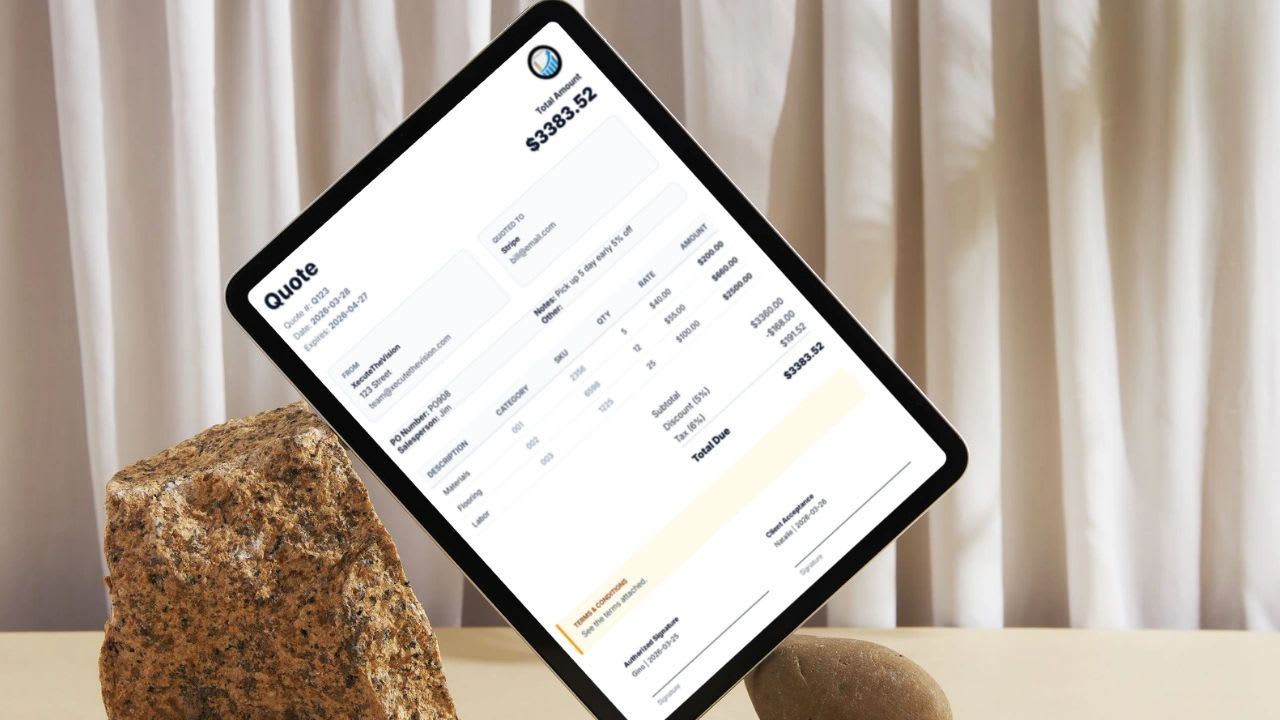
Staffing agency proposal templates give you a proven structure for showing a client how you will solve their hiring problem, what it will cost, and why they can trust you. Copy the free staffing proposal template below, use the bill rate calculator to price it, and use this guide to write a proposal that closes.
If you run a staffing agency, your proposal is not just paperwork. It is your closing tool. The agency with the clearest, most confident proposal often wins the contract, even when it is not the cheapest. A strong proposal builds trust immediately, explains exactly how you work, and makes it easy for the client to say yes.
What Is a Staffing Agency Proposal?
A staffing agency proposal is a formal document you send to a prospective client that explains your services, your recruiting and placement process, your pricing, and your guarantees. Underneath every section, it answers one question: why should this client trust you with their workforce? In staffing, trust is everything, because the client is handing you one of the most important parts of their business, their people.
Why Your Proposal Matters More Than You Think
Many agencies assume their experience will sell itself, their pricing will win the deal, or the relationship is enough. From the client's side, though, they are comparing several agencies, weighing risk, and looking for clarity. A vague, messy, or overly complicated proposal introduces doubt, and doubt kills deals. A clear one makes you the safe choice.
The Biggest Mistakes Staffing Agencies Make in Proposals
Talking Too Much About Themselves
Clients care about their outcome, not your founding story. Lead with their problem and your result, and keep the history to a line or two.
Unclear Pricing
If a client has to work out your pricing, they will move on to an agency that spells it out. List every rate and fee in plain numbers.
No Defined Process
Without a clear process you look inconsistent and risky. Show the steps from intake to placement so the client can picture working with you.
No Guarantees
Clients want protection. If you do not offer a replacement guarantee and a time-to-fill commitment, a competitor will.
Generic Templates
A proposal that could have been sent to anyone makes you replaceable. Tailor the needs section and examples to this client.
What a Winning Staffing Proposal Includes
1. Executive Summary
Your opening matters more than anything else. In two or three sentences, say who you help, what you solve, and the outcome you deliver. For example: "We help manufacturers reduce hiring delays and improve workforce reliability by providing pre-screened, ready-to-work candidates within days, not weeks."
2. Understanding of the Client's Needs
This section wins deals. Prove you understand their industry, their hiring challenges, and their urgency: "Based on our conversation, your biggest challenge is keeping staffing levels consistent during peak demand while controlling labor costs." When clients feel understood, they trust you faster.
3. Services Offered
List services in simple categories: candidate sourcing, screening and interviews, background checks, onboarding, and payroll and compliance for assigned workers. Structured clarity beats long paragraphs.
4. Your Staffing Process
Clients want to know how you get results, not just that you do. Walk through intake, sourcing, screening, placement, and follow-up. A predictable process removes uncertainty.
5. Pricing Structure
This is where most agencies lose deals. Clearly state the pay rate or bill rate, overtime and holiday bill rates, any markup or fees, and placement or conversion fees. No surprises means faster approvals.
6. Service Guarantees
Reduce the client's risk with a replacement guarantee, a time-to-fill expectation, and performance check-ins. For example: "If a worker does not meet expectations within the first seven days, we will provide a replacement at no additional cost."
7. Experience and Proof
Show the industries you serve, any metrics you can share, and a short case study. Even one strong, specific example builds confidence.
8. Terms and Conditions
Keep terms simple and clear: invoicing frequency, payment terms such as Net 15 or Net 30, minimum hours, and the agreement length.
9. Next Steps
Tell the client exactly what to do next: sign the agreement, schedule onboarding, and approve the first job orders. Remove every bit of friction between yes and the first placement.
Free Staffing Agency Proposal Template
Copy this template into a document, replace the brackets, and add your branding. Every section described above is included.
[YOUR AGENCY NAME]
STAFFING PROPOSAL

Prepared for: [Client Name]
Prepared by: [Your Name, Title]
Date: [Date]

1. EXECUTIVE SUMMARY
[Agency Name] helps [industry] companies [outcome, e.g., fill hourly roles with pre-screened, ready-to-work candidates within days]. This proposal outlines how we will support [Client Name] with [roles and volume].

2. YOUR NEEDS
Based on our conversation, your priorities are:
- [Challenge 1, e.g., keeping staffing levels consistent during peak season]
- [Challenge 2, e.g., reducing turnover in entry-level roles]
- [Challenge 3, e.g., controlling overtime and labor cost]

3. SERVICES
- Candidate sourcing and recruiting
- Screening, interviews, and skills checks
- Background checks and drug screens (as required)
- Onboarding and orientation
- Payroll, taxes, and workers' compensation for assigned workers

4. OUR PROCESS
Step 1: Intake meeting to define roles, skills, schedules, and site requirements
Step 2: Targeted sourcing from our candidate pool and job channels
Step 3: Screening and qualification against your requirements
Step 4: Placement with first-day check-in
Step 5: Ongoing performance check-ins and replacement support

5. PRICING
Position: [Role]
Pay rate: $[XX.XX]/hour
Bill rate: $[XX.XX]/hour
Overtime bill rate: $[XX.XX]/hour (1.5x)
Holiday bill rate: $[XX.XX]/hour
Temp-to-hire conversion: [terms, e.g., no fee after X hours worked]
Direct hire fee: [X]% of first-year base salary

6. SERVICE GUARANTEES
- Replacement at no additional cost if a worker does not meet expectations within [X] days
- Time to fill: [X] business days for standard roles
- Dedicated account contact: [Name, phone, email]

7. EXPERIENCE
- Industries served: [list]
- Results: [e.g., placed X workers for a similar client, with X% retention at 90 days]
- Reference or short case study: [summary]

8. TERMS
- Invoicing: [weekly] based on approved timesheets
- Payment terms: Net [15/30]
- Minimum assignment: [X] hours
- Agreement term: [X months], renewable

9. NEXT STEPS
1. Sign the attached service agreement
2. Schedule a 30-minute onboarding call
3. Approve the first job orders

Accepted by:
Client signature: ____________________  Date: __________
Agency signature: ____________________  Date: __________
How to Price a Staffing Proposal
Pricing is the part clients read most closely, so it needs to be clear and defensible. Most temporary staffing is priced with a markup on the worker's pay rate. The markup has to cover the employer burden, which is the cost of payroll taxes, workers' compensation, insurance, and other employment costs, and still leave you a gross margin for recruiting, overhead, and profit.
Pricing Models Explained
| Model | How it works | Best for |
|---|---|---|
| Markup on pay rate | Bill rate equals pay rate plus a percentage markup | Temporary and contract staffing |
| Flat bill rate | One all-inclusive hourly rate per role | Clients who want simple invoices |
| Temp-to-hire | Hourly billing during a trial, then conversion terms | Clients who want to evaluate before hiring |
| Direct hire fee | One-time fee, usually a percentage of first-year salary | Permanent placements |
A Bill Rate Example
Say the worker's pay rate is $18.00 per hour and you apply a 50% markup. The bill rate is $27.00 per hour. If your burden rate is 20% of pay, burden costs $3.60 per hour, which leaves $5.40 per hour in gross margin, or 20% of the bill rate. Overtime is typically billed at 1.5 times the bill rate, or $40.50 per hour in this example, because you also pay the worker time and a half. Use the calculator below to run your own numbers before you put a rate in writing.
Free Staffing Bill Rate and Markup Calculator
Free Staffing Bill Rate and Markup Calculator
Enter the worker's pay rate and your markup to see the bill rate, overtime and holiday bill rates, and your gross margin per hour. Add the burden rate to see what you actually keep.
Burden covers employer costs such as payroll taxes, workers' compensation, and insurance. Use your own rate. It varies by state, industry, and job classification.
How to Tailor a Proposal by Industry
The structure stays the same, but the emphasis should change with the client's world. Light industrial and warehouse clients care most about fill speed, attendance, and safety training. Healthcare clients focus on credentials, licensing verification, and shift reliability. Office and administrative clients weigh skills testing and culture fit. IT and professional clients want technical screening and flexible contract terms. Mirror the client's language and put their biggest concern in the first section they read.
How to Follow Up After Sending a Proposal
Many deals are lost after the proposal, not because of it. Before you send it, schedule a short review call so you can walk the client through it. If you have not heard back in two or three business days, follow up with something useful, such as an answer to a question they raised or a candidate profile that fits their open role. Keep each follow-up short, specific, and focused on their need, and ask a clear question that moves the decision forward.
Staffing Proposal Checklist
- The executive summary leads with the client's outcome, not your history.
- The needs section uses details from your conversation with this client.
- Every rate, fee, and multiplier is listed in plain numbers.
- The replacement guarantee and time to fill are specific.
- At least one proof point or short case study is included.
- Payment terms, minimums, and agreement length are stated.
- Next steps tell the client exactly what to do to get started.
- The proposal has been proofread and the client's name is correct everywhere.
Where Proposals Break Down: Billing and Operations
Here is where things go wrong in real life. You send a great proposal and win the contract, then operations get messy. Hours do not match invoices, rates are applied inconsistently, and payroll and billing do not line up. Nothing destroys client trust faster. The best agencies back their proposals with systems. Updoot connects time tracking, approvals, and invoicing so the hours your workers clock are the hours you bill, at the rates you promised. For more on this, see staffing agency billing software.
Proposal Lines You Can Use
Positioning lines like these work well in executive summaries and sales material: "The best staffing partnerships are built on clarity, consistency, and trust, not just candidates." "Clients do not just want workers. They want reliability they can count on." "The difference between winning and losing a contract often comes down to how clearly you present your process."
Final Thoughts
A staffing agency proposal is not about being the most detailed. It is about being the clearest, most confident, and easiest to work with. Show that you understand the client, present a clear process, remove pricing confusion, and back it all up with operations that deliver what you promised, and you will win more contracts consistently.
Opens in Google Drive. View and download for free.
Related Reading
Staffing Agency Billing Software: The Complete Guide →
Frequently Asked Questions About Staffing Agency Proposals
What is a staffing agency proposal?
A staffing agency proposal is a formal document sent to a prospective client that outlines your services, recruiting and placement process, pricing, and guarantees, and explains why the client should trust you with their workforce.
What should a staffing agency proposal include?
Include an executive summary, the client's needs, services offered, your staffing process, clear pricing with bill rates and overtime rates, service guarantees, proof of experience, terms, and next steps.
How do staffing agencies calculate bill rates?
Most agencies add a markup to the worker's pay rate. The markup must cover employer burden such as payroll taxes, workers' compensation, and insurance, and still leave a gross margin. For example, an $18 pay rate with a 50% markup is a $27 bill rate.
What is a typical staffing markup?
Markups vary widely by industry, role, location, and burden costs. Calculate your own burden rate first, then set a markup that covers it and leaves the margin you need.
What guarantees should a staffing agency offer?
Offer a replacement guarantee if a worker does not meet expectations within a set period, a time-to-fill commitment, and regular performance check-ins. Guarantees reduce the client's risk and often decide close deals.
Why do staffing proposals lose deals?
Common reasons are focusing on the agency instead of the client, unclear pricing, no defined process, no guarantees, and generic templates that look like every competitor's.
How should I follow up on a staffing proposal?
Schedule a review call before you send it, then follow up within two or three business days with something useful, such as a matching candidate profile, and a clear question that moves the decision forward.