Work Management Software
Stop rewriting job descriptions from scratch or hunting for the last version in an old email. Keep every role documented and ready to use.
Updoot ties job descriptions to the same roles already mapped in your org chart, so documentation and hiring aren't split across two disconnected systems.
Document responsibilities, requirements, and reporting lines for a role in a consistent format.
Connect the description to the actual position in your org chart, so it's never disconnected from the team structure.
Pull up the description for the next opening and update it instead of starting over from a blank page.
Every role documented in one place, ready when you need it.
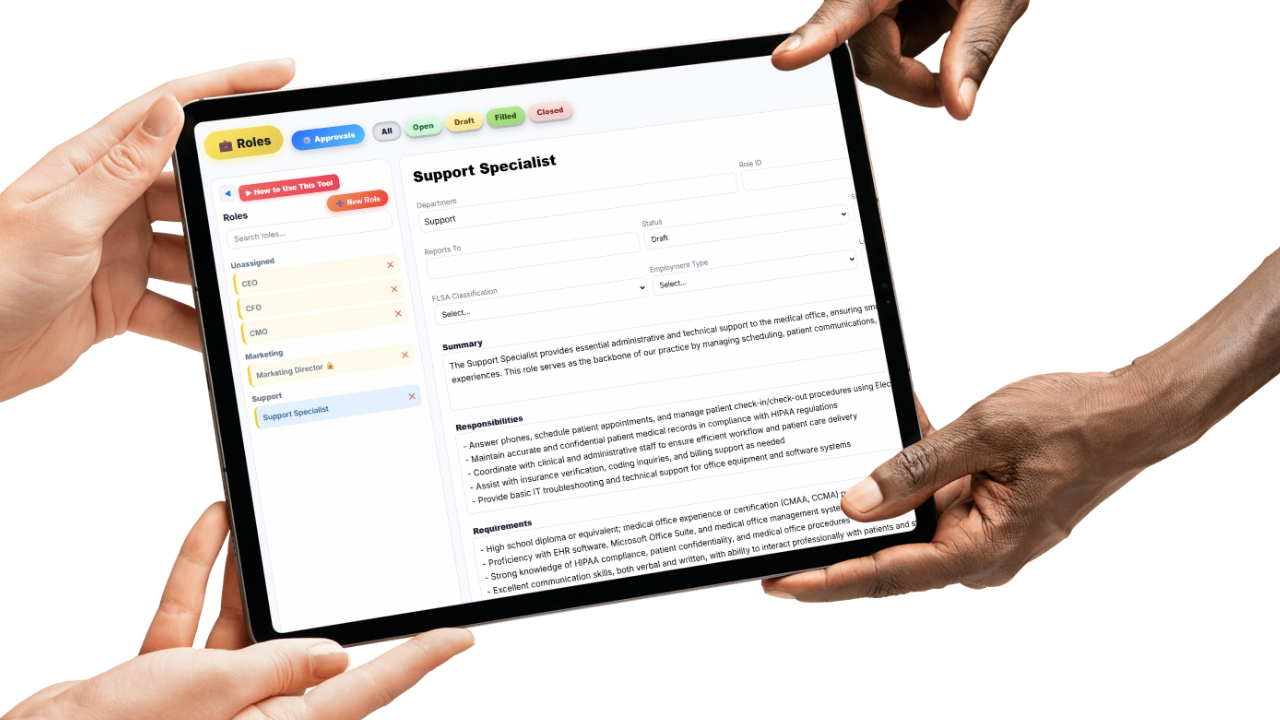
Every position in the business gets a stored job description, so the next time a role opens up, nobody's rewriting it from memory or digging through an old email for the last version.
Descriptions stay organized by role and department, making it easy to find and update the right one instead of maintaining a folder of loosely named documents.
Consistent formatting across every description means hiring managers and candidates both know what to expect, whether it's a first hire or the fiftieth.
Descriptions tied to the real role, not a standalone document.
Because job descriptions connect to the same roles mapped in your org chart, a description isn't a disconnected file, it reflects the actual reporting line and responsibilities tied to the position.
When a role's responsibilities shift, the description can be updated alongside the org chart, keeping both in sync instead of one falling out of date while the other moves on.
New hires and hiring managers both get a description that actually matches where the role sits in the business, not a generic template pulled from somewhere else.
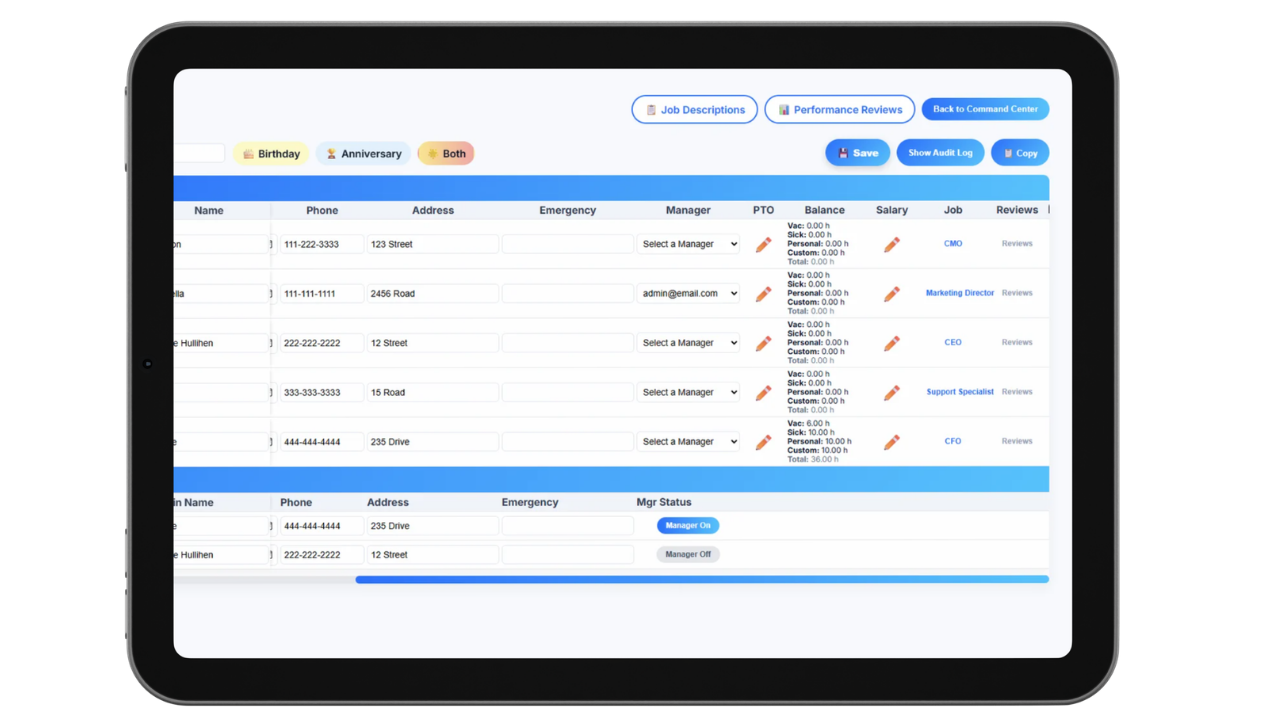
One description, used for the job posting and the new hire.
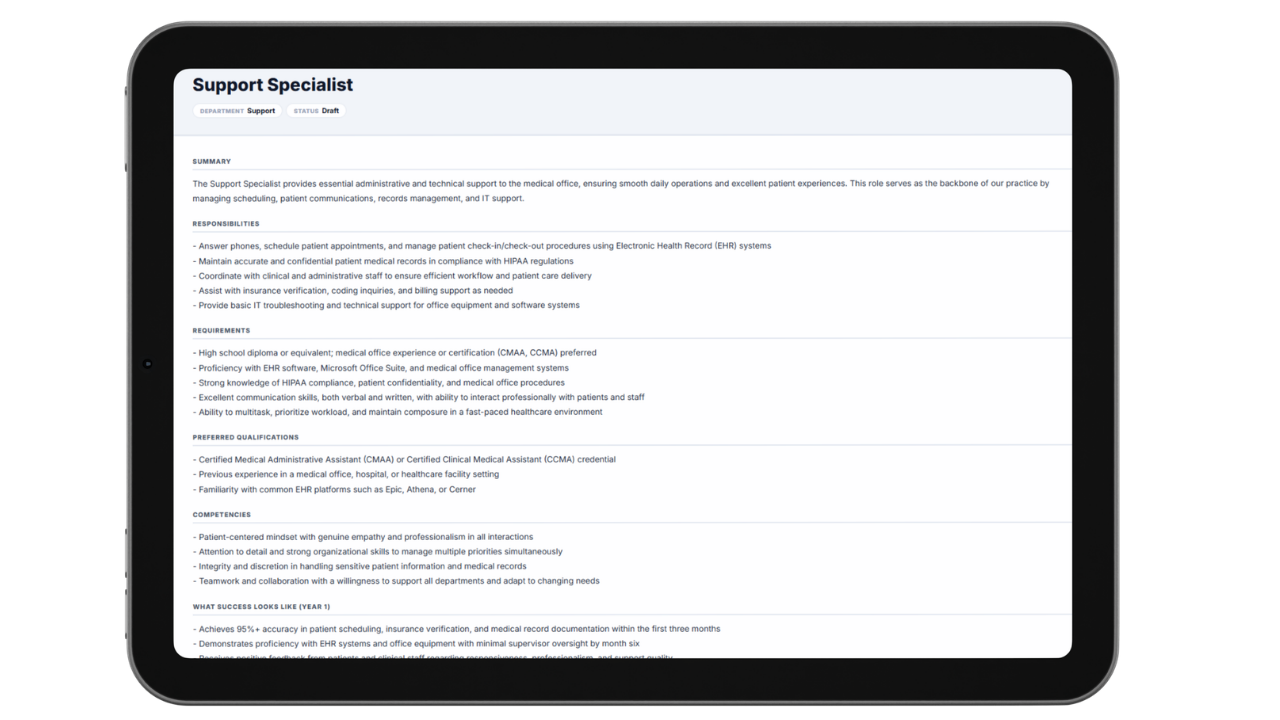
The same job description used to fill a role can carry over into onboarding, giving a new hire a clear reference for what they were actually hired to do.
When it's time to hire for a similar position again, pulling up the existing description and updating it takes minutes instead of writing a new one from scratch.
Keeping descriptions in the same platform as applicant tracking means hiring and documentation aren't split across two separate systems that never quite match.
Job descriptions have a way of disappearing. Someone writes one for a job posting, the role gets filled, and six months later when the position opens again, nobody can find the original and it gets rewritten from scratch, usually worse than the first version.
Updoot keeps every job description stored and tied to the actual role in your org chart, so it's there the next time you need it, not buried in an old email or a folder nobody remembers the name of.
Because descriptions connect to the same role structure used across the platform, they stay accurate as responsibilities shift, instead of describing a version of the job that stopped being true a year ago.
Whether you're posting a new opening or onboarding someone into an existing role, the same description carries through, giving hiring managers and new hires a consistent, accurate reference instead of a document that only existed for one hiring cycle.
The system for writing, storing, and reusing job descriptions.
Store every job description in one organized, searchable place.
Descriptions tie directly to the actual position and reporting line.
Update a description in minutes when responsibilities change.
Every description follows the same structure, making them easy to compare and reuse.
The same description supports both the job posting and new hire onboarding.
Find the right description fast instead of digging through old files.
Short, practical reads on team accountability, performance, and running a tighter operation.
Keep every role documented and ready for the next hire. Start your free trial of Updoot -- job descriptions, org chart, applicant tracking, and time tracking all in one platform built for small business.
Start Free Today →