Work Management Software
Stop finding out what your company said to customers by seeing it in the wild. Every email, ad, and social post gets planned on a shared calendar, approved before it ships, and measured after it lands.
Every customer-facing communication gets scheduled on a shared calendar, reviewed and edited through an approval step before it goes out, and tracked on a dashboard once it does.
Emails, ads, and social posts all go on one shared calendar so you can see the full picture of what customers will receive.
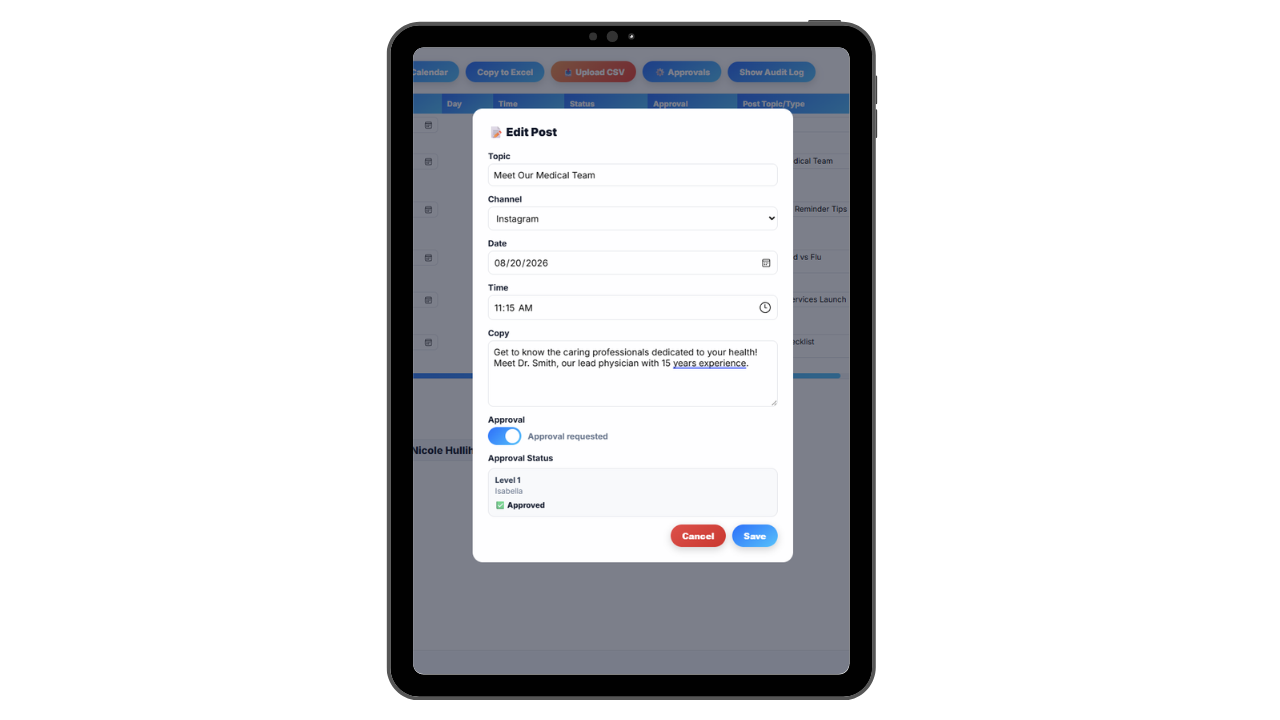
Whoever owns external communication opens the edit modal, adjusts the message, and approves it before anything ships.
The dashboard tracks engagement or any custom metric you want to measure, so next quarter's plan is based on results.
Be intentional about what customers hear, and how often they hear it.
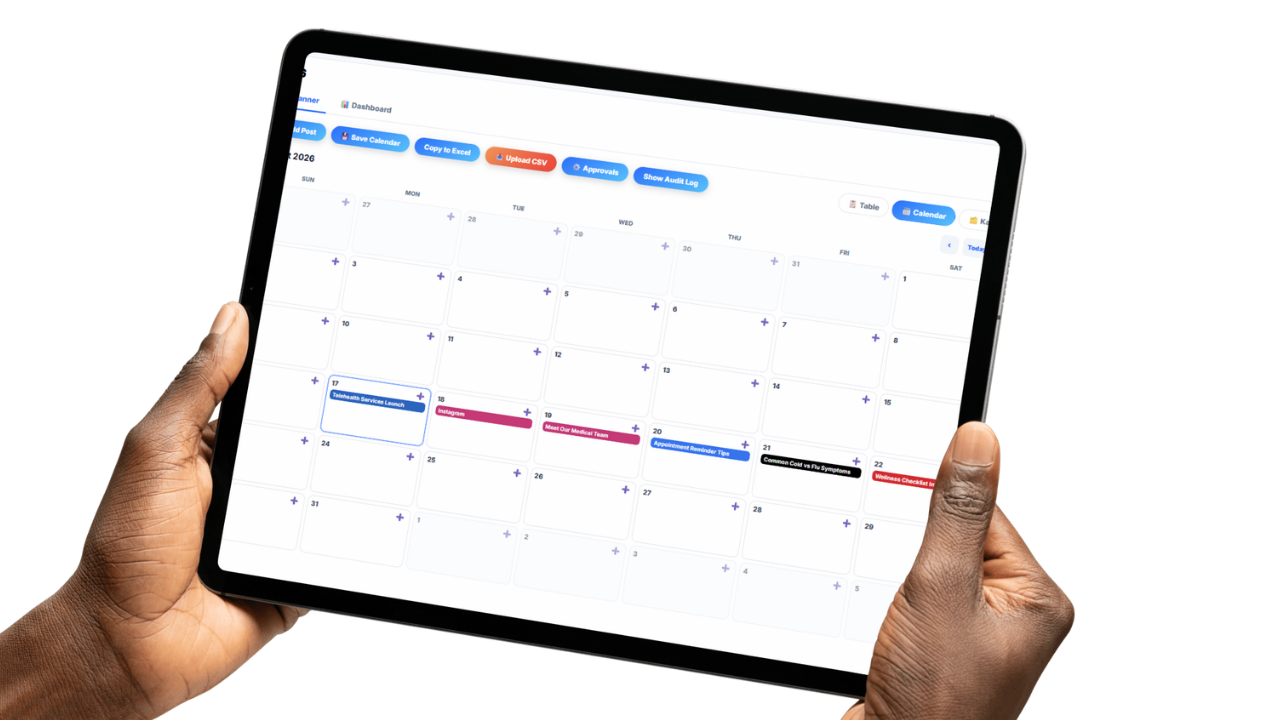
Emails, ads, and social posts all live on one calendar, which means you can finally see what a customer actually experiences instead of what each channel thinks it's doing on its own.
That view is what prevents the two most common failures. Ten messages landing on the same Tuesday because three people scheduled independently, and a promotion going out that contradicts the email sent two days earlier.
When everything is visible in one place, spacing and sequencing become deliberate choices. You decide what goes out this week and what waits, rather than discovering the collision after customers have already seen it.
Nothing reaches a customer that the right person hasn't read first.
Anything customer-facing can require approval before it publishes, so whoever owns external communication and social has a real checkpoint instead of finding out what went out by seeing it live.
The edit modal is where that review happens. The approver opens the actual message, adjusts wording, fixes an offer detail, or corrects tone, and approves it in the same step rather than sending notes back and forth and hoping the change was made.
The point is message consistency. Different people writing for different channels drift naturally, and a review step is what keeps the company sounding like one company rather than four departments with four voices.
Plan the next quarter on what worked, not on what felt good.
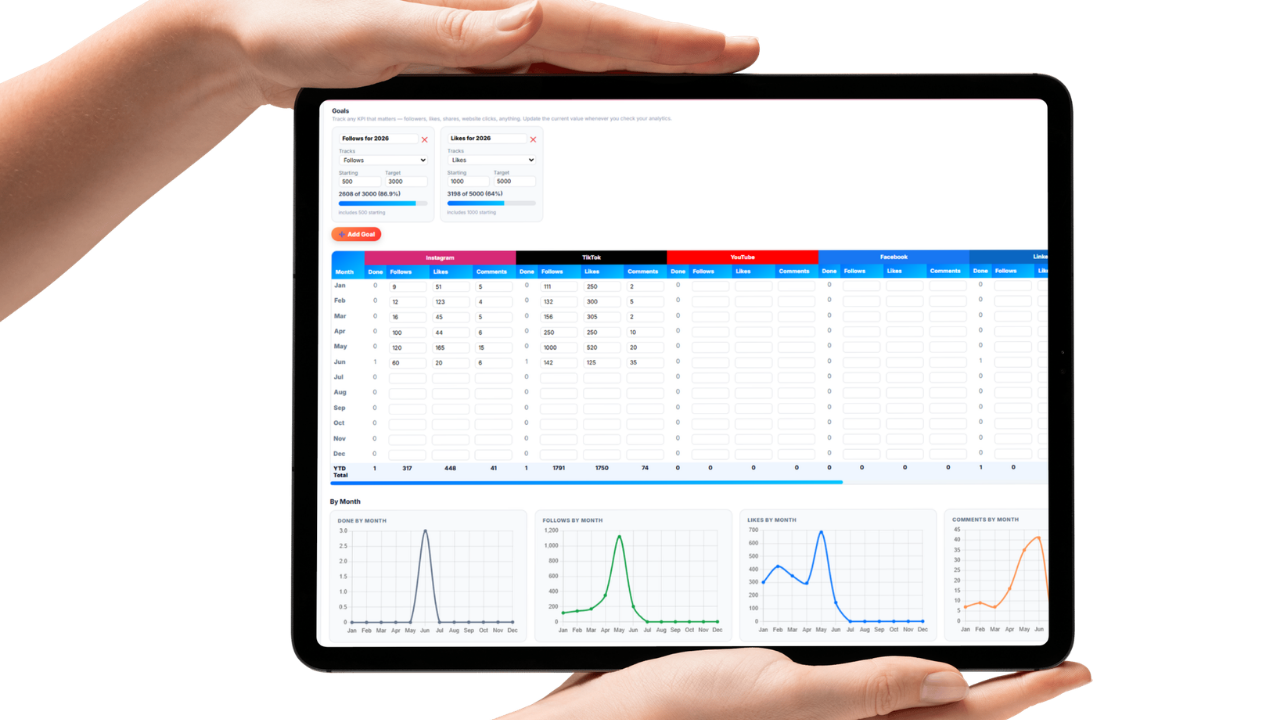
The dashboard tracks engagement across what you've published, so the calendar isn't just a schedule of things that happened. It's a record of what each message actually did.
You can track custom items too, whichever numbers matter to your business rather than the ones a generic tool decided to show you. For some companies that's opens and clicks, for others it's calls, replies, or foot traffic on a promotion day.
That's what makes the next plan strategic instead of habitual. If the Thursday email consistently outperforms the Monday one, you'll see it in the data rather than arguing about it from memory.
In most small businesses, external communication happens in parallel. Someone sends the customer email, someone else runs social, someone else buys the ads, and no single person can say what a customer will receive this week or whether any of it lines up.
The result is predictable. Ten messages land on the same day, a promotion contradicts an email from earlier in the week, and the company ends up sounding like four different businesses to the same customer.
Updoot puts every customer-facing communication on one shared calendar, with approvals and edit modals so whoever owns external messaging reviews and adjusts the actual content before it ships. Nothing reaches a customer that hasn't been read by the right person.
The engagement dashboard closes the loop, tracking performance and any custom metrics you care about, so the next quarter's plan is built on evidence. Intentional, spaced, consistent, and measured, instead of whatever four people happened to schedule that week.
The system for making sure every customer message is intentional, consistent, and approved before it ships.
Emails, ads, and social posts on one view of what customers receive.
Nothing external publishes without the right person signing off.
Approvers adjust the actual message in the same step they review it.
Keep every channel sounding like one company, not four departments.
See collisions before customers get ten messages in a single day.
Track how each message performed instead of guessing.
Measure the numbers that matter to your business, not generic ones.
Everyone sees the plan, so no one schedules over someone else.
Build the next period from results rather than habit.
Short, practical reads on job costing, field operations, and running a tighter operation.
No contradictions, no ten messages in one day, no surprises. Start your free trial of Updoot -- a shared content calendar, approvals with edit modals, and an engagement dashboard built for small business.
Start Free Today →