
10 PTO Request Email Templates and Examples
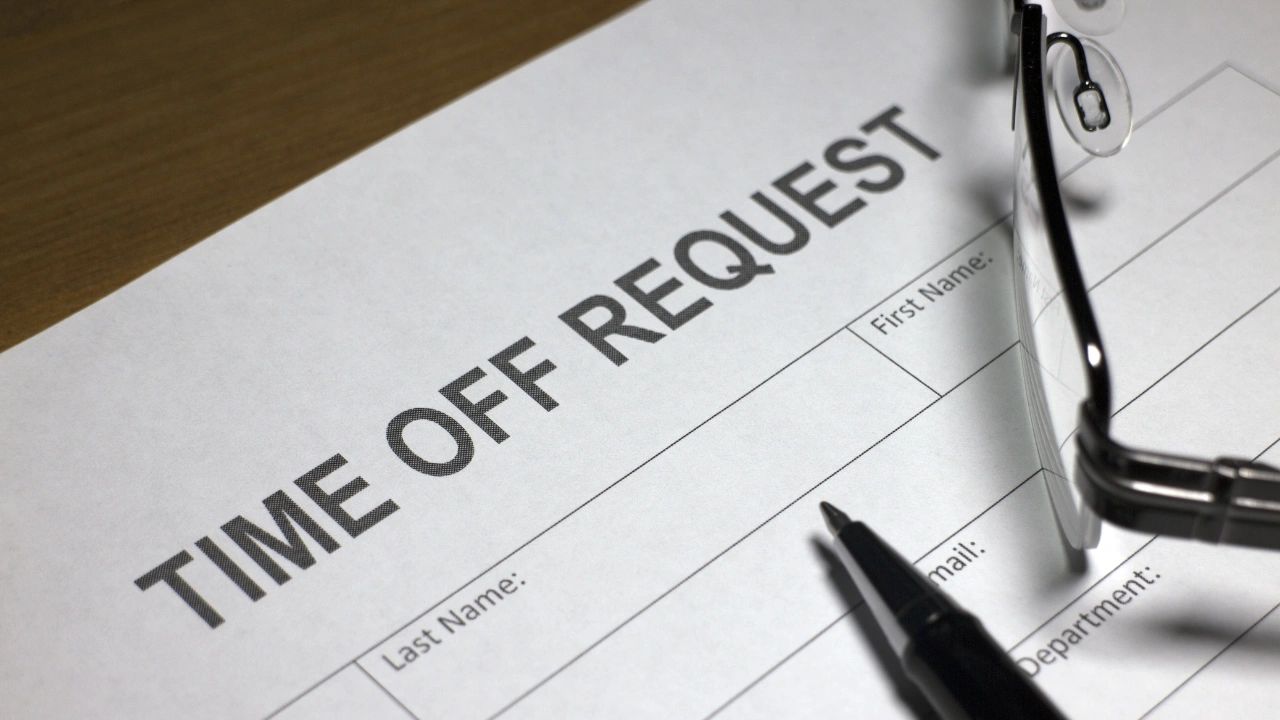
Use our free email template to request PTO whether it's vacation, sick time or personal time off. Requesting paid time off (PTO) is a normal part of working life, but many employees struggle with how to ask for time away from work professionally. Whether you are planning a vacation, need a personal day, or are requesting sick leave, writing a clear and respectful PTO request email helps ensure your request is handled smoothly.
This guide covers what to include in a PTO request email, ready-to-copy templates for every situation, what to do if your request gets denied, how to word it when your balance is low, tips for managers reviewing requests, and an interactive PTO email generator you can fill out and copy in seconds.
How to Request Time Off (Step-by-Step)
Before you write the email itself, a few quick checks make approval faster and avoid back-and-forth with your manager.
1. Check your company's time off policy
Your employee handbook or contract should outline how much time off you are entitled to, how far in advance you need to request it, and whether holiday, sick, personal, and vacation days are tracked separately or pulled from one combined balance. If you are unsure, ask HR before you submit a request.
2. Decide which type of leave applies
Holiday and vacation time usually needs more advance notice than sick or personal time. Knowing which category your request falls under helps your manager apply the correct policy and approve it without needing to follow up.
3. Check the team calendar first
Look for known deadlines, other approved time off, or busy periods before you pick your dates. Requesting time off that overlaps with a major deadline or a holiday rush is more likely to be delayed or denied, even with a strong request.
4. Put it in writing
A verbal heads-up is fine, but follow it with an email or a request through your time-off system. A written request creates a record of exact dates and approval, which protects both you and your manager if there's ever a question about what was agreed to.
5. Send your request with enough notice
Two weeks is standard for planned leave like vacation or holiday time. Sick leave and personal emergencies are the obvious exceptions; in those cases, let your manager know as soon as you reasonably can.
Tip: If your company distinguishes between PTO, holiday, sick, and personal time, use the specific category in your subject line and email rather than a general acronym. It removes any guesswork about which balance the time should come from.
What Is a PTO Request Email?
A PTO request email is a message sent to a manager or supervisor asking for approval to take time off from work. PTO stands for Paid Time Off, which typically includes vacation days, personal days, and sometimes sick leave. Most companies require employees to submit a formal request so managers can plan staffing schedules and ensure work responsibilities are covered.
What a strong PTO request includes
The exact dates being requested, confirmation that work responsibilities will be covered during the absence, a polite request for approval, and a subject line that immediately identifies the request by date.
Why Using a Template Helps
A simple template ensures your message stays professional, includes all necessary details, and reduces back-and-forth communication. Templates also make it easier for employees to submit requests consistently across teams -- and for managers, consistent request formats make review and approval faster.
What Every PTO Request Email Must Include
1. Clear Subject Line
The subject line should immediately explain the purpose. Examples: "PTO Request -- July 10-14" or "Vacation Request -- August 3-7". A clear subject line lets managers identify and prioritize the request without opening the email.
2. Exact Dates
Always state the specific start and end dates. "I would like to request PTO from June 12 through June 16" is clear. "Next week" or "a few days in July" are not. Be precise so managers can check schedules without following up.
3. Coverage Plan
Briefly confirm that your responsibilities will be handled. "I will ensure my current projects are up to date and will coordinate coverage with the team during this time." This one sentence removes the most common manager concern before it becomes a question.
4. Polite Closing
End respectfully and thank your manager for considering the request. "Please let me know if you need any additional information. Thank you for considering my request." Short, professional, and complete.
How far in advance? Most companies require at least two weeks notice for planned leave such as vacations. Sick leave and personal emergencies are generally exceptions. Check your company policy -- some industries require 30 days for extended leave.
10 PTO Request Email Templates and Examples
Copy any of the templates below directly into Gmail, Outlook, or Google Docs and fill in the bracketed fields.
Standard PTO Request
Hi [Manager's Name],
I hope you're doing well. I would like to request paid time off from [start date] to [end date].
During this time, I will make sure my responsibilities are up to date and will coordinate with the team to ensure any ongoing work continues smoothly.
Please let me know if this request works with the current schedule or if you need any additional information.
Thank you for your consideration.
Best regards,
[Your Name]
Short PTO Request
Hi [Manager's Name],
I'd like to request PTO from [start date] through [end date]. Please let me know if this works with the team schedule.
Thank you.
Best,
[Your Name]
Vacation Request
Hi [Manager's Name],
I would like to request vacation time from [start date] to [end date]. I will ensure my projects are up to date before I leave and will coordinate with the team to make sure everything runs smoothly during that time.
Please let me know if this request works.
Thank you.
Best,
[Your Name]
Sick Leave Request
Hi [Manager's Name],
I'm writing to let you know that I am unable to come in today [or: from [start date] through [end date]] due to illness. I will keep you updated on my return and will review any urgent items as soon as I am back.
Please let me know if there is anything pressing that needs coverage in the meantime.
Thank you.
Best,
[Your Name]
Time Off Request Email (No PTO Acronym)
Some workplaces -- especially outside the U.S., or companies that track holiday, sick, and personal time separately rather than as a combined PTO balance -- prefer requests that spell out the specific type of leave instead of using "PTO." These templates work the same way, just without the acronym.
General Time Off Request
Hi [Manager's Name],
I would like to request time off from [start date] to [end date]. I have checked the team calendar and don't see any conflicts with current deadlines.
I will make sure my responsibilities are up to date before I leave and will coordinate with the team to ensure any ongoing work continues smoothly.
Please let me know if this works with the schedule or if you need any additional information.
Thank you for considering my request.
Best regards,
[Your Name]
Holiday Leave Request
Hi [Manager's Name],
I would like to request holiday leave from [start date] to [end date]. I understand this falls during a busier period and am happy to discuss timing if it would help with team coverage.
I will wrap up my current tasks beforehand and arrange coverage for anything that comes up while I'm away.
Please let me know if these dates work.
Thank you.
Best,
[Your Name]
Short Notice Request
When you cannot give the standard two weeks, acknowledge it directly rather than hoping it goes unnoticed. Naming the short notice yourself is what keeps the request from reading as careless.
Hi [Manager's Name],
I know this is shorter notice than usual, and I wanted to ask rather than assume. I would like to request time off from [start date] to [end date].
[Brief reason, if you are comfortable sharing it.] I have checked the calendar and do not see a conflict with current deadlines, and I will make sure anything time-sensitive is either finished or handed over before I go.
If the timing does not work, I completely understand, and I am happy to look at alternatives.
Thank you.
Best,
[Your Name]
Extended Leave Request
Requests longer than a week or two need more than dates. Managers approve extended leave based on the coverage plan, so lead with that rather than leaving them to work it out.
Hi [Manager's Name],
I would like to request extended time off from [start date] to [end date], a total of [number] working days. I am raising it well in advance so we have time to plan around it.
Here is how I would propose handling coverage:
• [Project or responsibility] -- completed before I leave
• [Project or responsibility] -- handed to [colleague] with notes
• [Recurring duty] -- paused or covered by [colleague]
I am happy to adjust the dates or the coverage plan if either creates a problem for the team. Let me know what works best and I will put the handover documentation together.
Thank you for considering it.
Best regards,
[Your Name]
Personal Day Request
Personal days usually need less explanation than vacation, and offering one anyway can invite questions you did not want. Keep it short.
Hi [Manager's Name],
I would like to request a personal day on [date].
I will make sure anything time-sensitive is handled before I am out, and I am reachable if something urgent comes up.
Please let me know if that works.
Thank you.
Best,
[Your Name]
Formal Time Off Request Letter
Some employers still want a written letter rather than an email, particularly for extended leave or where the request goes into a personnel file. The content is the same, the format is more formal.
[Your Job Title]
[Date]
[Manager's Name]
[Manager's Job Title]
[Company Name]
Dear [Manager's Name],
I am writing to formally request time off from [start date] to [end date], returning to work on [return date].
I have reviewed my current balance and believe I have sufficient time available for this request. Before my departure I will complete [project or responsibility] and coordinate handover of any ongoing work with [colleague's name].
Please let me know if you require any additional information or documentation to process this request. I am happy to discuss alternative dates if these present a scheduling difficulty for the team.
Thank you for your consideration.
Sincerely,
[Your Name]
Free PTO Email Generator
Fill in your details below and click Generate to get a personalized, ready-to-copy PTO request email.
How to Save Your Template in Google Docs
- Open docs.google.com
- Click Blank Document
- Paste any template above
- Rename the document "PTO Request Email Template"
- Save it -- it will be available from any device whenever you need it
PTO Request Guidelines for Managers
What to check before approving
Confirm the requested dates, current team staffing levels during that window, any project deadlines that fall within the request period, and whether responsibilities are covered. Clear PTO policies make these decisions faster and more consistent.
How to prevent scheduling conflicts
Using a workforce scheduling tool that shows employee availability and approved time off in one view lets managers see coverage gaps before approving additional requests. The most common PTO conflict -- two key employees requesting the same week -- is almost always preventable with a shared schedule.
Manual tracking vs. software
Spreadsheets work for very small teams. As headcount grows, dedicated workforce management software eliminates the administrative overhead, keeps records accurate, and gives employees self-service visibility into their own balances. Platforms like Updoot allow employees to submit requests and managers to approve them directly in the system.
Consistency matters: Approving PTO for some employees and denying the same request for others without a documented business reason creates fairness complaints and, in some cases, legal exposure. Written PTO policies applied consistently are the employer's best protection.
What to Do If Your PTO Request Gets Denied
A denial isn't necessarily final, and how you respond matters more than the denial itself. The approach below works for most situations, but read your specific manager and company culture -- a rigid script can come across as pushy in the wrong context.
1. Ask why, specifically
Don't assume the reason. A denial during a known busy period is different from a denial with no stated cause -- the second is worth a direct, polite follow-up: "Totally understand if the timing doesn't work -- is there a specific conflict I should know about, or would different dates work better?" This usually surfaces the real constraint (a deadline, another employee already approved, a staffing gap) rather than leaving you guessing.
2. Offer alternative dates before being asked
Coming back with "would the following week work instead?" moves the conversation from a stalled no toward a yes. Managers are far more likely to say yes to a second offer than to reopen a request they already declined, since you're giving them an easy path to approval rather than asking them to reconsider their first answer.
3. Know the difference between "not now" and "not ever"
Most denials are about timing, not the request itself. If a manager says no to July but the underlying reason was a specific project deadline, that constraint won't exist in August. Re-submitting later isn't pushy -- it's the expected next step, and most managers assume you will.
4. Escalate only if the pattern is unfair, not just inconvenient
One denied request, even a frustrating one, usually isn't worth escalating to HR. A pattern -- repeated denials without explanation, or approval given to some employees on the same team but not others for comparable requests -- is a fairness issue worth raising, calmly and with specifics ("I've requested three times this quarter and haven't gotten approval or an explanation") rather than an emotional appeal.
How to Ask for PTO When Your Balance Is Low
Requesting time off when you don't have much balance left -- or none -- is a different conversation than a routine request, and the template above isn't quite right for it. A few adjustments:
If you're requesting unpaid time off
Say so directly in the email rather than letting your manager discover it when payroll processes. "I'm out of PTO for the year, so I'd like to request these days as unpaid leave" gives your manager accurate information to approve against, and avoids an awkward correction later. Some companies have a separate unpaid-leave approval process entirely -- check with HR before sending the request if you're unsure.
If you're asking to borrow against next year's balance
Not all companies allow this, and it's worth confirming with HR before you ask your manager -- a manager saying yes to something HR doesn't actually permit puts both of you in an awkward spot later. If it is allowed, be specific about the amount: "I'd like to request 3 days against my 2027 balance" rather than a vague ask.
If the time off is for something non-negotiable
A family emergency, a medical need, or a legal obligation (jury duty, a court date) isn't really a "request" in the same sense -- it's a notification with an ask for the company's process to be followed. Lead with the situation, not an apology: "I need to take time off for [situation] starting [date]. I understand this may affect my PTO balance -- can you let me know how the company handles this?" This is honest about the constraint without over-explaining or sounding like you're asking permission for something you don't actually have a choice about.
A note on transparency: Managers generally respond better to a direct "I'm out of balance, here's my situation" than to a vague request that leaves them to figure out the balance question themselves. Being upfront about where you stand usually gets a faster, more flexible response than hoping it doesn't come up.