
Flextime Policy and Request Templates (Free Copy and Paste)

Flextime policies let employees choose when their workday starts and ends while the business keeps the coverage and accountability it needs. Use the free flextime request generator and the copy-and-paste flextime policy below, then use this guide to roll flextime out without losing control.
The traditional 9-to-5 day is quickly giving way to something more flexible. Employees want control over their time, managers want productivity, and the business needs both without chaos. Most companies say they offer flexibility, then execute it poorly. The difference between flextime that works and flextime that falls apart is almost always structure: clear core hours, a written policy, and reliable time tracking.
What Is Flextime?
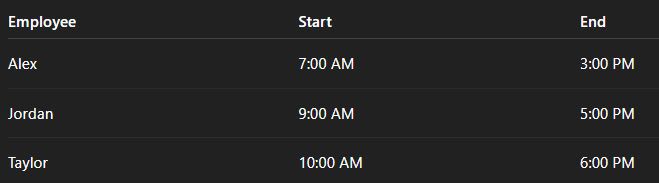
Flextime, short for flexible working hours, allows employees to choose when they start and end their workday within limits the company sets. Instead of everyone working 9:00 AM to 5:00 PM, one employee might work 7:00 AM to 3:00 PM, another 10:00 AM to 6:00 PM, and a third 8:30 AM to 4:30 PM. The key point is that the total hours stay the same. Only the timing changes.
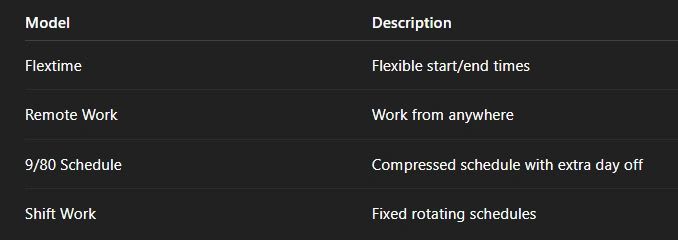
Flextime is about when people work, not where. It is different from remote work, which changes location, and from a compressed schedule, which changes how many days people work.
How Flextime Works
Almost every successful flextime program is built from two parts.
Core Hours
Core hours are the window when everyone must be available, such as 10:00 AM to 2:00 PM. Meetings, collaboration, and team handoffs happen during this overlap, so the team still works together even when schedules differ.
Flexible Hours
Outside core hours, employees choose their own start and end times within a set range. For example, they might start any time between 7:00 and 10:00 AM and finish any time between 3:00 and 7:00 PM, as long as they complete their required hours.
Flextime vs. Other Work Models
| Work model | What changes | What stays the same |
|---|---|---|
| Flextime | Start and end times | Total hours and work location |
| Remote work | Work location | Hours and schedule |
| Hybrid work | Location on certain days | Hours and schedule |
| Compressed workweek | Number of days worked, such as four 10-hour days | Total weekly hours |
| Part-time | Total hours | Varies by role |
Why Flextime Is Growing
Flexibility has moved from a perk to an expectation, and for good reason. It gives employees better work-life balance, letting them avoid rush hour, handle personal responsibilities, and work during the hours when they focus best. That usually means higher productivity and less burnout, because not everyone does their best work at 9:00 AM.
Flextime also helps with retention, since flexibility is one of the reasons employees choose to stay or leave. And it widens your talent pool, making it easier to hire parents, caregivers, and people in other time zones who could not commit to a rigid schedule.
The Downsides of Flextime
Flextime can go sideways when it is not managed well. Without guidelines, people work inconsistent hours and communication breaks down. When everyone picks a different schedule, customers can go unsupported and teams struggle to collaborate. Time tracking gets harder, which leads to misreported hours and inconsistent payroll.
The biggest downside is often manager anxiety. When people are not all in the same place at the same time, managers start to wonder whether work is actually getting done. That worry is valid when there is no system behind the flexibility.
How to Make Flextime Work
Flextime works when you stop measuring presence and start measuring outcomes and visibility. Four things need to be in place before you roll it out:
- Clear expectations for deliverables, deadlines, and responsiveness.
- Defined core hours so collaboration still happens.
- Reliable time tracking so hours are recorded accurately for payroll.
- Visibility into the work so managers can see progress without micromanaging.
Most companies fail here. They allow flexibility without the systems that make it sustainable, then blame the policy when it breaks.
When Flextime Works Best
Flextime is a strong fit when work is outcome-based, employees manage their own time well, roles do not require strict shift coverage, and you have systems to track time and performance. It is usually a poor fit for retail and other shift-based work, roles that need constant coverage, and environments with strict hourly compliance requirements. In those settings, shift swaps and advance scheduling usually solve the same problem better.
Free Flextime Request Generator
Employees can use this generator to write a professional flextime request in seconds. It covers everything a manager needs to approve the request: the proposed hours, a commitment to full hours, availability during core hours, and an optional trial period.
Free Flextime Request Generator
Fill in your details and the request writes itself. Copy it into an email or print it for your manager.
Employee Flextime Request Template
If you prefer to write the request yourself, copy this template into an email and fill in the brackets.
Subject: Request for a Flexible Work Schedule

Hi [Manager Name],

I would like to request a flexible work schedule so my working hours better match when I am most productive and my personal responsibilities.

I am proposing the following schedule:
Start time: [e.g., 7:30 AM]
End time: [e.g., 3:30 PM]

I will continue to work my full required hours and will be available during core team hours ([e.g., 10:00 AM to 2:00 PM]) for meetings and collaboration.

I am confident this schedule will let me maintain or improve my productivity while meeting every expectation and deadline. I am also happy to start with a trial period if that would be helpful.

Thank you for considering my request.

Best,
[Your Name]
Flextime Policy Template for Managers
This practical policy covers purpose, core hours, flexible hours, scheduling rules, performance expectations, time tracking, communication, and approval. Copy it into your handbook and adjust the brackets to fit your business.
FLEXTIME POLICY

Purpose
This policy gives employees flexibility in their work schedules while keeping business operations, collaboration, and productivity on track.

Core Working Hours
All employees must be available during core hours: [e.g., 10:00 AM to 2:00 PM].

Flexible Hours
Employees may choose their start and end times outside of core hours, as long as they complete their required daily or weekly hours.

Schedule Guidelines
- Employees must share their standard working schedule with their manager.
- Changes to an approved schedule must be approved in advance.
- Employees must remain reachable during their scheduled hours.

Performance Expectations
- All deadlines, deliverables, and responsibilities must be met.
- Flexibility does not reduce workload expectations.
- Performance is evaluated on results and output.

Time Tracking
All employees must accurately record their working hours in the company time tracking system.

Availability and Communication
- Employees should respond to messages within a reasonable time during working hours.
- Teams must keep enough coverage to meet business needs.

Review and Adjustments
Managers may adjust or end a flexible schedule if business needs change or performance issues arise.

Approval
Flextime arrangements require manager approval and may begin with a trial period.
How to Roll Out a Flextime Program Step by Step
The companies that get flextime right treat it as an operating change, not a perk announcement. This six-step rollout keeps coverage intact while you learn what works for your team.
- Decide which roles are eligible. Sort roles into three groups: fully flexible, flexible within a narrow window, and fixed. Roles tied to customer hours, shift coverage, or physical locations usually land in the last two groups. Put the criteria in writing so decisions are consistent and defensible.
- Set core hours and the flexible bandwidth. Choose the core window everyone must share, then the earliest start and latest finish allowed. A four-hour core with a three-hour flex window on each side works for most office teams.
- Write and share the policy. Use the template above so every employee sees the same rules for scheduling, approvals, availability, and time tracking before anyone changes their hours.
- Set up accurate time tracking. Flexible schedules make paper timesheets and memory unreliable. Decide how hours will be recorded and approved before the first schedule changes.
- Run a pilot. Start with one team for 60 to 90 days. A pilot surfaces coverage gaps and communication problems while the stakes are low.
- Measure, adjust, and expand. Review the results against the metrics in the section below, adjust core hours or eligibility, then expand to more teams.
Flextime Schedule Examples by Role
Flextime looks different depending on the work. These examples show how core hours and flexible windows typically fit common roles.
| Role | Core hours | Flexible window | Notes |
|---|---|---|---|
| Office and administrative | 10:00 AM to 2:00 PM | Start 7:00 to 10:00 AM | Stagger lunch coverage for the front desk or phones. |
| Accounting and finance | 10:00 AM to 2:00 PM | Start 7:00 to 9:30 AM | Suspend or narrow flextime during month-end close. |
| Software and design | 11:00 AM to 3:00 PM | Start 7:00 to 11:00 AM | Protect a daily overlap for standups and reviews. |
| Sales | Around key client hours | Flexible outside meetings | Calendars and pipeline activity matter more than start time. |
| Customer support | Team-level coverage, not individual | Staggered shifts | Use a coverage schedule so every open hour is staffed. |
Flextime, Overtime, and Pay Rules
Flextime changes when people work, not how they are paid. Under the federal Fair Labor Standards Act, non-exempt employees must still be paid overtime for hours worked over 40 in a workweek, no matter how their schedule is arranged. Some states add daily overtime rules or special rules for alternative schedules, so a flexible day that runs long can create overtime you did not plan for. Review the U.S. Department of Labor overtime guidance and your state labor department before approving flexible schedules for hourly employees.
The practical takeaway is simple: every hour must be recorded accurately. When start and end times vary, accurate time records are what keep payroll correct and protect both the employee and the business.
How Managers Should Evaluate Flextime Requests
Consistent decisions matter as much as the policy itself. Evaluate each request against the same criteria:
- Coverage: Will customers, teammates, and critical processes still be covered during the requested hours?
- Role fit: Is the role outcome-based, or does it depend on being available at specific times?
- Performance: Is the employee meeting expectations today? Flextime works best as an extension of trust that already exists.
- Fairness: Would you approve the same request from anyone else in the same role?
If you cannot approve a request as written, offer an alternative, such as a narrower window, a trial period, or flexibility on specific days. Document the decision and the reason so future requests are handled the same way.
How to Measure Whether Flextime Is Working
Judge flextime by results, not by who is online at 9:00 AM. Track deadlines met, response times, customer coverage and satisfaction, unplanned overtime, and turnover before and after the change. Pair the numbers with a short employee survey or an eNPS pulse at 30, 60, and 90 days. If output holds or improves and coverage stays intact, the program is working. If a metric slips, adjust core hours or eligibility rather than ending flexibility for everyone.
Managing Flextime in Excel vs. Software
You can manage flextime in a spreadsheet, but it gets messy quickly. Every employee has a different start and end time, there is no real-time view of who is working, productivity is hard to measure, and someone has to update the file by hand.
Updoot's employee time clock keeps flexibility without losing control. Employees clock in from a phone, browser, or kiosk whenever their day starts, managers see live hours and approve them before payroll, and time connects to the projects and output it produced. Flexibility plus visibility is what makes flextime sustainable.
Final Takeaways
Flextime means flexible start and end times, not fewer hours. Done well, it improves retention, productivity, and hiring. Done without structure, it creates coverage gaps and payroll problems. Flextime rarely fails because of employees. It fails when companies cannot see who is working, what they are working on, and how their time connects to results. Put core hours, a written policy, and reliable time tracking in place first, and flexibility becomes an advantage instead of a risk.
Opens in Google Drive. View and download for free.
Related Reading
What Is a Flexible Work Policy? Guide and Free Template →
Frequently Asked Questions About Flextime
What is flextime and how is it different from a standard schedule?
Flextime lets employees choose when they start and end their workday within limits the company sets, while total hours stay the same. Instead of a fixed 9 to 5, an employee might work 7 to 3 or 10 to 6.
What are core hours in a flextime schedule?
Core hours are the required window when all employees must be available, such as 10 AM to 2 PM. Meetings and collaboration happen during core hours even when start and end times differ.
What roles are best suited for flextime?
Flextime works best for outcome-based roles where employees manage their own time and strict shift coverage is not required. It is not a good fit for retail, roles that need continuous coverage, or environments with strict hourly compliance requirements.
Why do flextime programs fail?
Most flextime programs fail because companies allow flexibility without systems to support it. Without clear expectations, defined core hours, reliable time tracking, and visibility into output, flexibility turns into coverage gaps and payroll problems.
How should an employee request flextime?
Send a written request that includes the proposed start and end times, a commitment to work full required hours, availability during core hours, and how the schedule will maintain productivity. Offering a trial period often makes approval easier.
Should a flextime policy be in writing?
Yes. A written policy sets core hours, scheduling rules, performance expectations, and time tracking requirements so every employee is treated consistently and managers can adjust schedules when business needs change.
Do flextime employees still get overtime?
Yes. Non-exempt employees must be paid overtime under federal law for hours worked over 40 in a workweek, regardless of their schedule, and some states add daily overtime rules. Accurate time tracking keeps flexible schedules compliant.
How long should a flextime trial period be?
Most teams run a trial for 60 to 90 days. That is long enough to see effects on coverage, deadlines, and communication, and short enough to adjust quickly.