
How to Establish Strong Working Relationships: Minutes vs Months
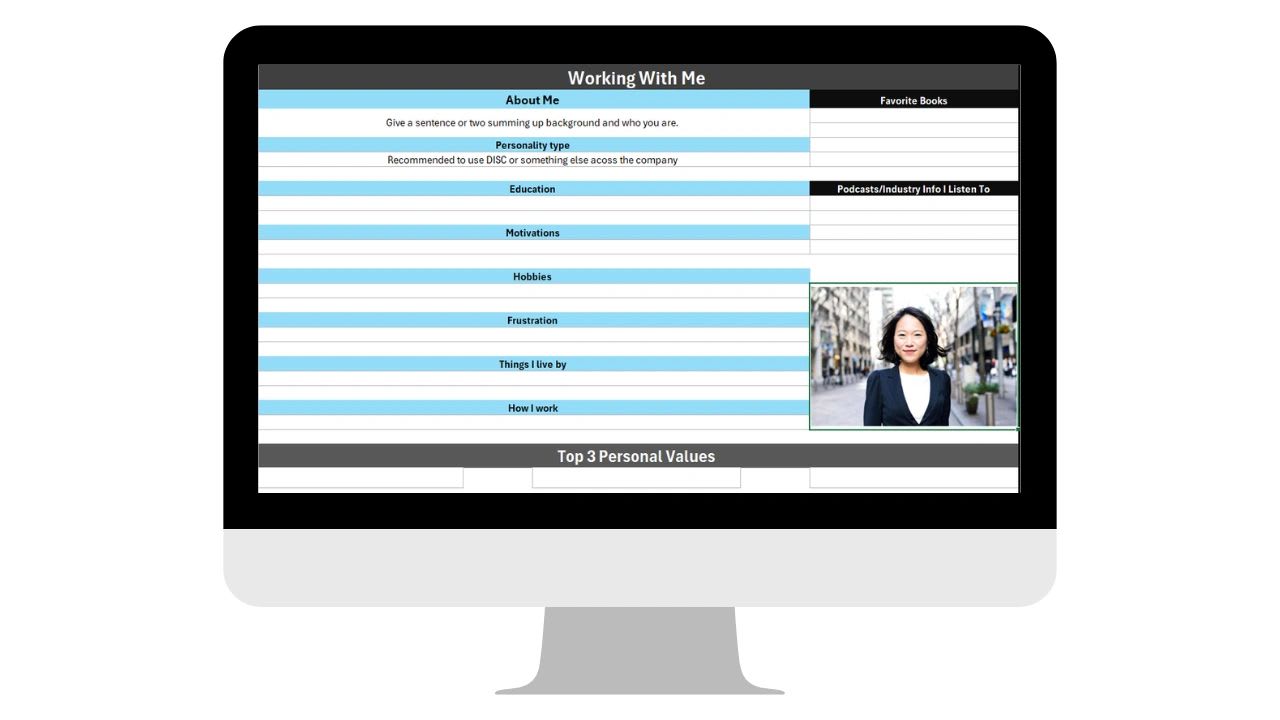
How to establish strong working relationships comes down to one question: how quickly can two people understand each other? One of the biggest challenges in any business is not the product, the process, or the strategy. It is the people. We spend months, sometimes years, learning how colleagues think, what motivates them, and how they like to work. But what if you could skip six months of guesswork and start with clarity from day one?
That is the idea behind a simple but powerful tool I recommend every leader and team member create: a "Working With Me" guide. This article explains where the idea comes from, why one page is enough, what to include, and why it matters, and it includes a free builder that creates your guide as you type.
The Working With Me Guide Inspired by Scaling People
In her book Scaling People, Claire Hughes Johnson, former chief operating officer at Stripe, shares her own "Working With Claire" document. It runs several pages and covers her leadership style, values, communication preferences, and more.
The idea is brilliant. Instead of leaving colleagues to figure you out over time, you hand them the cheat sheet. They can understand your motivations, quirks, and ways of working in minutes, not months.
But here is the thing: you do not need ten pages. You need one.
A Single Page That Saves Everyone Time
I recommend creating two versions of your Working With Me guide. As an employee, share how you like to receive feedback, your preferred communication style, what motivates you, and what frustrates you. As a leader, if it applies, share how you make decisions, what you expect from your team, and how people can work with you best.
Keeping it to a single page forces you to focus on what matters most, and it makes the guide practical for others to actually read and use. A new hire can read it before their first one-on-one, and a colleague on another team can skim it before a project kicks off.
What to Include in a Working With Me Guide
These are the sections I suggest. You do not need all of them, and each one should be a sentence or two.
| Section | What to write | Example |
|---|---|---|
| Background | A quick snapshot of your career, experience, or what drives you | "Ten years in operations; I love building systems." |
| Personality | A shared assessment result, such as your DISC style | "DISC: C, Conscientiousness." |
| Appreciation | How you like to be recognized at work | "Acts of service mean more to me than praise." |
| Values | The principles you prioritize in work and life | "Honesty and follow-through." |
| Motivations | What energizes you and keeps you engaged | "Solving messy problems as a team." |
| Working style | Communication channels, decision-making, and conflict | "Email for decisions, chat for quick questions." |
| Expectations | What people can count on from you, and what you need from them | "Replies within one business day." |
| Pet peeves | Things that frustrate you or slow you down | "Meetings without an agenda." |
| How I learn and process | Time to think, live brainstorming, or written context first | "Send me the details before the meeting." |
Background. A quick snapshot of your career, experience, or what drives you.
Personality. I recommend taking something like a free DISC test and putting your result on the page, or a similar assessment. Just make sure everyone on the team uses the same one, so you can all understand each other's results. Another option is similar to the love languages idea, but for the workplace, and it shows how each person is motivated and prefers to be appreciated.
Values. The principles you prioritize in work and life.
Motivations. What energizes you and keeps you engaged.
Working style. How you prefer to communicate, whether by email, chat, or meetings, how you make decisions, and how you handle conflict.
Expectations. What people can count on from you, and what you expect from them.
Pet peeves. The things that frustrate you or slow you down.
How I learn and process. Whether you like time to think, prefer brainstorming live, or need written context first.
The point is not to cover everything. It is to give others a fast track to understanding how to work with you most effectively.
Free Working With Me Guide Builder
Use the builder below to create your own guide. Choose the employee or leader version, then write a sentence or two for each section; the leader version adjusts the decision-making and expectations sections to cover how you lead the team. The finished one-page guide appears as you type, and the builder tells you how many sections are complete and whether it still fits on a page.
Print the finished guide to share with your team, or copy it to Excel to keep every team member's guide side by side in one workbook, with a count of completed sections. The example shows an operations manager's guide.
Working With Me Guide Builder
Fill in each section in a sentence or two and the builder lays out your one-page Working With Me guide as you type. Choose the employee or leader version, print the finished page to share with your team, or copy it to Excel to keep everyone's guides in one sheet. Nothing you enter is saved or sent anywhere.
Your one-page guide
Why This Matters
Creating and sharing a Working With Me guide does four things. It builds trust faster, because people do not have to guess what you value. It reduces friction, because teammates know your preferences up front. It improves collaboration, because when motivations are understood, it is easier to align. And it sets the tone for the culture, because when leaders share theirs first, it signals openness and accountability.
Instead of waiting months to discover how someone thinks and works, you can learn the essentials in minutes. The guides are especially useful when a new person joins, when a team is reorganized, or when two people keep misunderstanding each other and need a reset.
How to Roll It Out to Your Team
Start with yourself. If you lead the team, write and share yours first so others see what a good one looks like and feel safe being honest. Then ask everyone to complete theirs within a week, keep them in one shared place, and read them together in a short team meeting where each person highlights one thing others should know.
Revisit them once or twice a year, or whenever someone's role changes. Preferences evolve, and a guide that is out of date is worse than none.
Ready to Build Yours?
To make this even easier, I created a Working With Me template you can download and fill out. It is one page, simple to use, and designed for both employees and leaders. Download the Working With Me template here.
The sooner you and your team complete this, the sooner you will save months of trial and error in building stronger, more effective working relationships. Updoot is business management software that keeps your team's profiles, roles, and one-on-one notes in one place for $5 per user per month.
Opens in Google Drive. View and download for free.
Related Reading
The Importance of Employee Feedback and How to Use It Effectively →
Skip-Level Meetings: When They Help and When They Backfire →
Frequently Asked Questions About Working With Me Guides
What is a Working With Me guide?
It is a short document that explains how you like to work: your communication preferences, how you make decisions, what motivates you, how you like feedback, and what frustrates you, so colleagues can work with you effectively from day one.
Where did the Working With Me idea come from?
Claire Hughes Johnson, former COO at Stripe, shares her own Working With Claire document in her book Scaling People.
How long should a Working With Me guide be?
One page. Keeping it short forces you to focus on what matters and makes it practical for others to read.
What should I include in my guide?
Background, a personality assessment result such as DISC, how you like to be appreciated, values, motivations, working style, expectations, pet peeves, and how you learn and process information.
Should leaders write a different version?
Yes. A leader version adds how you make decisions for the team and what you expect from the people you manage.
How do I introduce these guides to my team?
Share yours first, ask everyone to complete theirs within a week, store them in one place, and review them together in a short team meeting.
How often should the guide be updated?
Once or twice a year, or whenever your role or team changes.