
GPS Tracking Laws by State (2026): An Employer's Guide
Fleet GPS is one of the most useful tools a small business can add, and one of the most misunderstood from a legal standpoint. Picture a service company running a handful of vans out of a shop that sits close to a state border. The owner installs trackers to tighten up routing, give customers accurate arrival windows, and cut down on unauthorized side trips. It all works beautifully, right up until a driver clocks out, keeps the van, and drives across a state line into a jurisdiction with much stricter privacy rules. Nothing about the hardware changed, but the legal footing did. That gap between good intentions and patchwork state law is where most employers get caught off guard.
This guide walks through how employee GPS tracking is regulated in 2026, state by state, in plain language. We will cover what actually counts as consent, when written notice is required, why company vehicles and personal vehicles sit in different legal buckets, what happens when a tracked vehicle crosses state lines, and how to write a policy that holds up. Every state below links out to the relevant statute or its official code so you can read the source yourself rather than take our word for it.
Quick Answer
In most states an employer can legally track a company-owned vehicle or device for a genuine business reason. Tracking a personal vehicle usually requires the owner's written consent, and a growing number of states require prior notice for any electronic monitoring. The safest universal approach: track only company assets, only during work hours, and always with a signed, written policy in place.
Key Takeaways
- Get written consent before tracking, especially when a personal vehicle or personal phone is involved or a vehicle crosses state lines.
- Know your state's tier. Rules range from strict consent statutes to general privacy law, and a handful of states have no GPS-specific law at all.
- Limit tracking to legitimate, work-related purposes and to work hours. Off-hours tracking is where most privacy claims come from.
- Put it in writing. A clear, signed GPS policy that explains why, when, and what you track protects the business and the employee.
Table of Contents
How States Are Regulated: The Four Tiers
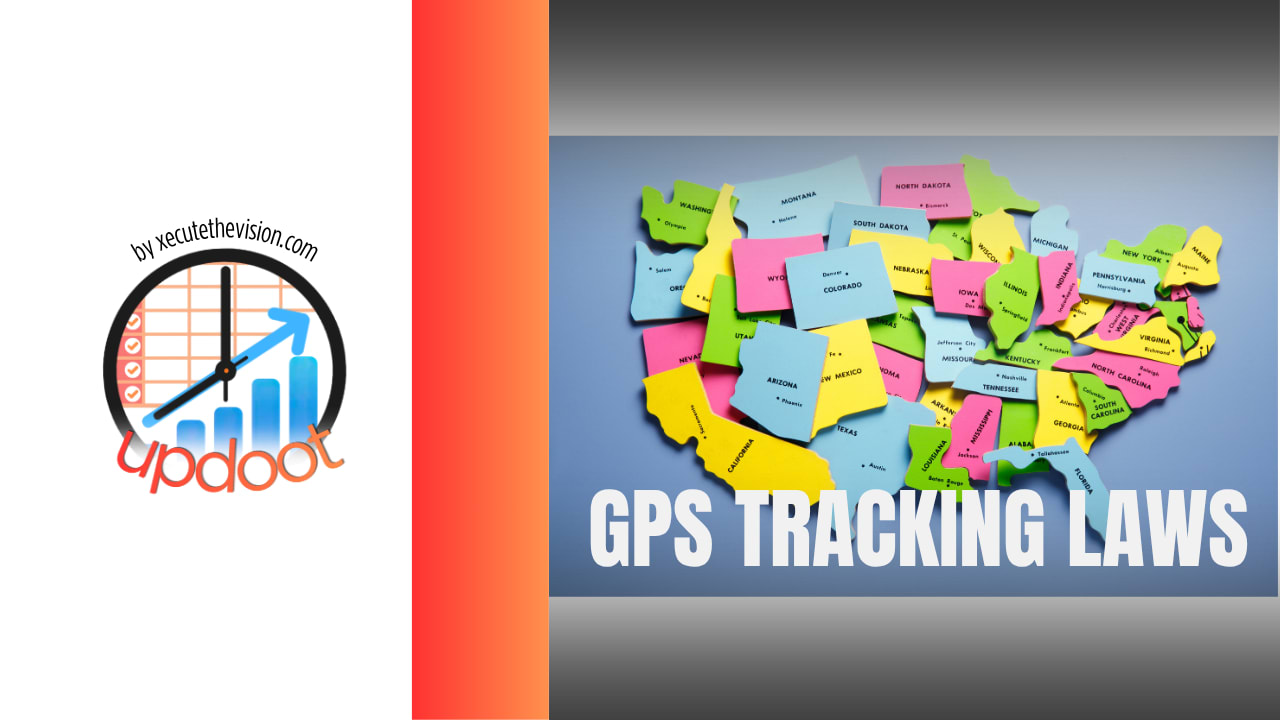
There is no single national GPS tracking law that governs private employers, so the rules come from a mix of state privacy statutes, electronic monitoring laws, and anti-stalking laws. It helps to sort states into four rough tiers based on how much they restrict employer tracking.
Strict states have a GPS-specific statute paired with an explicit employer notice requirement. California and New Jersey are the clearest examples: California bars tracking without consent under its penal code, and New Jersey requires written notice before tracking either a company-owned or an employee-owned vehicle. Moderate states, the largest group, have a real tracking-device or anti-stalking statute on the books that bars placing a tracker or using GPS to follow someone without consent, even though it was not written with employers specifically in mind; company vehicles are still generally trackable with notice. Permissive states have no GPS-specific statute at all, so tracking company vehicles for business reasons is broadly allowed. A small handful of states have no specific tracking law identified, where general privacy or harassment statutes are the only backstop.
There is no federal GPS tracking statute for private employers; the U.S. Department of Labor's Fair Labor Standards Act governs hours and pay but does not regulate location tracking, and the Fourth Amendment protections from cases like United States v. Jones apply to government searches, not private employers. That leaves state law to do the work, and the table below sorts all 50 states accordingly. The tier is a general orientation, not a substitute for reading the statute, which is why each state name links directly to its actual tracking, stalking, or privacy statute on an official government source wherever one exists.
GPS Tracking Laws by State
Tap any state to open the relevant statute or state code. Consent and notice notes reflect the most common employer scenario: a fleet or field team using vehicles or mobile devices for work.
| State | Tier | Employer takeaway |
|---|---|---|
| Alabama | None | No GPS-specific statute; unauthorized surveillance may fall under trespass/privacy law (Ala. Code §13A-11-32). |
| Alaska | Moderate | Alaska Code §11.41.270(h) treats GPS tracking without knowledge or consent as stalking. |
| Arizona | Moderate | Ariz. Rev. Stat. §13-2923 makes unauthorized continuous GPS surveillance a form of stalking. |
| Arkansas | Permissive | No GPS-specific statute. Company vehicles trackable without consent; personal vehicles need consent. |
| California | Strict | Penal Code §637.7 bars tracking without consent; company ownership implies consent but employees must be informed. |
| Colorado | Moderate | Vonnie's Law, C.R.S. §18-3-602, bars using a device to repeatedly follow or surveil someone. |
| Connecticut | Moderate | CGS §31-48d requires prior written notice of electronic monitoring; §53a-181f separately bars covert GPS stalking. |
| Delaware | Moderate | 11 Del. C. §1335(8) bars placing a tracking device on a vehicle without the owner's consent. |
| Florida | Moderate | Fla. Stat. §934.425 bars installing a tracking device or app on someone's property without consent. |
| Georgia | None | No GPS-specific employer statute; unauthorized tracking without consent may still carry legal risk. |
| Hawaii | Moderate | H.R.S. §§803-41, 803-42 require a warrant or consent to use a tracking device. |
| Idaho | Permissive | Title 18-6701 covers electronic tracking/interception generally; get consent before tracking a personal vehicle. |
| Illinois | Moderate | 720 ILCS 5/12-7.3 and 5/21-2.5 criminalize tracking a vehicle without consent, except company-owned vehicles. |
| Indiana | Moderate | Ind. Code §35-46-8.5-1 bars GPS tracking without consent outside law enforcement or family exceptions. |
| Iowa | Moderate | Iowa Code §708.11A bars unauthorized placement of a GPS device without a legitimate purpose or consent. |
| Kansas | Moderate | Senate Bill 217 bars using a GPS tracking device to stalk a person's location or movements. |
| Kentucky | Moderate | KRS §508.152 makes it unlawful to place a tracker on a vehicle or track a person without consent. |
| Louisiana | Moderate | La. R.S. §14:323 bars using a tracking device to determine a person's location without consent. |
| Maine | Moderate | Title 17-A §210-A bars following or tracking another person by device; a 2026 surveillance-notice law also applies, excluding GPS on employer-owned vehicles. |
| Maryland | Moderate | Md. Code, Crim. Law §3-802 bars using a device to track someone's location without consent (stalking). |
| Massachusetts | None | No GPS-specific statute; criminal harassment law (ALM GL ch. 265 §43A) may apply to a pattern of covert tracking. |
| Michigan | Moderate | MCL 750.539l bars placing a tracking device on a vehicle without the owner's consent. |
| Minnesota | Moderate | Minn. Stat. §626A.35 bars using a tracking device without a court order or consent. |
| Mississippi | Moderate | Miss. Code §97-3-107 treats GPS tracking that follows someone in a way that causes distress as stalking. |
| Missouri | Moderate | Mo. Rev. Stat. §455.095 bars installing a device on someone's vehicle without consent, absent a caretaking exception. |
| Montana | Moderate | Montana requires consent or a warrant to track a person's location; House Bill 603 (2013) governs law enforcement use. |
| Nebraska | None | No GPS-specific statute identified; general privacy and stalking law may still apply. |
| Nevada | Moderate | Nevada AB356 bars installing a tracking device on another person's vehicle without consent. |
| New Hampshire | Moderate | RSA §644-A:4 bars placing an electronic device on someone's vehicle to obtain location data without consent. |
| New Jersey | Strict | N.J. Stat. §34:6B-22 requires written notice before tracking, covering both company-owned and employee-owned vehicles. |
| New Mexico | Moderate | N.M. Stat. §30-3A-3 (anti-stalking) bars using a device to track or surveil someone without authorization. |
| New York | Moderate | Civil Rights Law §52-c requires written notice of electronic monitoring; treat GPS as covered. |
| North Carolina | Moderate | N.C.G.S. §14-196.3 (cyberstalking) bars knowingly using a GPS device to track someone without consent. |
| North Dakota | Moderate | N.D. Cent. Code §12.1-17-07.1 covers unauthorized GPS tracking of a person's movement under stalking law. |
| Ohio | None | No GPS-specific statute; §2903.211 (menacing by stalking) covers electronic devices used to transmit location. |
| Oklahoma | Moderate | 21 Okla. Stat. §1173 bars using GPS to track someone's location without consent, with a lawful-use exception. |
| Oregon | Moderate | ORS §163.715 makes it a crime to attach a GPS device to a vehicle without the owner's consent. |
| Pennsylvania | Moderate | 18 Pa. C.S. Ch. 57, Subch. D requires consent before placing a mobile tracking device on a vehicle. |
| Rhode Island | Moderate | R.I. Gen. Laws §11-69-1 bars placing an electronic tracking device on a vehicle without consent. |
| South Carolina | Moderate | S.C. Code §17-30-50 bars using a tracking device to monitor someone's location without authorization. |
| South Dakota | Moderate | S.D.C.L. §23A-35-4.3 requires a warrant for GPS tracking, aimed primarily at law enforcement use. |
| Tennessee | Moderate | Tenn. Code Ann. §39-13-606 bars attaching a tracking device to a vehicle without the owner's consent. |
| Texas | Moderate | Penal Code §16.06 bars installing a tracking device in a vehicle without the owner or lessee's consent. |
| Utah | Moderate | Utah Code §76-9-408 bars installing a tracker on a vehicle you don't own or lease without permission. |
| Vermont | Moderate | Vermont's anti-stalking law bars tracking individuals without consent using any type of device. |
| Virginia | Moderate | Va. Code §18.2-60.5 bars using an electronic tracking device to track someone's location without consent. |
| Washington | Moderate | RCW §9A.90.130 (cyberstalking) bars installing or monitoring a tracker that would reasonably cause fear. |
| West Virginia | Moderate | W. Va. Code §61-3-50 makes unauthorized GPS tracking a misdemeanor, escalating to a felony on repeat offenses. |
| Wisconsin | Moderate | Wis. Stat. §940.315 makes placing a GPS device on someone's vehicle without consent a Class A misdemeanor. |
| Wyoming | Moderate | Wyo. Stat. §6-2-506 bars using GPS or other electronic devices to surveil someone without authorization. |
A quick note on the grey "None" states, which include Alabama, Georgia, Massachusetts, Nebraska, and Ohio. The absence of a GPS-specific statute does not mean tracking is a free-for-all. General privacy, surveillance, and anti-stalking laws still apply, and a covert tracker placed on someone's personal property can create real exposure. Treat "no specific law" as "proceed carefully," not "anything goes."
Company Vehicles vs. Personal Vehicles
If you remember one distinction from this entire guide, make it this one: who owns the vehicle. Ownership is the single biggest factor in whether GPS tracking is clearly legal or legally risky, and it cuts across nearly every state's approach.
When the company owns the vehicle, the employer generally has the right to know where its own asset is. Courts have long recognized that a business can monitor company-owned vehicles used for work, which is what makes fleet tracking systems viable in the first place. The tracking still needs a legitimate business purpose, such as routing, safety, dispatch, or theft prevention, and in notice states you still have to tell employees. But the core right to track your own vehicle during work is well established.
Personal vehicles are a different world. When an employee uses their own car for deliveries, sales calls, or service runs, the employer does not own the asset and cannot simply attach a tracker to it. A large share of states make it a crime to place a tracking device on a vehicle you do not own without the owner's consent. That means you need explicit, ideally written, consent before any tracking begins, and you should limit that tracking strictly to work hours. Following an employee's personal car on evenings and weekends is exactly the fact pattern that has produced privacy lawsuits, including the well-known case where a state agency secretly tracked an employee's personal car around the clock, including on a family vacation, and a court found the round-the-clock surveillance went too far.
The practical rule of thumb: track company assets freely (with notice), track personal assets only with written consent and only during the workday, and when in doubt, don't track the personal vehicle at all. Reimburse mileage instead and keep location tracking on company-owned equipment.
What Happens When Tracking Crosses State Lines
Back to the border scenario from the top. Say a business is based in a permissive state but its drivers routinely cross into a strict-consent state, or the reverse. Which state's law controls?
There is no tidy answer that works everywhere, because more than one state can have a legitimate interest, especially the state where the employee lives and works. The safe operating principle is to comply with the strictest state you regularly touch. If your team crosses into a strong-consent state like California, or an employee is based there, build your entire program around that state's requirements even when the vehicle is physically somewhere more permissive. A vehicle does not shed the stricter state's expectations just by driving across a line, and organizing your policy around the most demanding jurisdiction means you are compliant everywhere else by default.
For multistate operations this can mean a bit more paperwork, clearer written consent, and tighter limits on off-hours tracking than a single-state business would need. That is a small price compared to defending a privacy claim. If your footprint spans several states with meaningfully different rules, this is the moment to get an employment attorney to review your policy against every state you operate in.
How to Write a GPS Tracking Policy
A written policy is what turns GPS tracking from a legal question mark into a defensible, transparent business practice. It also does something quieter but just as valuable: it tells your team exactly what is and is not being watched, which prevents the resentment that grows when people suspect they are being monitored in secret. Here is what a solid policy covers.
1. State the purpose plainly
Open with why you track. Legitimate reasons include routing and dispatch efficiency, customer arrival estimates, driver safety, fuel and mileage accuracy, and theft recovery. Naming the purpose builds trust and also anchors the legal justification. Vague or punitive framing does the opposite.
2. Define what and when
Spell out exactly what is captured (location, route, speed, stops) and when (work hours only, company vehicles or company devices only). Explicitly commit to not tracking outside work hours. This single boundary prevents the majority of privacy problems.
3. Get written, signed consent
Even where a state does not strictly require it, obtain written consent and have employees sign an acknowledgment. In notice states this is mandatory; everywhere else it is your best protection against a future dispute. Include how data is collected, stored, and used.
4. Explain data use, access, and security
Say who can see the data (dispatch, a fleet manager, HR) and who cannot. Limit access to the people who genuinely need it, and describe how the data is secured against misuse or a breach. Employees are far more comfortable with tracking when they know the data is not floating around the whole company.
5. Set consequences and keep it current
Define what happens if someone disables or tampers with a device, and also hold managers accountable for handling the data responsibly. Then schedule a review, because these laws move. Maine's new employer surveillance law taking effect in 2026 is a good reminder that a policy written two years ago may already be out of date.
Keep policies, HR, and time tracking in one place
Store your GPS policy, collect signed acknowledgments, and track hours and locations for field teams without stitching five tools together. Updoot brings HR, scheduling, and time tracking into one platform built for small business.
Start Free TodayDoes Your Time Tracking Software Use GPS?
Plenty of time tracking tools include optional GPS features, and it is worth understanding how they differ from a hardware tracker bolted to a van. Most software-based location features run on the employee's own mobile device and are tied to clocking in and out: a location stamp on a punch, a breadcrumb trail during a shift, or a geofence that only lets someone clock in once they have arrived at the job site. Because these features live on a personal or company phone rather than on the vehicle, and because they usually only run while an employee is on the clock, they tend to sit more comfortably within the work-hours boundary that keeps tracking defensible.
The same principles from this guide still apply. Whether location comes from a fleet tracker or a phone app, you want a clear written policy, employee consent, tracking limited to work time, and access limited to the people who need it. Handled that way, GPS becomes what it should be: a tool for running a tighter, safer, more accountable operation, not a source of legal risk or team distrust.
If you are evaluating how to bring time tracking, scheduling, and HR together in one place, and keep your GPS policy and acknowledgments alongside them, that is exactly the kind of workflow Updoot is built to simplify.
Frequently Asked Questions
In most states, an employer can legally track a company-owned vehicle or device used for work, as long as the tracking serves a legitimate business purpose and the employer follows any state notice rules. The picture changes when the employer tracks a personal vehicle or personal phone. Many states require the owner's consent before a tracking device goes on a personal vehicle, and tracking someone outside of work hours can create privacy exposure even when the device itself is legal.
There is no single federal law that requires it, but several states do. Connecticut, Delaware, and New York require prior written notice before electronic monitoring, and other states effectively require it through consent rules. Even where notice is not strictly mandated, telling employees in writing is the safest approach because it removes any argument that the tracking was secret.
Only with the owner's consent in most states, and even then tracking should be limited to work hours. A large number of states make it a crime to place a tracking device on a vehicle you do not own without permission. When an employee uses their own car for deliveries or service calls, get written consent, restrict tracking to the workday, and turn it off when the shift ends.
When a vehicle moves between states with different rules, the safest approach is to comply with the stricter state's requirements, especially if the employee is based there. A truck that starts the day in a strict-consent state does not shed those obligations by driving into a permissive one. Businesses that regularly cross state lines should build their policy around the most demanding state they touch.
Some does. Many time tracking tools offer optional GPS features such as location stamps on clock-ins or geofenced punch areas, usually tied to an employee's own mobile device rather than a hardware tracker on a vehicle. These features are typically opt-in and are best paired with a clear written policy so employees understand what is captured and when.