
Business Growth Consultant for Small Businesses
A business growth consultant in Michigan can help when your business has hit the point where working harder no longer moves the numbers.
Maybe revenue is inconsistent, operations feel disorganized, or the team is not executing the way you expect. You know there is more potential, but you need structure, clarity, and a way to turn plans into results.
Here is the part most people do not talk about: hiring the wrong consultant costs time, money, and momentum. Below is what a growth consultant actually does, when to hire one, what to look for, the pitfalls to avoid, how to figure out what your business really needs, and a free scorer that ranks your biggest growth gaps.
What Is a Business Growth Consultant?
A business growth consultant helps companies increase revenue, improve operations, and build systems that support long-term scalability.
They are not just advisors. At their best, they act as a second set of eyes on your business, identifying inefficiencies, missed opportunities, and structural gaps that are holding you back.
Their role typically includes:
- Evaluating your current business model
- Identifying growth opportunities
- Improving operational systems
- Aligning your team around clear goals
- Helping implement processes that scale
The key word here is implementation.
Anyone can give advice. A true growth consultant helps you execute.
| Growth Consultant | Operations Consultant | Fractional COO | |
|---|---|---|---|
| Main focus | Revenue, profitability, and the systems that support growth | Processes, tools, and operational efficiency | Ongoing leadership of operations and the leadership team |
| Engagement | Project or retainer | Project or defined scope | Part-time, ongoing |
| Best when | Growth has stalled or become unprofitable | Operations cannot keep up with demand | You need an executive but not full-time |
Why Businesses in Michigan Seek Growth Consultants
Michigan has a wide range of businesses, from small local operations to rapidly growing companies. Many reach a point where growth becomes harder, not easier.
This usually happens when:
- The business outgrows its original systems
- Founders are stretched too thin
- Teams expand without clear structure
- Revenue increases but profitability does not
- Processes become inconsistent
At this stage, growth is no longer about working harder. It is about working smarter with better systems.
When You Should Hire a Business Growth Consultant
Timing matters.
If you wait too long, problems compound. If you move too early, you may not be ready to implement changes.
You should strongly consider hiring a consultant when:
- You feel stuck despite putting in more effort
- Your team is growing but performance is inconsistent
- You are making decisions without clear data
- Operations feel reactive instead of structured
- You spend more time fixing problems than moving forward
- You have goals but no clear execution plan
The biggest signal is this:
You know what you want to achieve, but you do not have a system to get there.
Free Growth Priorities Scorer
Free Growth Priorities Scorer
Rate how each area of your business works today (1 means broken, 5 means strong) and how important it is to your growth goals (1 means low, 5 means critical). The scorer ranks the biggest gaps so you know exactly what to bring to a growth consultant, or what to fix first yourself. Nothing you enter is saved or sent anywhere.
| Area | Today (1 to 5) | Importance (1 to 5) | Priority Score |
|---|---|---|---|
| Revenue consistency | 0 | ||
| Profitability | 0 | ||
| Operations and processes | 0 | ||
| Team accountability | 0 | ||
| Data for decisions | 0 | ||
| Systems and tools | 0 | ||
| Clear growth goals | 0 |
Your Top Three Priorities
What to Look For in a Business Growth Consultant
This is where most businesses make mistakes.
They focus on personality, branding, or surface-level expertise instead of what actually drives results.
Here is what you should prioritize.
1. A Focus on Execution, Not Just Ideas
Many consultants are great at strategy.
Fewer are effective at execution.
You want someone who:
- Breaks strategy into actionable steps
- Defines clear responsibilities
- Helps ensure work actually gets done
If a consultant cannot connect high-level goals to daily tasks, nothing changes.
This is where systems like Updoot become essential. Execution requires:
- Tasks tied to outcomes
- Clear ownership
- Visibility into progress
Without that, strategy stays theoretical.
2. A Structured Approach to Operations
Growth without structure leads to chaos.
A strong consultant will help you build:
- Defined roles and responsibilities
- Standard operating procedures
- Repeatable workflows
- Clear accountability systems
If your business relies on memory, conversations, or informal processes, it will not scale effectively.
Updoot supports this by centralizing SOPs, tasks, and workflows into one system so your operations are consistent and repeatable.
3. Data-Driven Decision Making
Guesswork is expensive.
A good consultant helps you track and understand:
- Revenue trends
- Profitability by product or service
- Employee performance
- Time allocation
- Efficiency gaps
You should be able to answer questions like:
- Where are we making money?
- Where are we losing time?
- What is actually driving growth?
Without data, you are reacting instead of leading.
4. Alignment Between People, Process, and Performance
Growth is not just about increasing sales. It is about aligning your entire business.
This includes:
- Clear job descriptions
- Defined expectations
- Performance tracking
- Regular feedback
When alignment is strong:
- Teams move faster
- Communication improves
- Accountability increases
When alignment is missing:
- Work becomes inconsistent
- Managers spend time correcting issues
- Growth slows down
Updoot helps connect these elements by linking roles, tasks, performance, and goals in one place.
5. Simplicity Over Complexity
Many consultants overcomplicate growth.
They introduce:
- Too many frameworks
- Too many tools
- Too many changes at once
This leads to confusion and low adoption.
A strong consultant simplifies your business. They focus on what actually drives results and eliminate unnecessary complexity.
Questions to Ask a Consultant Before You Hire
- Tell me about a business like mine that you helped grow. What changed, and how did you measure it?
- How do you turn strategy into weekly tasks and owners?
- What will you need from me and my team each week?
- What will we be able to run on our own when the engagement ends?
- How do you price your work, and what exactly is included?
The Biggest Pitfalls When Hiring a Business Growth Consultant
Even experienced business owners make these mistakes.
Avoid them.
Pitfall 1: Hiring Based on Personality
It is easy to choose someone you like.
It is harder to choose someone who will challenge you and improve your business.
Focus on:
- Results
- process
- ability to execute
Not just communication style.
Pitfall 2: Expecting the Consultant to Do the Work
A consultant guides and supports.
They do not run your business.
If you are not prepared to:
- implement changes
- hold your team accountable
- follow through on plans
Then results will not happen.
Pitfall 3: Not Having Systems to Support Growth
This is one of the biggest hidden issues.
Consultants can provide:
- strategy
- plans
- recommendations
But without systems, execution breaks down.
This is why platforms like Updoot are critical.
They provide the infrastructure for:
- task management
- project tracking
- SOPs
- performance visibility
So strategy turns into action.
Pitfall 4: Trying to Fix Everything at Once
Growth takes focus.
Trying to:
- overhaul operations
- change marketing
- restructure teams
All at once leads to burnout and failure.
A good consultant prioritizes.
Pitfall 5: Ignoring Team Buy-In
Your team is responsible for execution.
If they:
- do not understand the changes
- do not see the value
- are not held accountable
Then even the best strategy fails.
How to Evaluate What Your Business Actually Needs
Before hiring a consultant, you need clarity.
Ask yourself these questions.
1. Where Are We Losing Time?
- Manual processes
- Repetitive tasks
- Constant follow-ups
Time inefficiency is a major growth blocker.
2. Where Is Accountability Breaking Down?
- Missed deadlines
- Unclear ownership
- Inconsistent performance
This is usually a systems issue, not a people issue.
3. What Decisions Are We Guessing On?
- Pricing
- hiring
- project timelines
- resource allocation
If you are guessing, you need better data.
4. What Does Growth Actually Look Like for Us?
Be specific.
- Revenue targets
- team size
- operational structure
Without a clear definition, growth becomes vague and difficult to achieve.
Free and Low-Cost Growth Help in Michigan
Before, or alongside, a paid consultant, Michigan business owners have several free or low-cost resources worth using:
- Michigan Small Business Development Center (SBDC): no-cost business consulting, market research, and training for Michigan small businesses.
- U.S. Small Business Administration local assistance: find the SBA district office, lenders, and resource partners that serve your part of Michigan.
- SCORE: free one-on-one mentoring from experienced business owners and executives, with chapters across the state.
These are great for planning, financing, and general guidance. A growth consultant adds hands-on help building the systems and accountability that turn those plans into results.
Why Systems Matter More Than Advice
Here is the truth:
Advice does not scale your business. Systems do.
You can have the best strategy in the world, but if your business runs on:
- spreadsheets
- emails
- disconnected tools
Execution will always fall short.
That is why modern business growth focuses on building systems that support consistent execution.
How Updoot Supports Business Growth
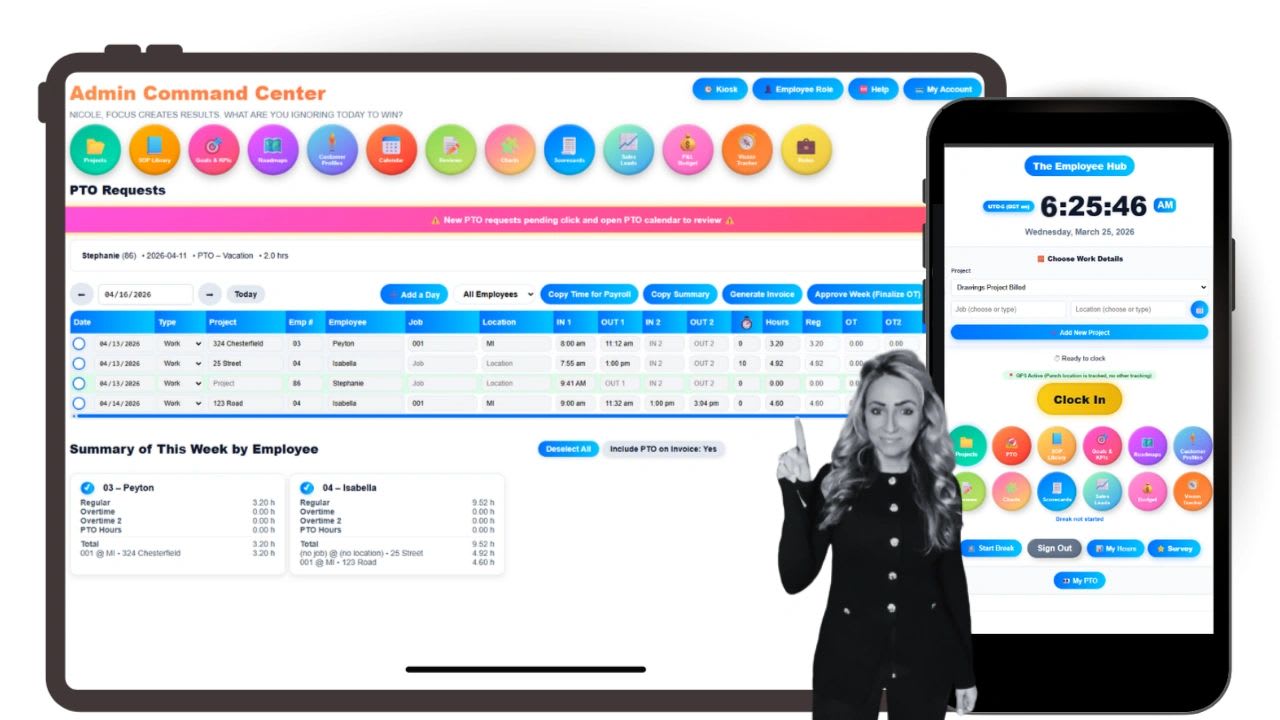
Updoot acts as the operational backbone that supports what a growth consultant is trying to build.
It helps businesses move from ideas to execution.
1. Turning Strategy Into Action
- Assign tasks with clear ownership
- Set deadlines and expectations
- Track progress in real time
2. Creating Operational Structure
- Build and manage SOPs
- Standardize workflows
- Define roles and responsibilities
3. Improving Accountability
- Provide visibility into performance
- Track progress against goals
- Reduce reliance on constant follow-up
4. Connecting Work to Results
- Track time by project
- Understand efficiency
- Link work to outcomes
5. Centralizing Your Business Systems
Instead of juggling multiple tools, Updoot brings everything together in one place.
This reduces:
- confusion
- duplication
- inefficiency
And creates a single source of truth for your business.
Updoot is business management software priced at $5 per user per month with every feature included, including project management, SOPs, KPIs, time tracking, and performance tools.
Work With Nicole Hullihen
Nicole Hullihen, founder of XecuteTheVision and Updoot, is a former COO with an MBA who helps growing businesses build the systems, structure, and accountability that make growth repeatable. If your business is growing faster than your operations can keep up, contact Nicole or connect on LinkedIn.
Final Thoughts
Hiring a business growth consultant in Michigan can accelerate your business in a meaningful way.
But only if you approach it correctly.
Focus on:
- execution, not just ideas
- systems, not just strategy
- alignment, not just activity
Growth is not about doing more.
It is about doing the right things consistently with the right structure in place.
Tools like Updoot play a critical role in making that possible by connecting your operations, team, and performance into one system.
Because at the end of the day, growth does not come from knowing what to do.
It comes from actually doing it.
Opens in Google Drive. View and download for free.
Related Reading
Small Business Operations Consultant: Building Systems That Scale →
How to Hire a Fractional COO: The Complete Guide →
How to Hire a COO: The Free Chief Operating Officer Hiring Guide →
Frequently Asked Questions About Business Growth Consultants
What does a business growth consultant actually do?
A business growth consultant helps companies increase revenue, improve operations, and build systems that support long-term growth. That includes evaluating the business model, finding growth opportunities, improving operations, aligning the team around clear goals, and helping implement processes that scale.
When is the right time to hire a business growth consultant?
When you feel stuck despite more effort, your team is growing but performance is inconsistent, decisions are made without clear data, operations feel reactive, or you have goals but no clear plan to reach them.
What is the most important thing to look for in a growth consultant?
A focus on execution, not just ideas. Look for someone who turns strategy into specific tasks with clear owners and helps make sure the work actually gets done.
What are the biggest mistakes when hiring a growth consultant?
Hiring based on personality instead of results, expecting the consultant to do the work, not having systems to support execution, trying to fix everything at once, and ignoring team buy-in.
Are there free business growth resources in Michigan?
Yes. The Michigan Small Business Development Center offers no-cost consulting and training, SCORE provides free mentoring, and the SBA's local assistance finder connects you with district offices and resource partners.
Why do businesses need systems and not just strategy?
Advice does not scale a business, systems do. Even the best strategy fails when execution depends on spreadsheets, emails, and disconnected tools. Systems create consistent execution, clear ownership, and visibility into progress.