
Free Flextime Manager Policy and Request Templates

Here is a free flextime policy you can use as a manager and the request templates for employees. The traditional 9-to-5 workday is quickly becoming outdated. Today’s employees want flexibility. Managers want productivity. And businesses want both without losing control. That’s where flextime comes in.
But here’s the reality: Most companies say they offer flexibility… and then execute it poorly.
This guide will show you:
- What flextime actually is
- How it works in real businesses
- The pros and cons
- And how to implement it correctly (with templates you can use today)
What Is Flextime?
Flextime (flexible working hours) allows employees to choose when they start and end their workday—within agreed limits.
Instead of a fixed schedule like: 👉 9:00 AM – 5:00 PM
Employees might work:
- 7:00 AM – 3:00 PM
- 10:00 AM – 6:00 PM
- 8:30 AM – 4:30 PM
👉 The key difference: The total hours stay the same, only the timing changes.
How Flextime Works
Most flextime setups include two parts:
1. Core Hours (Required)
These are hours when everyone must be available.
Example:
- 10:00 AM – 2:00 PM
👉 Meetings, collaboration, and team overlap happen here.
2. Flexible Hours
Employees choose when they work outside core hours.
Example:
- Start anytime between 7:00–10:00 AM
- Finish anytime between 3:00–7:00 PM
🧩 Example Flextime Schedule
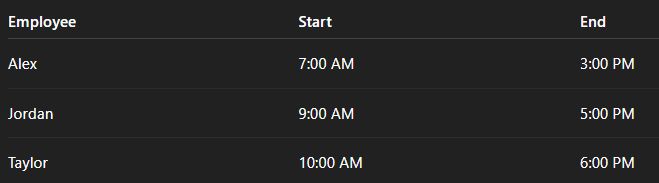
👉 Everyone overlaps during core hours but keeps flexibility.
Why Flextime Is Growing Fast
This isn’t just a “nice to have” anymore—it’s becoming expected.
👍 1. Better Work-Life Balance
Employees can:
- Avoid rush hour
- Handle personal responsibilities
- Work during their most productive hours
👍 2. Increased Productivity
Not everyone works best at 9 AM.
Flextime allows people to:
- Work when they’re most focused
- Reduce burnout
- Produce better results
👍 3. Higher Employee Retention
Flexibility is now one of the top reasons employees stay or leave.
👍 4. Wider Talent Pool
You can hire:
- Parents
- Caregivers
- People in different time zones
The Downsides of Flextime
Let’s be real, this can go sideways if not managed properly.
👎 1. Lack of Structure
Without guidelines:
- People work inconsistent hours
- Communication breaks down
👎 2. Coverage Gaps
If everyone chooses different schedules:
- Customers may not get support
- Teams may struggle to collaborate
👎 3. Harder Time Tracking
If you’re not tracking properly:
- Hours get misreported
- Payroll becomes inconsistent
- Productivity becomes unclear
👎 4. Manager Anxiety (Big One)
Managers often worry: 👉 “Are people actually working?”
The Key to Making Flextime Work
Flextime only works if you shift from:
❌ “Tracking time presence” ➡️ to ✅ “Tracking outcomes and visibility”
What You Need in Place:
- Clear expectations
- Defined core hours
- Reliable time tracking
- Visibility into work being done
👉 This is where most companies fail, they allow flexibility without systems.
Managing Flextime in Microsoft Excel
You can manage flextime in spreadsheets, but it gets messy fast:
- Different start/end times
- No real-time visibility
- Hard to track productivity
- Manual updates
A Better Way to Manage Flextime
Instead of guessing:
Tools like Updoot allow you to:
- Track when employees are working
- See hours in real time
- Tie time to projects and output
- Maintain flexibility without losing control
👉 Flexibility + visibility = sustainable operations
When Should You Use Flextime?
Flextime works best if:
✅ Work is outcome-based ✅ Employees are self-managed ✅ Roles don’t require strict shift coverage ✅ You have systems to track time and performance
Not ideal for:
- Retail or shift-based work
- Roles requiring constant coverage
- Environments with strict hourly compliance
Flextime vs Other Work Models
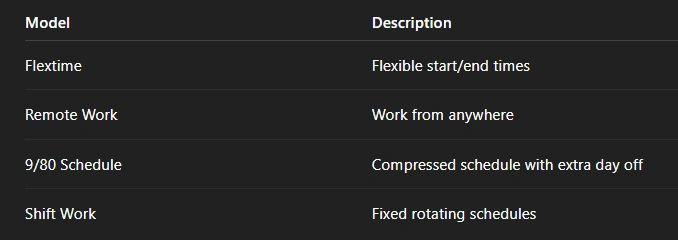
👉 Flextime is about when you work, not where.
📄 COPY-PASTE TEMPLATE: Employee Flextime Request
Here’s a professional, simple request employees can use:
Writing
Subject: Request for Flexible Work Schedule
Hi [Manager Name],
I’d like to request a flexible work schedule adjustment to better align my working hours with my productivity and personal responsibilities.
I am proposing the following schedule:
- Start time: [e.g., 7:30 AM]
- End time: [e.g., 3:30 PM]
I will continue to work my full required hours and will be available during core team hours ([insert core hours, e.g., 10:00 AM – 2:00 PM]) for meetings and collaboration.
I’m confident this adjustment will allow me to maintain (or improve) my productivity while continuing to meet all expectations and deadlines.
Please let me know if you’d like to discuss this further or if a trial period would be helpful.
Thank you for considering my request.
Best, [Your Name]
📄 COPY-PASTE TEMPLATE: Flextime Manager Policy
Here’s a clean, practical policy you can implement immediately:
Flextime Policy
Purpose This policy provides employees with flexibility in their work schedules while ensuring business operations, collaboration, and productivity remain effective.
Core Working Hours All employees are required to be available during core hours: [Insert core hours, e.g., 10:00 AM – 2:00 PM]
Flexible Hours Employees may choose their start and end times outside of core hours, provided they complete their required daily or weekly hours.
Schedule Guidelines
- Employees must communicate their standard working schedule to their manager
- Any changes to schedules should be approved in advance
- Employees must remain accessible during their scheduled hours
Performance Expectations
- All deadlines, deliverables, and responsibilities must be met
- Flexibility does not reduce workload expectations
- Performance will be evaluated based on results and output
Time Tracking All employees are required to accurately track their working hours using the company’s time tracking system.
Availability & Communication
- Employees should respond to messages within a reasonable timeframe during working hours
- Teams should ensure adequate coverage for business needs
Review & Adjustments Managers reserve the right to adjust or revoke flexible schedules if business needs or performance issues arise.
Approval Flextime arrangements are subject to manager approval and may begin with a trial period.
Final Takeaways
- Flextime = flexible start and end times (not fewer hours)
- It improves retention, productivity, and hiring
- It fails without structure and visibility
- Systems matter more than policies
Final Thought (This Is the Real Difference)
Flextime doesn’t fail because of employees…
👉 It fails because companies don’t track it properly.
If you can’t see:
- Who’s working
- What they’re working on
- How time connects to output
Then flexibility turns into chaos.
Frequently Asked Questions
What is flextime and how is it different from a standard work schedule? Flextime allows employees to choose when they start and end their workday within agreed limits while keeping total hours the same. Instead of a fixed 9 to 5, an employee might work 7 to 3 or 10 to 6. The timing changes but the total hours do not.
What are core hours in a flextime schedule? Core hours are the required window when all employees must be available regardless of their individual schedule. For example a company might set core hours from 10 AM to 2 PM so meetings, collaboration, and team overlap happen consistently even when employees have different start and end times.
What types of roles are best suited for flextime? Flextime works best for outcome-based roles where employees are self-managed and do not require strict shift coverage. It is not well suited for retail, customer-facing roles requiring continuous coverage, or environments with strict hourly compliance requirements.
What are the biggest risks of implementing flextime? The biggest risks are lack of structure leading to inconsistent hours and communication breakdowns, coverage gaps when employees choose conflicting schedules, inaccurate time tracking that creates payroll problems, and managers losing visibility into whether work is actually getting done.
Why do most flextime programs fail? Most flextime programs fail not because of employees but because companies allow flexibility without putting systems in place to track it. Without clear expectations, defined core hours, reliable time tracking, and visibility into actual output, flexibility quickly turns into operational chaos.
How should an employee request a flextime schedule? An employee should submit a written request to their manager that includes their proposed start and end times, confirmation that they will work their full required hours, confirmation of availability during core hours, and a note on how the arrangement will maintain or improve their productivity. Offering a trial period in the request often makes approval easier.