
Billing Format for Clients: Free Template and Examples
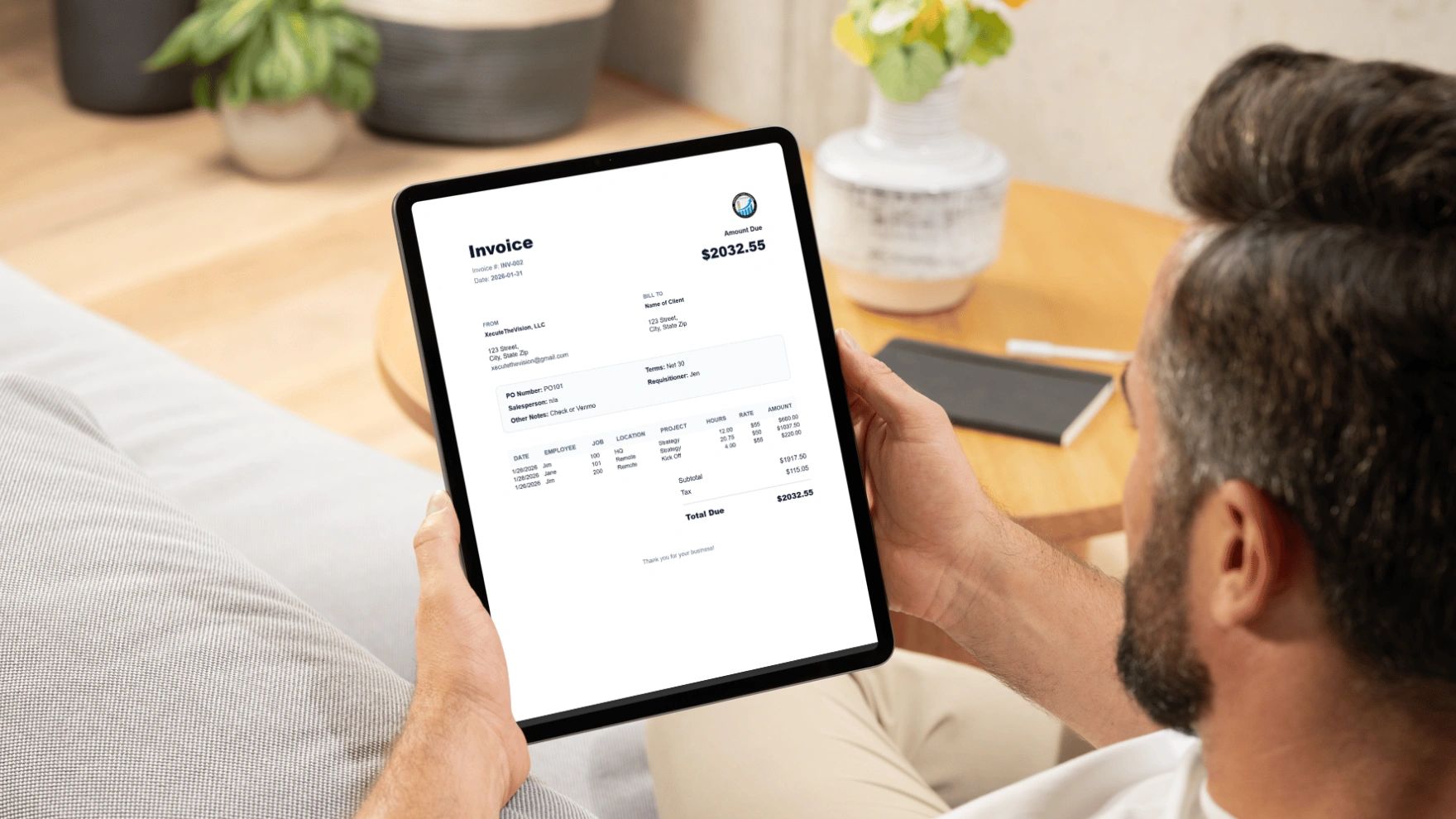
Download our free billing format for clients template below or plug your info into the free invoice generator. If you have ever sent an invoice and then waited, followed up, waited again -- you already understand why your billing format matters. The format of your invoice is not just a document layout. It is a communication tool, a compliance tool, and a payment accelerator. A poorly structured billing format creates confusion, disputes, delays, and lost revenue. A strong billing format increases clarity, builds professionalism, and shortens your payment cycle.
This guide covers exactly what a billing format for clients must include, how to structure it by business type, the most common mistakes that delay payment, and a free interactive invoice builder you can use right now to generate and print a formatted invoice.
What Is a Billing Format for Clients?
A billing format is the structured layout and organization of information in your invoice. It determines:
- How services or products are described
- How pricing is calculated and displayed
- What payment terms are communicated
- How totals and taxes are presented
- How easy it is for clients to approve and pay
It applies whether you are a freelancer, agency, contractor, consultant, SaaS company, or product-based business. Your billing format should remove friction, not create it.
The 5 Core Purposes of a Strong Billing Format
1. Clarity
Clients should instantly understand what they are paying for, how the total was calculated, and when payment is due. If they need to email you for clarification, you have already added friction and extended your payment cycle.
2. Legal and Tax Compliance
Your billing format often becomes part of your financial records. Depending on your industry and location, it may need to include business registration details, a tax ID or VAT number, applicable taxes, and specific payment terms. Missing required information can cause accounting issues for your client and delay processing.
3. Professional Credibility
Your invoice reflects your brand. Clean formatting signals stability and operational maturity. A sloppy invoice tells clients you may run your operations the same way.
4. Faster Payment Cycles
Clear line items and visible due dates reduce back-and-forth communication. That directly shortens your Days Sales Outstanding (DSO) -- the number of days between sending an invoice and receiving payment.
5. Dispute Prevention
The clearer the structure, the fewer misunderstandings about scope, hours, rates, or billing period. Most invoice disputes trace back to ambiguous descriptions, not actual disagreements about the work.
Essential Elements Every Invoice Must Include
1. Header Section
- Your business name and logo
- Your contact details (email, phone, address)
- Invoice number -- always sequential, never skipped
- Invoice date
- Payment due date
Tip: Always include an explicit due date. "Net 30" without a specific date gives clients room to interpret start date differently. Write "Due: April 15, 2026" and remove the ambiguity entirely.
2. Client Information
- Client company name
- Billing address
- Contact person or accounts payable email
- Purchase order number if applicable -- missing this delays payment in large organizations
3. Itemized Line Items
This is where most billing formats fail. Each line item must include a description of the service or product, quantity or hours, rate, and line total. Avoid vague descriptions like "consulting services" or "monthly work." Use clarity:
- "Marketing strategy consultation -- 8 hours @ $125/hr"
- "Website design -- Phase 2 milestone completion"
- "Monthly retainer -- March 1 through March 31, 2026"
The goal is transparency without overwhelming detail. One clear line per deliverable.
4. Subtotal, Taxes, and Discounts
Always separate these clearly: subtotal, then discounts if applicable, then tax rate and tax amount, then the final total. Never bury taxes inside line item pricing unless local regulation requires it.
5. Payment Terms and Instructions
State exactly: Net 15 / Net 30 / Net 45, any late payment penalties, accepted payment methods, and the specific payment instructions for each method. If you accept ACH, wire, credit card, or check -- say so. Ambiguity here is one of the most common causes of payment delay.
6. Notes Section
Use this section for a brief thank-you, a reminder of any relevant contract terms, a payment link if you have one, or bank details for wire transfers. Keep it professional and minimal -- it should not look like a second invoice.
The 4 Billing Format Types by Business Model
| Type | Best For | Key Line Items | Common Pitfall |
|---|---|---|---|
| Hourly | Consultants, freelancers | Date, hours, description, rate, line total | Not tracking time properly before billing |
| Fixed Project | Milestone-based work | Milestone name, description, fixed fee, completion reference | Not referencing the contract milestone number |
| Recurring Retainer | Agencies, ongoing services | Service period, monthly fee, optional breakdown summary | Omitting the service period dates |
| Product-Based | Goods and inventory | SKU, product name, quantity, unit price, line total | Missing shipping, handling, or tax line items |
The 5 Billing Format Mistakes That Delay Payment
1. Vague service descriptions -- "Consulting" or "Project work" forces the client to approve something they cannot verify. Approval slows and disputes start.
2. No explicit due date -- Without one, clients default to their own internal payment terms, which are almost always longer than yours.
3. Missing payment instructions -- Never assume the client knows how to pay you. Specify every accepted method with the exact details needed to process each one.
4. Inconsistent invoice numbers -- Gaps in your invoice sequence create accounting confusion for your client and can delay processing in AP systems.
5. Overcomplicated layout -- Too many fonts, colors, and nested tables reduce readability. Clean, simple formatting gets approved and paid faster than elaborate designs.
Your Invoice Is a Sales Tool
Most businesses treat invoices as an afterthought. That is a mistake. Your billing format reinforces your value, your structure, and your operational maturity. A clean, professional invoice communicates: this company is organized. That perception matters -- especially with clients who work with multiple vendors -- because it signals you will be easy to do business with long term.
When to Update Your Billing Format
Review your billing format when you change your pricing structure, add new services, move from hourly to retainer billing, expand internationally, or when clients keep asking the same clarifying questions about your invoices. If your clients are repeatedly asking the same question, the answer is to fix the invoice, not keep answering the question.
Free Invoice Template and Builder -- Generate and Print Your Invoice
Download our free invoice template in Google Sheets or use the interactive builder below to generate and print a formatted invoice instantly.
Fill in the fields below to build a formatted invoice you can print or save as a PDF. No account required.