
Volunteer Time Off Policy Template (Free, Copy-Paste Ready)
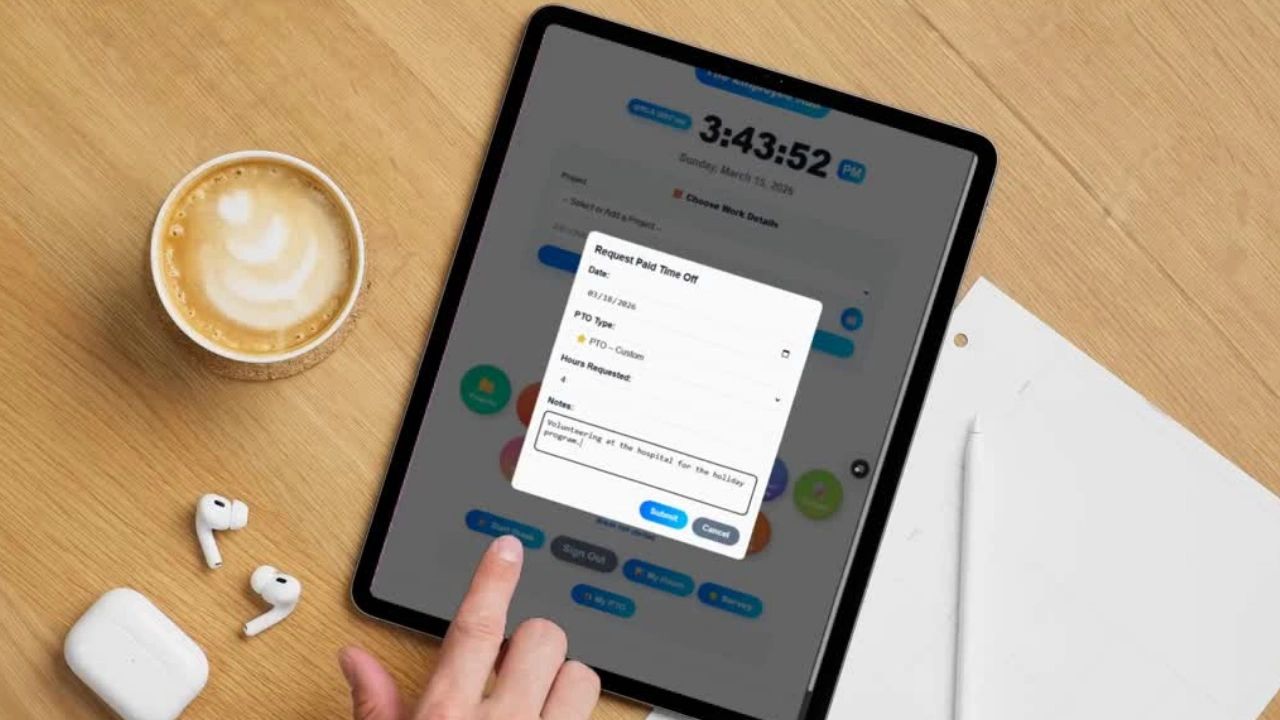
Use and customize our free volunteer time off policy template below, then copy it to your handbook. Volunteer Time Off (VTO) is a policy that gives employees paid time away from work specifically for volunteer and community service activities -- separate from their regular PTO bank. A well-structured VTO policy improves employee engagement, supports recruiting, strengthens company culture, and in some cases opens up grant opportunities for organizations that document employee volunteer hours.
This page includes everything you need to implement a VTO program: what VTO is and how to structure it, the policy questions small businesses get wrong, a complete copy-paste policy document, an employee request form, a manager approval form, and a FAQ accordion covering the most common implementation questions.
What Is Volunteer Time Off (VTO)?
VTO is a workplace benefit that allows employees to take paid time away from their job to participate in volunteer or community service activities. Unlike regular PTO, VTO is dedicated exclusively to qualifying community activities and is tracked separately. It does not come out of the employee's vacation or sick leave balance.
Companies like Salesforce, Patagonia, and Deloitte have built well-documented VTO programs and consistently attribute them to higher employee satisfaction and retention scores. But VTO is not only for large enterprises -- small and mid-size businesses implement it successfully at every scale, and the operational load is lower than most HR teams expect once the policy is written and an approval process is in place.
Write the policy before you announce the program. Many companies announce a VTO benefit before they have a written policy, which creates immediate questions the HR team cannot answer consistently. The template below gives you everything you need to publish the policy in your employee handbook before the first VTO request comes in.
How to Structure a VTO Program
Annual Volunteer Hours Allotment
Employees receive a set number of paid volunteer hours each year to use at their discretion with manager approval. This is the most common structure and the easiest to administer. Most companies start at 8 hours (one full workday) per year. 16 hours is a common middle ground. 40 hours per year is at the high end and is typical of companies with established CSR programs. Start with a defined number rather than unlimited -- unlimited VTO programs are operationally harder to manage and often have lower actual participation rates than programs with a clear annual allotment because employees are uncertain about how much time is actually acceptable to take.
Company Volunteer Days
The organization designates specific days for group volunteering, typically one to four times per year. All eligible employees participate together at a pre-selected organization or event. This structure drives high participation rates because the activity is organized, the date is set, and the social component makes it easier for employees who would not self-organize to get involved. Company volunteer days also generate strong internal culture content -- team photos, impact stories, and participation numbers that can be shared internally and externally.
Flexible Individual VTO
Employees can use VTO on their own schedule throughout the year for any qualifying activity, subject to advance approval. This gives employees maximum flexibility to support causes they personally care about rather than participating in company-selected events. It requires a clear approval process and a tracking system to work well. Without those two elements, flexible VTO tends to become inconsistent -- some managers approve liberally and others do not, and the program loses credibility as a benefit.
Many companies combine approaches: a defined annual allotment that employees can use flexibly, plus one or two company volunteer days per year that count separately from the individual allotment.
Why Companies Offer Volunteer Time Off
Employee Engagement and Retention
Employees who feel their employer supports causes they care about report consistently higher job satisfaction, stronger organizational loyalty, and lower likelihood of looking for new jobs. For small businesses competing against larger companies on compensation and benefits packages, a well-structured VTO policy is a low-cost differentiator that resonates particularly strongly with workers in their 20s and 30s who evaluate employer values alongside compensation when making job decisions.
Employer Brand and Recruiting
A VTO policy is a concrete, verifiable signal that a company invests in social responsibility beyond a values statement on a careers page. Candidates increasingly research employer community involvement before accepting offers, and a documented VTO benefit appears in job listings, Glassdoor reviews, and LinkedIn profiles in ways that generic culture statements do not. It is one of the most credible ways a small business can demonstrate culture authentically without a large marketing budget.
Team Cohesion
Group volunteer events build relationships between employees who may not interact much in their day-to-day roles. Working alongside a colleague at a food bank or community clean-up creates a different kind of connection than a team lunch. Organizations that run company volunteer days as part of their VTO program consistently report them as among the highest-rated engagement activities of the year.
Tax and Grant Implications
Some companies with formal volunteer programs qualify for state-level tax incentives or are eligible to apply for corporate social responsibility grants from foundations that fund workplace giving programs. Requirements vary by state and program, but accurate volunteer hour records are almost always a prerequisite. A VTO policy paired with a real tracking system creates the documentation trail needed to pursue these opportunities.
Common VTO Policy Mistakes
Vague Eligibility Rules
Policies that say employees can volunteer with "any nonprofit or community organization" create ambiguity that causes real problems. Employees may request VTO for activities that serve personal interests rather than public benefit, or for organizations with political or religious affiliations the company does not want to appear to endorse. Define eligible organization types explicitly (registered 501(c)(3) nonprofits, accredited educational institutions, government-sponsored community programs), list categories that do not qualify, and require the specific organization and activity to be submitted for approval. The approval step is your last line of defense -- the eligibility definition is your first.
No Approval Process
VTO without a structured approval process creates scheduling problems and opens the door to misuse. Employees who take VTO without advance notice leave teams short-staffed. Without documented approval, there is no record connecting the time taken to a qualifying activity. The fix is a simple request form submitted at least 48 to 72 hours in advance that captures the organization, activity, date, and expected hours, and routes to the manager for approval before any time is taken.
Unlimited VTO Without Guardrails
Without a cap, a small number of employees may use VTO heavily while the majority use little or none, creating inequity. Team coverage becomes unpredictable. The payroll cost of unlimited paid volunteer time is also genuinely significant for small businesses where every absent hour has direct operational impact. Start with a defined annual allotment and expand it as you learn how the program is actually used.
Tracking VTO Separately From the Time System
VTO hours that are not logged in the same system as PTO and regular work time create reconciliation problems at payroll and reporting time. Employees need to know VTO is tracked. Managers need visibility into who has taken VTO and how much remains in their annual allotment. HR needs a clean record for compliance and program measurement. Log VTO in the same platform you use for all time off -- just with its own category so it can be reported separately.
Interactive VTO Policy Builder
Fill in your company details below. The fixed policy language is pre-written. Click Copy to paste into your handbook, or Print to save as a PDF.
📝 VTO Policy Builder
Fill in the fields. Fixed policy language is already written. Copy or print when done.
Policy Header
1. Purpose
2. Eligibility
3. VTO Allowance
4. Approved Volunteer Activities
5. Ineligible Activities
6. Request and Approval Process
7. Time Tracking
8. Manager Responsibilities
9. Compliance
10. Policy Review
VTO Employee Request Form
Employees complete this form and submit it to their manager for approval before taking VTO.
📝 VTO Request Form
Fill in employee details. Copy to paste into email or HR system.
VTO Manager Approval Form
Managers complete this and return it to the employee. Log the decision in your HR system.
✓ Manager Approval
Fill in and copy to email or HR system.
How Updoot Manages VTO for Small Businesses
Updoot replaces the paper forms above with a fully digital workflow. Employees submit VTO requests inside the same platform they use for regular time tracking. Managers receive the request, review it, and approve or deny with a single click. VTO hours are tracked separately from PTO and work hours so they never get mixed in payroll calculations. HR can see total VTO usage by employee, by team, and by program at any time without building a spreadsheet.
Digital VTO Request and Approval Workflow
Employees submit VTO requests with organization, activity, and hours. Managers approve or deny from their dashboard. No paper, no email chain, no reconciling a spreadsheet at year end.
VTO Tracked Separately From PTO and Work Hours
Volunteer time lives in its own category. Employees see their remaining annual VTO balance. Managers see team usage. Payroll exports show VTO clearly so there is no ambiguity about how hours should be compensated.
Participation Reports for CSR and Grant Reporting
Total volunteer hours by employee, by team, and by program are available instantly. For companies that report to boards, investors, or grant funders, the data is always current and accurate without any manual work.
Related Reading
How to Track Volunteer Hours →