Employee Performance Improvement Plan (PIP) Template: Free Builder + Real Examples
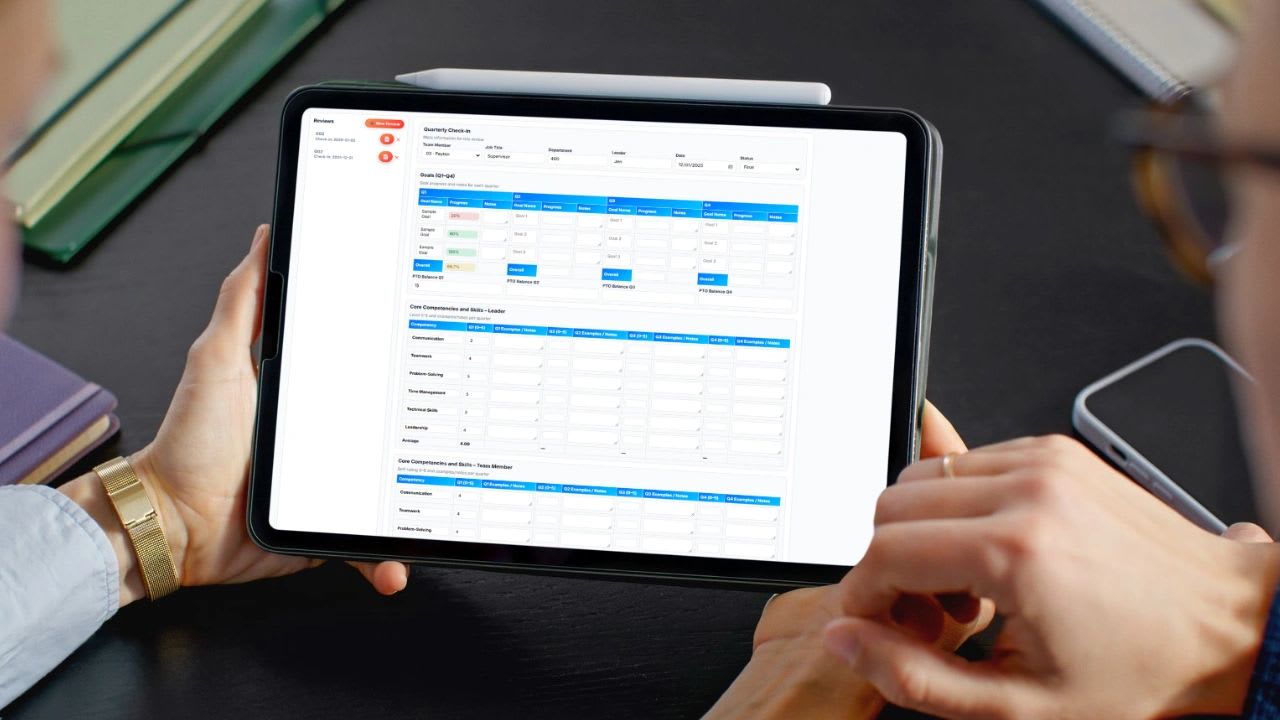
Use the free interactive builder below to fill out and export a complete Performance Improvement Plan, then keep reading for three real PIP examples, why most PIPs fail, and how to run one as a manager without it feeling like a formality before termination.
Quick Answer
A PIP template needs employee and role details, specific performance issues, measurable expected improvements, an action plan covering both employee and manager responsibilities, a timeline with checkpoints, success metrics, and clearly defined outcomes. Fill in the builder below to generate one in minutes.
Key Takeaways
- A usable PIP template covers 7 parts: employee info, performance issues, expected improvements, action plan, timeline, success metrics, and outcomes.
- Most PIPs fail from vague language like "improve communication" that can't actually be measured or evaluated.
- The strongest PIPs pair every issue with a specific, measurable expectation and a concrete action plan, not just a warning.
- A PIP is not the employee's responsibility alone; manager support and documented check-ins are what make it work.
- Use the free builder below to generate your own PIP with real fields, not just a blank template to fill in by hand.
Table of Contents
Free Interactive PIP Template Builder
Fill in the fields below to generate a complete, ready-to-use Performance Improvement Plan. Add as many performance issues, expected improvements, and checkpoint dates as the situation calls for.
Why Most PIPs Fail
Most PIPs do not work, and it is rarely because the employee could not have improved. Usually the plan itself is the problem.
Vague expectations
"Improve communication" or "be more proactive" are not measurable. If the goal can't be scored, the outcome can't be evaluated fairly.
No clear metrics
If success is not defined in numbers or specific behaviors up front, there is no objective way to say whether the plan worked.
No manager support
A PIP is not solely the employee's responsibility. Managers need to actively coach and remove blockers, not just hand over a document and check back in 30 days.
Unrealistic timelines
Too short, and the employee never had a fair shot. Too long, and the plan loses urgency and the underlying issue drags on unresolved.
Treated like a formality
If the outcome feels predetermined, the whole process loses credibility, for the employee and for anyone else on the team watching how it's handled.
What a Strong PIP Template Includes
1. Employee and Role Information
Employee name, role, department, manager, and the PIP start date.
2. Performance Issues
Specific, fact-based, and supported by examples. Avoid opinions and stick to observable behavior.
3. Expected Improvements
What needs to change and what success looks like, stated in a way that can actually be measured.
4. Action Plan
The steps the employee will take, the support the company will provide, and any training or resources involved.
5. Timeline
A clear timeframe, typically 30, 60, or 90 days, with checkpoint dates built in rather than a single review at the end.
6. Success Metrics
The specific numbers or behaviors that define whether the plan succeeded, agreed on before the plan starts, not after.
7. Outcomes
What happens if expectations are met, and what happens if they are not. Stating both up front is what creates real accountability.
3 Realistic PIP Examples
Example 1: Missed Deadlines
Issue: Employee consistently misses deadlines on client deliverables.
Expectation: 100% of assigned tasks completed by agreed deadlines over the next 30 days.
Action Plan:
- Use the project tracker daily
- Weekly check-ins with manager
- Prioritize tasks at the start of each day
Outcome: If successful, return to normal performance status. If not, further disciplinary action.
Example 2: Poor Communication
Issue: Lack of communication with the team and missed updates.
Expectation: Provide daily updates on project status and respond to internal messages within 4 hours.
Action Plan:
- Attend communication training
- Use a standardized update format
- Manager reviews updates weekly
Example 3: Low Productivity
Issue: Output below the expected level for the role.
Expectation: Complete a minimum of 8 tasks per week while meeting quality standards.
Action Plan:
- Break work into daily goals
- Weekly performance review
- Time tracking required
Notice what all three examples have in common: a clear issue, a measurable expectation, defined actions, and a timeline. No ambiguity. That's what makes them effective, and it's the same structure the builder above generates automatically.
How Managers Should Handle a PIP
Be direct, not harsh
Clarity is respect. Avoid sugarcoating or vague language that leaves the employee guessing what's actually expected.
Stay consistent
Apply the same standards across employees in similar roles and situations.
Provide real support
A PIP is not "fix this yourself." It's "here's how we help you succeed," backed by actual coaching, not just a document.
Document everything
Every check-in should be recorded, both for fairness to the employee and to protect the business if the outcome is termination.
Ready to try Updoot free?
Track performance, manage PIPs, and document progress in one platform built for small business.
Start Free TodayFrequently Asked Questions
A usable PIP template needs employee and role details, specific performance issues with examples, measurable expected improvements, a clear action plan covering both employee actions and manager support, a timeline with checkpoint dates, success metrics, and defined outcomes for both meeting and missing expectations.
Most PIPs fail because of vague expectations like "improve communication" that can't be measured, no clear success metrics, no real manager support beyond the document itself, timelines that are either too short to be fair or too long to create urgency, and being treated as a formality before a termination that's already been decided.
A typical PIP for missed deadlines states the issue plainly, such as consistently missing deadlines on client deliverables, sets a measurable expectation like 100% of assigned tasks completed on time over the next 30 days, and pairs it with an action plan: daily use of a project tracker, weekly check-ins with the manager, and prioritizing tasks each morning.
A PIP template gives you the ready-to-fill document structure and real examples to model from. A full PIP guide covers the broader process: when to use one, how to run the meeting, and how to follow up. This page is built for someone who needs the document now; the complete guide covers the process end to end.
Most PIPs run 30, 60, or 90 days depending on the role and the size of the performance gap. Too short and the employee doesn't have a fair chance to show change; too long and the plan loses urgency and the issue drags on unresolved.