
How to Hire Remote Employees
Hiring remote employees is no longer a trend. It is how modern companies scale.
The challenge is not finding people. It is finding the right people who can perform without constant oversight.
That requires a different approach than traditional hiring.
If you treat remote hiring like in-office hiring, you will make bad hires.
This guide walks you through:
- What makes remote hiring different
- How to hire remote employees step by step
- What to look for specifically in remote candidates
- Common mistakes to avoid
- A hiring tracker template built for remote teams
Why Hiring Remote Employees Is Different
When someone works in an office, you get built-in advantages:
- Face-to-face communication
- Immediate feedback
- Visibility into work habits
Remote removes all of that.
What replaces it?
Systems, communication, and accountability.
This means you are not just hiring for skill.
You are hiring for:
- Self-management
- Communication clarity
- Reliability
- Time discipline
If someone needs constant direction, they will struggle remotely.
The Benefits of Hiring Remote Employees
Let’s start with why this is worth doing.
1. Access to Global Talent
You are no longer limited to your city.
You can hire the best person, not just the closest one.
2. Lower Costs
You can reduce:
- Office space
- Overhead
- Geographic salary premiums
3. Increased Productivity
Many remote employees:
- Experience fewer interruptions
- Control their environment
- Get more focused work done
4. Better Retention
Flexibility is one of the most valued benefits today.
Employees stay where they have control over their time.
The Drawbacks You Need to Plan For
Remote hiring is powerful, but it is not easy.
1. Communication Gaps
If expectations are not clear, work slows down.
2. Time Zone Challenges
You need overlap hours or strong async systems.
3. Harder Culture Building
You must be intentional about connection.
4. Hiring Mistakes Are More Expensive
It takes longer to detect problems remotely.
Step-by-Step: How to Hire Remote Employees
Here is the process that actually works.
Step 1: Define the Role Clearly
Most hiring failures start here.
You need to define:
- Responsibilities
- Expected outcomes
- Tools used
- Communication expectations
- Working hours or overlap requirements
Remote roles must be outcome-based, not activity-based.
Step 2: Write a Remote-Optimized Job Description
Your job description should include:
- Time zone expectations
- Communication tools (Slack, email, etc.)
- Async vs live work expectations
- Performance metrics
This filters out candidates who are not a fit.
Step 3: Source Candidates
Use platforms that attract remote talent:
- Job boards focused on remote roles
- Referrals
Look for candidates who already have remote experience.
Step 4: Screen for Remote Readiness
This is where most people fail.
You are not just screening for skills.
You are screening for behavior.
Ask questions like:
- How do you manage your time without supervision?
- How do you communicate progress?
- What tools do you use to stay organized?
- Describe a time you worked remotely
You are looking for clarity and structure in their answers.
Step 5: Test with Real Work
Do not rely on interviews alone.
Give candidates:
- A small project
- A real-world scenario
Watch:
- How they communicate
- How they manage time
- How they deliver
This tells you everything.
Step 6: Evaluate Communication Skills
Remote work is communication.
If someone is:
- Slow to respond
- Vague in writing
- Disorganized in updates
They will struggle.
Step 7: Check for Self-Management
Strong remote employees:
- Plan their day
- Track their work
- Communicate proactively
Weak ones wait for direction.
Step 8: Run Structured Interviews
Do not wing it.
Ask consistent questions across candidates so you can compare objectively.
Step 9: Make the Offer and Set Expectations
Be clear about:
- Working hours
- Communication standards
- Tools
- Performance expectations
Clarity upfront prevents problems later.
Step 10: Onboard Properly
This is where most companies drop the ball.
Your onboarding should include:
- SOPs
- Tools setup
- Clear first-week goals
- Check-ins
Remote onboarding needs to be intentional.
What to Look for in Remote Employees
This is where you win or lose.
1. Communication Clarity
They explain things clearly in writing.
2. Accountability
They take ownership of outcomes.
3. Time Management
They structure their own day.
4. Reliability
They follow through consistently.
5. Comfort with Tools
They can work in digital systems without friction.
Common Mistakes to Avoid
Avoid these and you will outperform most companies.
Hiring Only for Skill
Skill does not equal remote success.
No Trial Work
You need to see how they actually perform.
Vague Expectations
Unclear roles create poor performance.
No Tracking System
If you are not tracking candidates, your hiring process becomes messy fast.
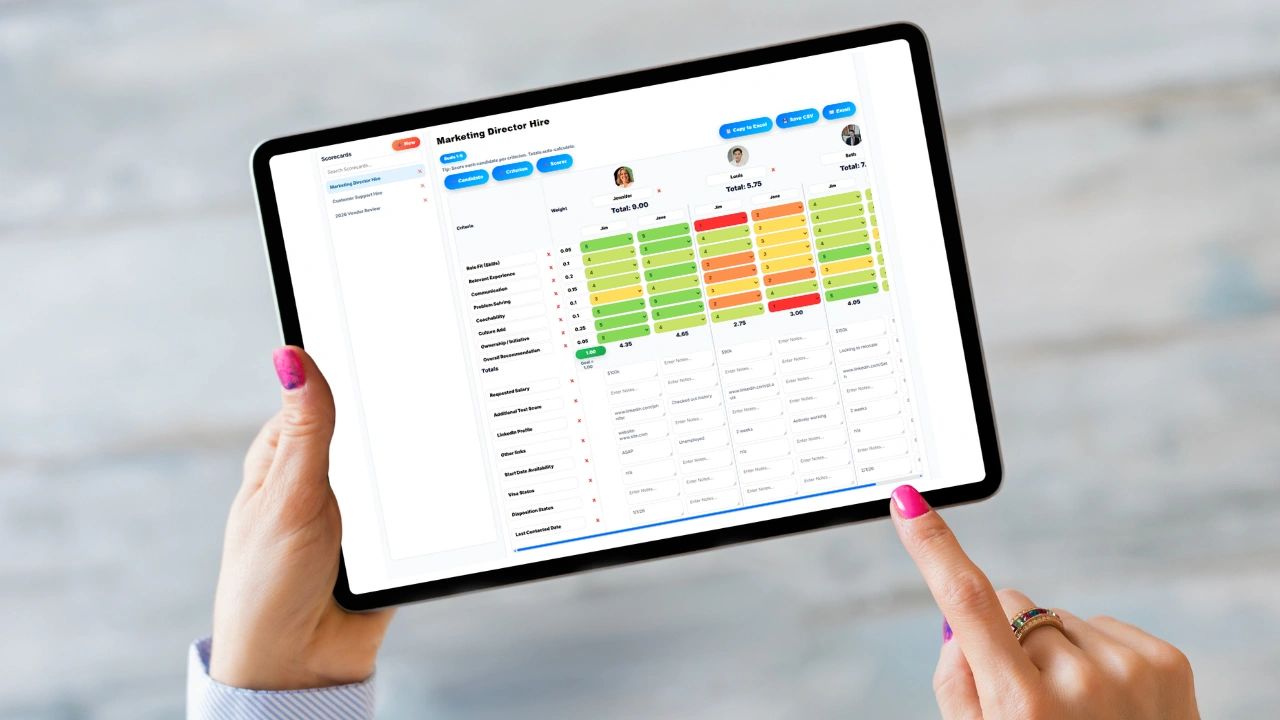
Why You Need a Hiring Tracker
If you are hiring more than one person, you need a system.
A hiring tracker helps you:
- Keep candidates organized
- Track stages
- Compare applicants
- Avoid losing strong candidates
- Improve your hiring process over time
Without it, things fall through the cracks.
Remote Hiring Tracker (Excel Template Structure)
Use this in Excel or Google Sheets.
What Each Column Means
Candidate Name Who they are.
Role Position applied for.
Location / Time Zone Critical for scheduling and collaboration.
Source Where they came from (LinkedIn, referral, etc.).
Stage Example stages:
- Applied
- Screening
- Interview
- Test Task
- Final Interview
- Offer
- Hired
- Rejected
Owner Who is responsible for this candidate.
Resume Link Quick access.
Test Task Score Rate performance on real work.
Communication Score Rate clarity and responsiveness.
Remote Experience Yes or no plus details.
Availability When they can start.
Salary Expectation Align early to avoid wasted time.
Notes Anything important.
Next Step / Date Keeps process moving.
Final Decision Outcome.
How to Use This Tracker Effectively
Do not just fill it out.
Use it actively.
- Review it weekly
- Move candidates through stages
- Remove inactive candidates
- Compare top performers
This becomes your hiring pipeline.
Taking It Further
Once you scale hiring, spreadsheets start to break.
You will need a system that connects:
- Hiring
- Team management
- Performance
- Projects
Because hiring is not just about filling roles.
It is about building a team that executes.
Final Take
Hiring remote employees is one of the biggest advantages you have today.
But only if you do it right.
If you:
- Define roles clearly
- Screen for remote readiness
- Test real work
- Track candidates properly
You will build a team that performs.
Not just a team that looks good on paper.