Digital Marketing Funnel: How to Build One for Revenue Growth
Digital marketing funnels map the path a buyer takes from first discovering your business to paying you, so every piece of marketing has a job in moving them forward. Run your numbers in the free funnel calculator below, then use this guide to build each stage, find where your funnel leaks, and turn traffic into predictable revenue.
Most companies do not have a marketing problem. They have a revenue conversion problem. They get traffic, post content, run ads, and maybe rank on Google, but revenue stays inconsistent. That happens when marketing is a set of activities instead of a funnel with a single purpose: turning attention into buyers in a predictable system.
What Is a Digital Marketing Funnel?
A digital marketing funnel is the structured path a potential customer follows from first learning about your business to becoming a paying customer. It maps how people move from recognizing a problem, to evaluating solutions, to choosing to buy. The purpose is to guide qualified people through that journey on purpose, so visitors do not just land on your website and leave, but build trust over time and convert into revenue.
Free Marketing Funnel Calculator
Free Marketing Funnel Calculator
Enter your monthly traffic, conversion rate at each stage, and average deal value. See how many leads, opportunities, and customers your funnel produces, and what a small improvement at one stage is worth.
| If you improve this stage by 10% | New monthly revenue | Added revenue |
|---|
Notice which stage adds the most revenue for the same 10% improvement. That is usually where your next marketing hour or dollar should go.
The Stages of a Revenue Funnel
Top of Funnel: Awareness
At the top, you attract people who have a problem. This is where search engine optimization, content, social media, and paid ads live. The goal is qualified attention, not random clicks. Top-of-funnel content answers questions like "Why is my team not productive?" or "How do I track employee performance?" It does not sell. It starts the conversation and earns the next click.
Middle of Funnel: Consideration
This is where most revenue is won or lost. The visitor now knows they have a problem and is evaluating ways to solve it. Your job is to build authority, show your approach, and explain why it is different. Guides, templates, comparisons of approaches, webinars, and case studies belong here. The goal is for the buyer to believe your way is the best path forward, and to give you an email address so you can keep the conversation going.
Bottom of Funnel: Decision
At the bottom, the buyer is ready. Your job is to remove friction. Pricing pages, product demos, free trials, customer stories, and side-by-side comparisons do the work here. The goal is to turn intent into action with a clear offer and an easy next step.
After the Sale: Retention and Referral
The funnel does not stop at the first purchase. Onboarding, customer success, and referral programs turn customers into repeat buyers and advocates. Keeping a customer is almost always cheaper than finding a new one, and happy customers feed the top of the funnel with referrals and reviews.
Funnel Metrics to Track at Each Stage
| Stage | Key metric | How to calculate it |
|---|---|---|
| Awareness | Qualified traffic | Visitors from your target audience and channels |
| Awareness to consideration | Visitor to lead rate | Leads divided by visitors |
| Consideration | Lead to opportunity rate | Sales-qualified opportunities divided by leads |
| Decision | Close rate | New customers divided by opportunities |
| Efficiency | Cost per lead | Marketing spend divided by leads |
| Efficiency | Customer acquisition cost (CAC) | Sales and marketing spend divided by new customers |
| Value | Customer lifetime value (LTV) | Average revenue per customer over the relationship |
A healthy funnel earns back acquisition cost several times over through lifetime value. Use the free customer acquisition cost calculator and customer lifetime value calculator to check yours.
Why Most Funnels Fail: Where Revenue Leaks
Most businesses do not fail at marketing. They fail at the transitions between stages.
Leak 1: Traffic With No Buying Intent
Content that attracts students, job seekers, or hobbyists can look great in analytics and produce nothing. If your traffic grows but leads do not, look at who you are attracting.
Leak 2: No Middle Layer
Asking a first-time visitor to buy is like proposing on a first date. Without middle-of-funnel content and an email follow-up, people never build the trust they need to buy.
Leak 3: Weak Conversion Pages
Even warm leads will not convert when the offer is unclear, pricing is hidden, or the next step is buried. Every bottom-of-funnel page needs one obvious call to action.
Leak 4: Slow or Missing Follow-Up
Leads that wait days for a reply go cold. Track every lead, respond quickly, and make sure each one has an owner and a next step.
Content Types for Each Funnel Stage
| Stage | Content types | Example topic |
|---|---|---|
| Top: problem | Blog posts, short videos, social posts | "Why your team feels busy but nothing gets done" |
| Middle: solution | Guides, templates, checklists, webinars, email courses | "How operators build systems that eliminate chaos" |
| Bottom: decision | Pricing, demos, case studies, comparisons, free trials | "Operations software for small business teams" |
| After the sale | Onboarding emails, help content, customer newsletters | "Getting set up in your first week" |
How to Build a Digital Marketing Funnel Step by Step
- Define your ideal customer. Know who buys, what triggers the purchase, and who makes the decision before you create anything.
- Map the buyer's questions. List what they ask at each stage, from "What is causing this problem?" to "Which option should I buy?"
- Create one asset per stage. Start small: one strong article, one lead magnet, and one clear offer page.
- Connect the stages. Every piece should point to the next: blog to template, template to email, email to demo or pricing, pricing to purchase.
- Set up email nurture. Send new leads a short series that teaches, builds trust, and ends with a clear offer.
- Track the metrics. Measure conversion between every stage so you know where people drop off.
- Fix the biggest leak first. Improve the weakest stage before buying more traffic.
A Simple Email Nurture Sequence
A five-email sequence is enough for most small businesses. Email 1 delivers what the lead signed up for and sets expectations. Email 2 teaches one useful idea tied to their problem. Email 3 shares a short customer story or example. Email 4 answers the most common objection, such as cost, time, or switching effort. Email 5 makes a clear offer with one next step, such as booking a demo or starting a trial. Space them a few days apart and keep each one focused on a single idea.
Lead Magnet Ideas That Move Buyers to the Middle
A lead magnet is the reason a visitor gives you an email address. The best ones solve a small, specific problem right away and relate directly to what you sell. Strong options for small businesses include templates and checklists, calculators, short email courses, buyer's guides, assessments or quizzes, and recorded webinars. A payroll company might offer an overtime calculator, and an operations consultant might offer a process audit checklist. If the lead magnet would attract people who will never buy, it is filling your list with the wrong contacts.
B2B Service Funnels vs. Ecommerce Funnels
| B2B service or software | Ecommerce | |
|---|---|---|
| Buying cycle | Weeks to months, several decision makers | Minutes to days, usually one buyer |
| Middle-of-funnel focus | Education, trust, and proof | Product details, reviews, and reminders |
| Main conversion step | Demo, consultation, or free trial | Add to cart and checkout |
| Key follow-up | Sales outreach and email nurture | Abandoned cart and retargeting emails |
| Key metric | Lead to opportunity and close rate | Conversion rate and average order value |
The stages are the same, but the time and effort between them are different. B2B funnels need more content in the middle, while ecommerce funnels win by removing friction at checkout.
The Real Growth Engine: Ideal Customer Alignment
If you attract the wrong audience, no funnel can fix it. You rarely need more traffic. You need better buyers in the funnel. When content attracts researchers instead of buyers, employees instead of decision makers, or bargain hunters instead of serious operators, revenue stays flat no matter how much you publish. Score your leads against a clear ideal customer profile, and point your content at the people who actually buy.
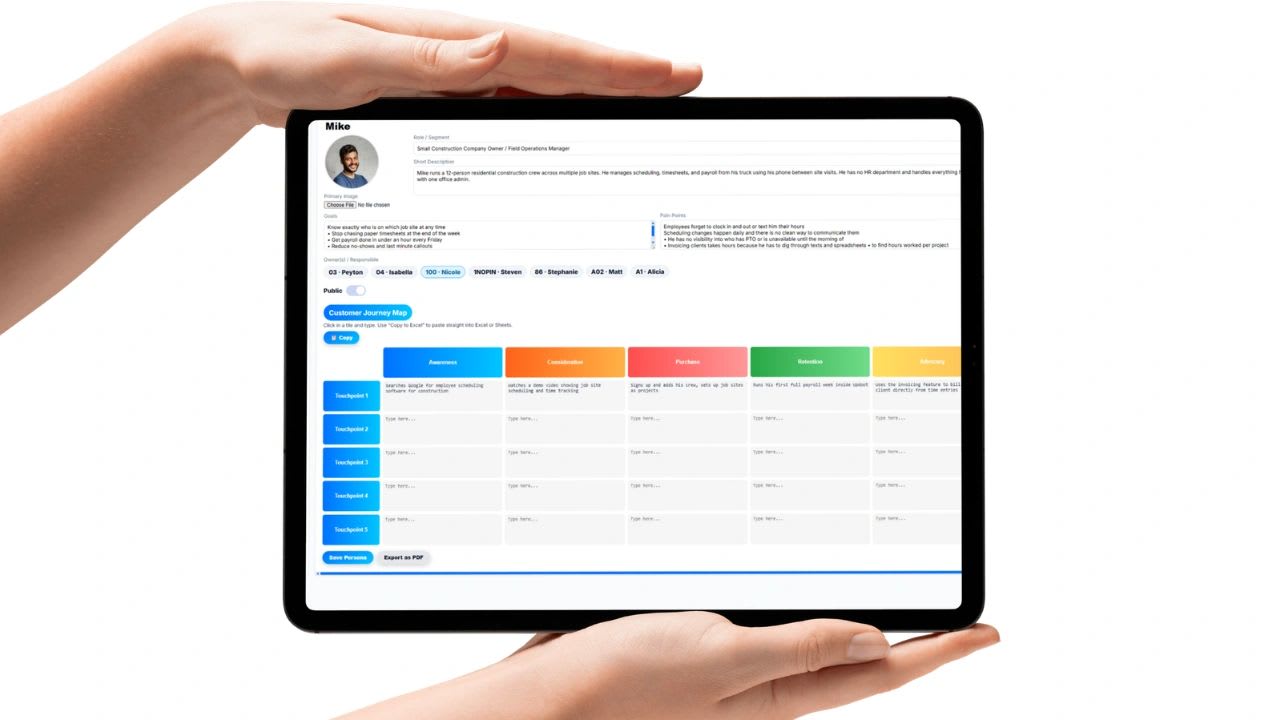
A weak ideal customer profile makes even great marketing ineffective. A strong one makes average marketing profitable. Updoot's customer persona and profile builder helps you define your ideal customer, identify real buying triggers, and align content with decision makers, and Updoot Sales CRM tracks every lead through the bottom of the funnel.
What a Revenue-Driven Funnel Looks Like
Put together, the model is simple. Search, content, and ads bring in qualified traffic. Problem content earns attention. Solution content and email build trust. Decision content and a clear offer close buyers. Onboarding and customer success keep them. And alignment with your ideal customer makes sure the right people are moving through the whole system.
Final Thought
A digital marketing funnel is not about ranking pages or collecting impressions. It is about building a predictable path from first search to revenue. When traffic is qualified, trust is built in the middle, sales happen at the bottom, and every stage is measured, marketing stops being a cost center and becomes a revenue system.
Opens in Google Drive. View and download for free.
Related Reading
Lead Generation Sales Funnel →
How to Lower Customer Acquisition Costs for Small Businesses →
Frequently Asked Questions About Digital Marketing Funnels
What is a digital marketing funnel?
A digital marketing funnel is the path a potential customer follows from first discovering your business to becoming a paying customer, organized into stages such as awareness, consideration, and decision.
What are the stages of a marketing funnel?
The core stages are top of funnel (awareness), middle of funnel (consideration), and bottom of funnel (decision). Many businesses add retention and referral after the sale.
How do you calculate funnel conversion rates?
Divide the number of people who reach the next stage by the number at the current stage. For example, visitor to lead rate is leads divided by visitors, and close rate is customers divided by opportunities.
What is a good conversion rate for a marketing funnel?
It varies widely by industry, offer, price, and traffic source. Track your own rates between each stage, then focus on improving the weakest stage rather than comparing to general averages.
Why do marketing funnels fail?
Most funnels fail at the transitions: traffic with no buying intent, no middle-of-funnel content to build trust, weak conversion pages, and slow follow-up on leads.
What content should I create for each funnel stage?
Use blog posts and social content for awareness, guides, templates, and webinars for consideration, and pricing pages, demos, case studies, and comparisons for the decision stage.
How do I improve my marketing funnel?
Measure conversion at every stage, find the stage with the biggest drop-off, and fix it first. Improving a weak stage often adds more revenue than buying more traffic.