
Contractor Quote Template for Google or Word
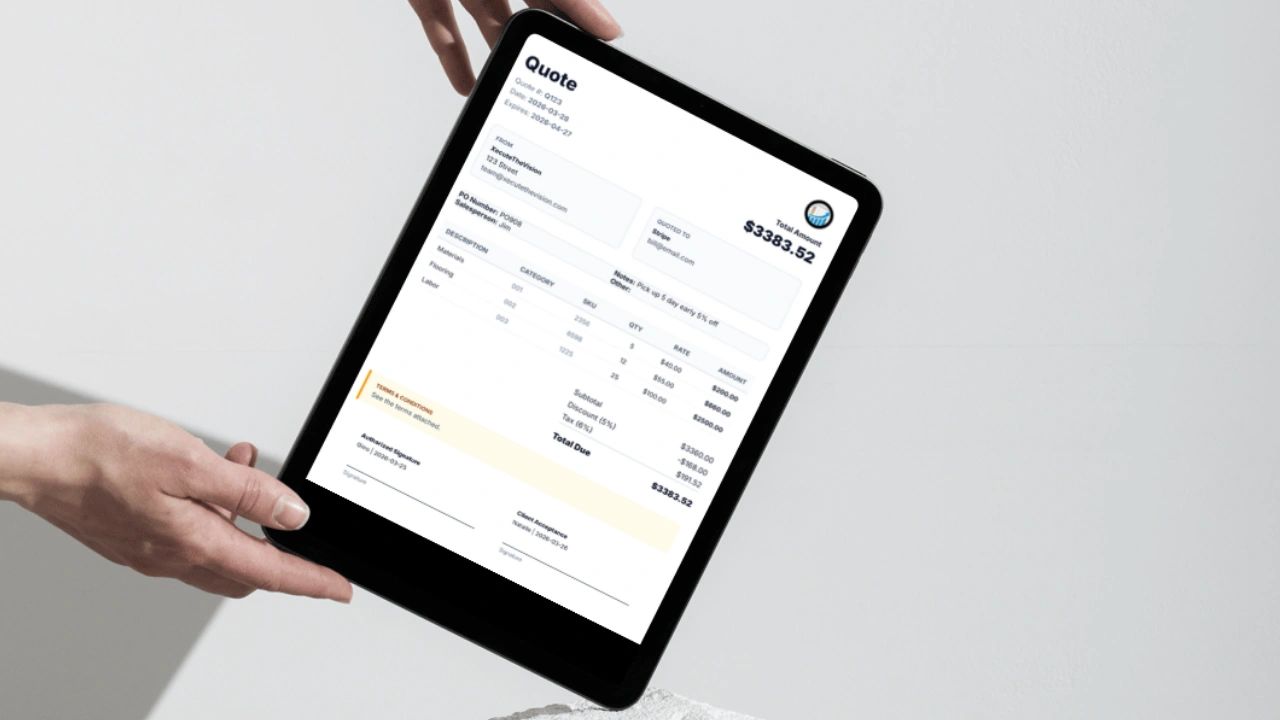
If your contractor quotes are just a number on a page, you are leaving money on the table. A contractor quote is not just an estimate -- it is your sales pitch, your scope control, your profit protection, and your legal foundation. Most contractors do not lose jobs because they are too expensive. They lose jobs because their quote lacks clarity, confidence, or professionalism. And many who win the job end up losing money because their quote was not detailed enough to protect them when scope changed.
This guide covers what a contractor quote actually needs to do, the 10 sections every quote must include, how to price jobs accurately to protect your margin, the most common mistakes that kill profitability, and a free interactive quote builder you can fill out and print directly from this page.
Quote vs Estimate: Why the Distinction Matters
An estimate is a rough projection subject to change. A quote is a formal, committed price for a defined scope of work. When you present something as a quote, clients expect you to honor it -- unless the scope changes through a documented change order. If you cannot commit to a number, present it as an estimate. But understand that vague pricing creates doubt, slows approvals, and invites clients to shop around for someone who can give them a firm number.
The other thing most contractors miss: clients are not just buying your price. They are buying certainty. A strong quote gives them confidence in your professionalism, clarity about what they are getting, and trust that there will not be surprises. A weak quote creates doubt and back-and-forth questions -- which is how you lose jobs to competitors who quoted higher but more clearly.
The 10 Sections Every Contractor Quote Must Include
1. Business Information
This is the first thing a client sees and it establishes credibility immediately. Include your business name, phone number, email, address, and license number if applicable. A logo if you have one. The goal is to look like a professional business rather than an individual sending a price from their personal email.
2. Client and Project Information
Clearly identify who this quote is for and where the work will be performed. Client name, company if applicable, contact information, and the project address. This is especially important for contractors working multiple jobs simultaneously -- a quote without a specific project address attached can create confusion about what was approved for which location.
3. Quote Number, Issue Date, and Expiration Date
The quote number lets you track and reference it in follow-up conversations and invoices. The issue date establishes when pricing was locked. The expiration date -- typically 7 to 30 days -- protects you from being held to pricing that no longer reflects your costs if a client sits on the quote for months. Always include one. Material costs fluctuate and your labor availability changes.
4. Project Overview
Two to three sentences that summarize the project at a high level before the client gets into the details. "Full kitchen renovation including demolition, cabinet installation, countertop replacement, and painting" tells them immediately whether they are looking at the right quote. This also helps if multiple people at the client's company are reviewing it -- not everyone will read the full scope.
5. Detailed Scope of Work
This is the most important section and where most quotes fail. Every scope item needs to be specific enough that there is no reasonable disagreement about what is and is not included. "Install cabinets" is not a scope item. "Install 12 upper cabinets and 8 lower cabinets in kitchen per approved layout drawing dated April 4" is a scope item.
Quantities, locations, specifications, and material references all belong here. Just as important: explicitly list what is not included. If you are not doing electrical, say so. If the client is supplying fixtures, say so. Every ambiguity in the scope becomes a future dispute. Eliminate them here.
6. Materials Breakdown
List materials separately from labor so clients can see exactly what they are paying for. Specify quantities, product types, and who is supplying what. Distinguish between contractor-supplied and client-supplied materials. This prevents disputes about quality -- if you spec standard interior paint and the client wanted premium, that gap needs to be visible in the quote before work starts, not after.
7. Labor and Pricing Breakdown
Never give a single total. Break down labor, materials, equipment, and any other cost categories separately. This accomplishes three things: it builds trust by showing how you arrived at the number, it reduces negotiation friction because clients can see exactly what they are paying for each component, and it protects you from accusations of overcharging because every line item is visible and defensible.
8. Project Timeline
Estimated start date, estimated completion date, and any dependencies that could affect the timeline -- permits, materials delivery, weather, or work that needs to be done by another trade before you can start. Setting timeline expectations in the quote prevents the "why isn't this done yet" conversation that derails client relationships.
9. Payment Terms
Define exactly when and how you expect to be paid. A 30 to 50 percent deposit upfront protects you from clients who disappear after work starts. Progress payments at defined milestones protect your cash flow on larger jobs. Final payment upon completion with a clear definition of what "completion" means. List accepted payment methods and any late payment terms. Vague payment terms are how contractors end up chasing invoices for months.
10. Terms and Conditions
Your protection layer. Every quote should include language covering: how changes to scope are handled (in writing, with a signed change order, before work proceeds), responsibility for delays outside your control, any warranty on materials and labor, site access and preparation responsibilities, cleanup expectations, and liability limitations. This does not need to be a legal wall of text -- clear plain language covering these topics is what prevents disputes from escalating.
How to Price a Contractor Quote to Protect Your Margin
Most contractors undercut themselves not by quoting too low but by forgetting entire cost categories when they build the number. Here is the correct sequence.
Labor: Hourly rate times estimated hours, then add a 10 to 20 percent buffer. Jobs always take longer than the initial estimate. The buffer is not padding -- it is an accurate reflection of how construction and field service work actually runs.
Materials: Use current supplier pricing, not memory from the last job. Add a 5 to 15 percent waste factor depending on the material type. Tile, lumber, and fabric all have meaningful waste built into real-world installation that does not show up in theoretical square footage calculations.
Overhead: This is what kills most contractor margins. Tools, vehicle maintenance and fuel, insurance, licensing fees, administrative time spent estimating and invoicing -- none of this is free, and none of it belongs on the materials list. Calculate your actual overhead cost per job and make sure it is in every quote.
Profit margin: You are running a business, not covering costs. Typical contractor margins run 10 to 30 percent depending on job type, market, and your positioning. If you are not including a margin line in your quotes, you are not actually pricing -- you are just covering expenses and calling it a business.
Contingency: Add 5 to 15 percent for unexpected issues. Hidden damage, supply chain delays, subcontractor problems -- something unexpected happens on almost every job. Pricing for it in advance is how you absorb surprises without losing money on the job.
Free Interactive Contractor Quote Builder
Fill in the fields, add line items, and watch the total calculate automatically. Click Print when ready.
📋 Contractor Quote Builder
All totals calculate automatically as you type. Print when done.
Business Information
Client and Quote Details
Pricing Line Items
| Description | Category | Qty | Unit Price | Total | |
|---|---|---|---|---|---|
| $0.00 | |||||
| $0.00 | |||||
| $0.00 |
Approval
By signing below, client agrees to the scope, pricing, and terms outlined in this quote.
Mistakes That Kill Contractor Profit After the Quote Is Approved
Winning the job is only half the battle. Where most contractors actually lose money is in what happens after approval.
No change order process. The client asks for one small addition. You say yes, because it seems minor. Then another addition. Then another. By the end of the job you have done $4,000 of work that was never in the original quote and never got invoiced. Every change in scope, regardless of how small, needs a written change order with a price attached before work starts. One conversation is all it takes to establish this expectation with clients, and it changes how the entire project runs.
Not tracking actual hours versus estimated. If you quoted 40 hours and the job took 65, you need to know that -- not to go back to the client, but to price the next similar job correctly. Most contractors finish a job and assume it went fine because the client was happy. Without tracking actual versus estimated, you have no idea whether you actually made money.
No system connecting quotes to invoices. When your quote is a Google Doc, your time tracking is in a notebook, and your invoice is built manually in Excel, profit leaks through every gap. You forget to bill for materials you bought. You miss hours that were logged on paper. You invoice for a round number instead of what was actually incurred. Connecting your quote, time tracking, and invoicing in one system closes these gaps and makes it possible to actually know what you earned on a job.
Updoot's time tracking and invoicing lets you log employee hours directly against the job, compare actual labor costs to your quote in real time, and turn approved time into an invoice without manually rebuilding the numbers. The quote becomes the baseline that your actual performance is measured against -- which is how you know whether your pricing is right, not just whether the client paid.