
2-3-2 Work Schedule Explained and Template
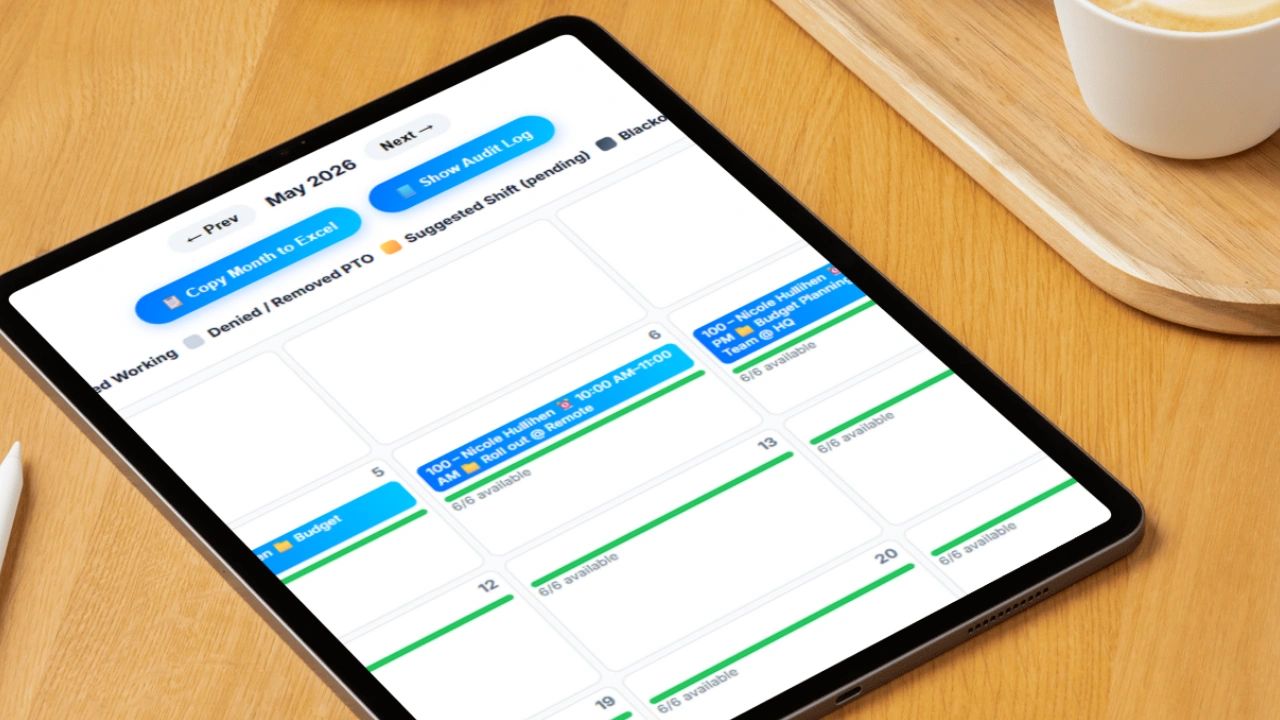
If you are running a business that needs consistent coverage but also want to give employees meaningful time off, the 2-3-2 work schedule is one of the most balanced shift patterns available. It is simple, repeatable, and gives employees a predictable mix of short work stretches and longer breaks. This guide covers exactly how the 2-3-2 schedule works, the benefits and downsides, a real two-week template, and how it compares to the 2-2-3.
What Is a 2-3-2 Work Schedule?
The 2-3-2 schedule is a rotating shift pattern where employees work 2 days on, take 3 days off, then work 2 more days on. The pattern then flips the following week, continuing the rotation. It typically runs on 12-hour shifts and repeats on a two-week cycle, which means employees always know exactly when they are working and when they are off.
The core appeal is the 3 consecutive days off in the middle of the cycle. That block of rest time is longer than most rotating schedules provide and gives employees real recovery rather than scattered individual days off that do not feel like a break.
How the 2-3-2 Schedule Works Week by Week
The rotation over two weeks looks like this:
| Day | Week 1 | Week 2 |
|---|---|---|
| Monday | WORK | OFF |
| Tuesday | WORK | OFF |
| Wednesday | OFF | WORK |
| Thursday | OFF | WORK |
| Friday | OFF | OFF |
| Saturday | WORK | OFF |
| Sunday | WORK | OFF |
Week 1 gives the employee 4 shifts (2 weekday + 2 weekend) while week 2 gives them 2 shifts (mid-week). The pattern then repeats from week 1. To maintain continuous coverage, businesses run two or more rotating crews offset from each other so that when Team A is off, Team B is covering.
Hours Breakdown
With 12-hour shifts, employees work approximately 48 hours in week 1 (four shifts) and 24 hours in week 2 (two shifts). This averages to around 36 hours per week over the two-week cycle. The variation between weeks matters for overtime compliance -- whether overtime triggers daily or weekly depends on your state. Businesses running this schedule should ensure their payroll system handles variable weekly hours correctly rather than calculating a flat weekly average.
Benefits of the 2-3-2 Schedule
Longer Consecutive Rest Periods
The biggest advantage is the 3 days off in a row. This gives employees real recovery time rather than scattered days that do not allow them to fully disconnect. Three consecutive days off means they can travel, handle appointments, or simply rest in a way that two separate days off never allow. For shift workers doing physically or mentally demanding work, this matters significantly for long-term sustainability.
Short Work Streaks
Employees only work 2 consecutive days before getting a break. Compared to 3-day stretches in other shift patterns, this feels lighter and results in less cumulative fatigue. For roles involving physical labor, patient care, or high-intensity operations, limiting consecutive days on shift has a real impact on performance and error rates.
Predictable Rotation
The schedule repeats every two weeks without variation. Employees always know their schedule weeks or months in advance, which makes personal planning, childcare, and second jobs significantly easier. Predictability is one of the most underrated factors in employee satisfaction with shift work.
Strong Coverage for 24/7 Operations
The 2-3-2 works well for manufacturing, warehousing, healthcare, security, and field operations where you need continuous coverage around the clock. Running day and night shifts on the same 2-3-2 rotation with offset crews provides full coverage without requiring employees to work excessive consecutive days.
Downsides of the 2-3-2 Schedule
12-Hour Shifts Are Demanding
Like most rotating shift schedules, the 2-3-2 depends on 12-hour shifts. That is a long time to be on site regardless of how physical the work is. Mental fatigue, decision quality, and attention to safety all decline over a 12-hour shift in ways they do not over an 8-hour one. For roles where errors have serious consequences, this is a genuine concern that needs to be managed with shift structure, breaks, and workload design.
Weekend Rotation Is Less Predictable
Depending on how the cycle falls, weekend distribution is not as balanced as some other schedules. Some employees may find they work more weekend days than others, or that weekends off do not fall in a consistent alternating pattern. This can create dissatisfaction if not managed carefully and communicated clearly when employees are hired into the schedule.
Communication Gaps Between Shifts
Because employees are off for longer stretches, teams can miss updates, handoffs can be inconsistent, and institutional knowledge about ongoing situations can get lost between shifts. This requires deliberate shift handoff protocols and communication systems that do not rely on employees being available during their off days.
Not Suitable for All Roles
The 2-3-2 is built for shift-based, operational environments. It does not work well for office roles, creative work, or positions requiring daily continuity and collaboration. If your team needs to be in sync every day or your work changes frequently based on daily inputs, a rotating shift pattern creates more friction than it resolves.
2-3-2 vs 2-2-3: Which Is Better?
| Factor | 2-3-2 | 2-2-3 |
|---|---|---|
| Max consecutive days worked | 2 | 3 |
| Longest rest block | 3 days | 2 days |
| Weekend fairness | Less consistent | More balanced |
| Fatigue management | Better | Slightly harder |
| Cycle length | 2 weeks | 2 weeks |
| Best for | High-fatigue environments | Weekend-fairness priority |
If fatigue is your primary concern -- construction, healthcare, heavy manufacturing -- 2-3-2 is often the better choice. If weekend fairness matters more to your team and work intensity is moderate, 2-2-3 may win out. Neither is universally superior. The right answer depends on the type of work and what your employees value most.
When to Use and When to Avoid the 2-3-2
Use 2-3-2 when you need continuous coverage, work is shift-based, fatigue is a genuine concern, and your team benefits from longer uninterrupted rest periods. It works particularly well in high-intensity environments where recovery time directly affects performance and safety.
Avoid 2-3-2 when you need consistent daily staffing, your work changes frequently based on daily inputs, team collaboration requires daily overlap, or your shifts are shorter than 10 hours and the 12-hour foundation does not fit your operation.
Using the 2-3-2 Schedule With Updoot
A shift pattern is only useful if it is tracked correctly. Updoot's scheduling and time tracking lets you assign rotating 2-3-2 shifts to employees, attach each shift to a project, job, and location, see exactly who is working and where in real time, adjust the rotation without breaking the pattern, and track hours directly against payroll-ready reports. The schedule becomes an operational system, not just a calendar.