
Working With Me Template Inspired by Scaling People
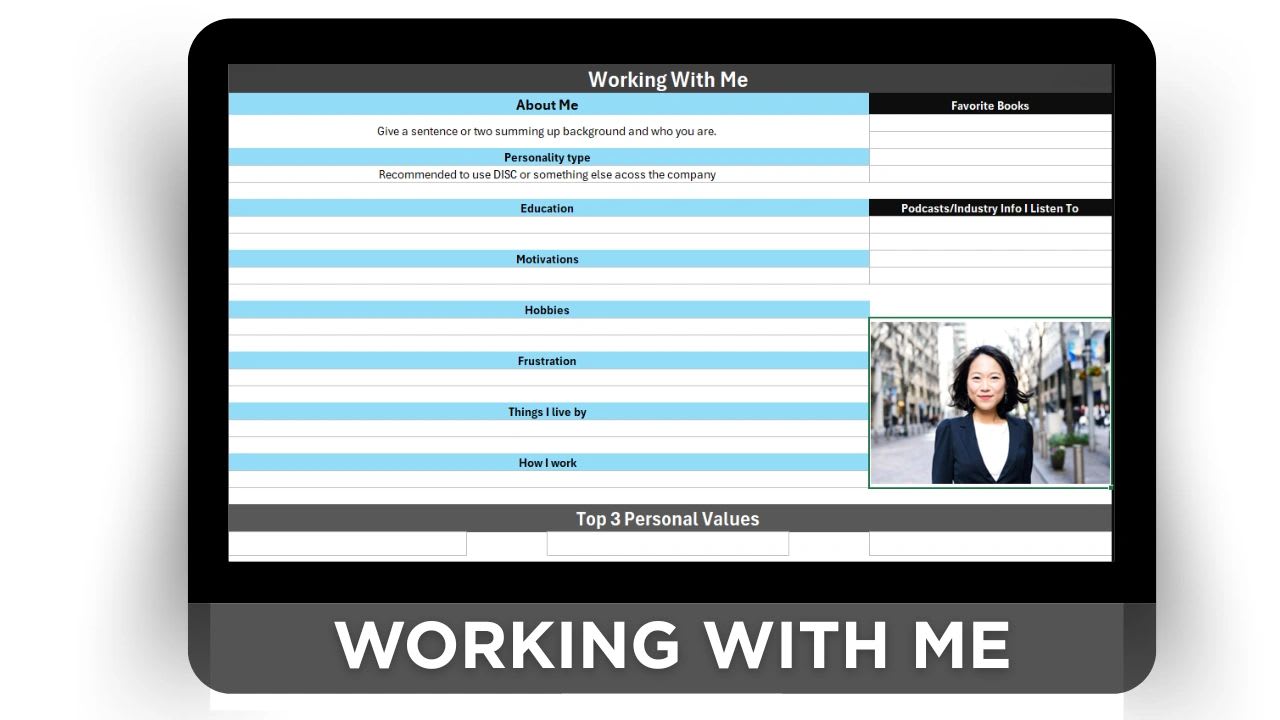
Change how you and teams you lead and are part of communicate with this working with me template. There is a quiet revolution happening in how the best workplaces handle introductions, expectations, and working relationships. It does not involve a new app, a complicated framework, or a months-long culture initiative. It is a single document, usually one page, that answers the question every new colleague silently wonders: how does this person actually work?
It is called a work with me template, and if you have not heard of it yet, you are about to wonder how you ever managed without one.
This article covers what a work with me template is, why it matters for both leaders and employees, what it should include, and how organizations can use it as a practical foundation for better communication and stronger teams. If you are building out your people operations toolkit, this one is worth your full attention.
What Is a Work With Me Template?
A work with me template is a short, structured document that a person, whether a manager, a team lead, or an individual contributor, uses to communicate their working style, preferences, and expectations to the people they work with.
Unlike a resume, which tells people what you have done, or a bio, which tells people who you are, a work with me template tells people how to work with you. It answers practical questions like: How do you prefer to communicate? How do you make decisions? What does good collaboration with you look like? What should people never assume about you?
The concept has been gaining traction across forward-thinking organizations for a good reason. When people understand how their colleagues operate, they spend less time guessing, less time recovering from miscommunications, and more time doing actual work together.
Why This Matters: The Case From Scaling People
If you want to understand why this kind of intentional, documented communication is so powerful, look no further than Claire Hughes Johnson's book "Scaling People: Tactics for Management and Company Building." Hughes Johnson, a longtime executive at Google and Stripe, makes a compelling case for why written artifacts, including personal operating manuals, are not just nice to have but genuinely essential for leaders who want to build high-performing, trust-based teams.
In the book, she encourages leaders to write what she describes as a working-with-me document, a transparent, honest account of how they operate, what they value, and what they struggle with. Her argument is straightforward: if your team has to guess how you work, they are going to get it wrong sometimes, and those misses cost time, erode trust, and create anxiety.
Hughes Johnson writes from experience leading and scaling some of the most demanding organizations in the world. Her take is that great leadership is not about being mysterious or projecting an air of authority. It is about being clear. And a work with me template is one of the most direct, practical ways to be clear.
The beauty of this idea is that it does not have to stop with leaders. When the whole team has a work with me document, something genuinely powerful happens. Everyone becomes more legible to each other. Collaboration gets easier. Conflict decreases because expectations are set. And new team members get up to speed on the people around them without having to learn everything the hard way.
Two Versions That Serve Different Purposes
Here is where most organizations miss an opportunity. They treat the work with me template as a leadership tool only, something managers write and hand down to their teams. But that is only half the picture.
A truly effective work with me template strategy has two distinct versions: one for leaders and one for employees. They share a common structure but serve different purposes and answer different questions.
The Leader Version of Working With Me
When a manager or executive has a work with me document, it does a few critical things.
First, it takes the guesswork out of how to work with someone in a position of authority. One of the biggest sources of workplace anxiety is not knowing what your manager expects, how they want to be updated, or what sets them off. A work with me document from a leader addresses this directly and openly.
Second, it signals psychological safety. A manager who is willing to say "here is how I work, here are my blind spots, here is the best way to give me feedback" is a manager who is inviting honest, two-way communication. That invitation matters enormously for team culture.
Third, it creates accountability. When a leader documents their working style and preferences, they are making a kind of implicit commitment. It becomes harder to be inconsistent when your team can read exactly what you said your standards were.
A leader's work with me template might include sections on decision-making style, how they like to receive updates and bad news, what their availability looks like, how they give feedback, what they are working on improving, and what they value most in the people they lead.
The Employee Version of Working With Me
The employee version of a work with me template is just as valuable, and arguably more underused.
When individual contributors have their own work with me documents, a few things shift. First, it gives employees a voice in defining how they are managed. Rather than defaulting to whatever style a manager brings, an employee can say: here is how I do my best work. Here is how I prefer to receive feedback. Here is what I need to stay focused. That is not a demand, it is information, and good managers use that information to lead better.
Second, it creates peer-level clarity. When teammates understand each other's working styles, collaboration gets dramatically easier. You stop wondering why your colleague never responds to Slack after 4pm (she is offline, it is in her document) or why your coworker sends such detailed briefs before every meeting (he thinks in writing and that is how he processes, also in his document).
Third, it supports more equitable management. When managers are relying on gut feelings and personality reads to understand how to work with each person, there is a lot of room for bias to creep in. Structured documents level the playing field. Everyone has one, everyone filled it out the same way, and the information is there for anyone who wants to use it.
What to Include in a Work With Me Template
Whether you are building the leader version, the employee version, or both, the core sections are similar. The questions and emphasis shift, but the structure holds.
1. Your Role and What You Own
Start with clarity about what you are actually responsible for. Job titles are often unclear from the outside. A plain-language description of your role and what you own helps teammates understand when to loop you in and when not to.
2. Your Communication Preferences
This is often the most immediately useful section. How do you prefer to communicate day to day? Are you a Slack person or an email person? Do you like quick voice notes or well-structured written messages? What is the best way to get time on your calendar? Are you fast to respond in some channels and slow in others? The more specific, the better.
3. How You Do Your Best Work
When are you sharpest? What environment helps you focus? Do you need context before jumping into a problem or do you prefer to dive in and ask questions later? Are you energized by collaboration or do you need significant heads-down time? This section gives people a window into your rhythm and how to work with it instead of against it.
4. How You Like to Give and Receive Feedback
Feedback is one of the biggest sources of friction in workplace relationships. Some people want blunt, direct input. Others need it delivered with more care. Some people want written feedback before a conversation so they have time to process. Others shut down if they feel blindsided. Getting this on paper, in your own words, makes feedback loops so much smoother.
5. How You Make Decisions
For leaders especially, this section is gold. Do you want all the information upfront before you weigh in? Do you prefer to be consulted early and often or only at decision points? Are you comfortable with team members making calls independently, or do you want to stay in the loop? Clarity here prevents the endless escalation-vs-autonomy confusion that slows so many teams down.
6. What You Are Working On or Focused On Right Now
A current-state snapshot. What projects or goals are you driving right now? Where is your attention? This helps people understand your context, prioritize when to pull you in, and spot opportunities to collaborate.
7. Your Pet Peeves and Working Anti-Patterns
This is the section that makes some people nervous but pays off enormously. What are the things that slow you down, frustrate you, or break your trust? Not as a way to list complaints, but as honest, useful information. A leader who says "I lose trust quickly when I get surprised in public meetings, please tell me bad news before it goes to the group" is doing their team a real service.
8. Something Personal
One or two lines about who you are outside of work. Where you are based, something you care about, something that makes you you. A work with me template is a professional document, but the best ones leave a little room for the human being filling it out.
Using Working With Me Templates Across a Team
For this to work at the team or organizational level, you need a system. A single template filled out by one manager and filed away somewhere does very little. The impact comes from scale and accessibility.
Here is what works. Start by standardizing the template format so that everyone is answering the same core questions. This makes documents easier to read and compare, and it signals that this is a team-wide practice, not just a personal quirk of one people-forward manager.
Then make sure the documents live somewhere everyone can find them. A shared wiki, an internal directory, a people operations hub. The goal is that anyone on the team can pull up anyone else's document in two clicks.
Build it into onboarding. When a new employee joins, they fill out their work with me document in the first week, and they get access to their manager's and teammates' documents at the same time. That single exchange of information does more to accelerate early relationship-building than almost anything else.
Revisit the documents regularly. A work with me template is not a set-it-and-forget-it document. People's roles change, their preferences evolve, and what was true six months ago might not be true today. A quarterly or semi-annual reminder to update it keeps the information fresh and the practice alive.
The Connection to Stronger People Operations
What we are really talking about, underneath all the individual documents and onboarding checklists, is a deliberate, documented approach to how people work together. That is people operations at its core.
Claire Hughes Johnson's "Scaling People" is essentially a book-length argument for this kind of intentionality. The companies that scale well are not the ones that hire the most talented people and hope chemistry happens. They are the ones that build systems and structures that help people understand each other, communicate clearly, and do their best work together. A work with me template is one of the simplest, most accessible versions of that kind of system.
For HR professionals and people operations leads, standardizing work with me documents across the organization is a low-lift, high-impact initiative. It does not require a big budget or a long implementation timeline. It requires a good template, a clear rollout, and a culture that actually uses the documents it creates.
FAQ: Working With Me Template
What is a work with me template?
A work with me template is a short document that explains how you prefer to work, communicate, give feedback, and collaborate. It tells your colleagues and manager what to expect from you day to day so that everyone spends less time guessing and more time actually working well together.
Who should have a work with me template?
Both leaders and employees benefit from having one. A manager's work with me template helps their team understand how to communicate with them and how they make decisions. An employee's version helps their manager and peers understand how they do their best work and what kind of support they need. When both exist, working relationships start on much clearer footing.
What should a work with me template include?
A strong work with me template covers your role and what you own, your communication preferences, when and how you do your best work, how you like to give and receive feedback, how you make decisions, what you are currently focused on, and one or two personal details. The more specific and honest you are, the more useful the document becomes.
How is a work with me template different from a job description?
A job description defines what you are responsible for. A work with me template describes how you operate as a person. One is about the role, the other is about the human filling it. Both matter, but the work with me template is what actually helps day-to-day collaboration and communication.
How often should a work with me template be updated?
Update it at least once a year, or any time something meaningful changes such as a new role, a shift in working hours, or new communication preferences. An outdated document is less useful than no document at all, so keeping it current is important.
Where can I find a work with me template for my team?
The work with me template, including both a leader version and an employee version, is available as part of the People Pack, Lever 1. It is built for HR and people operations teams who want to make this a standard practice across their organization.
Get the Template That Is Ready to Use
If you are ready to bring this practice to your team, the work is already done for you. The work with me template is available as part of the People Pack, a collection of professionally designed people operations templates built for modern workplaces and the teams that run them.
The People Pack includes both a leader version and an employee version of the work with me template, each designed to ask the right questions, prompt genuine reflection, and produce documents that people will actually read and use. They are clean, customizable, and built to integrate into whatever onboarding or team communication system you already have.
For HR professionals and people operations teams managing everything from onboarding to culture building, having the right documents on hand makes the difference between a people strategy that lives in a slide deck and one that actually runs.
Updoot builds practical, design-forward templates for the people and HR teams doing this work every day. If you are serious about creating a workplace where people actually understand each other and do their best work together, the People Pack is where to start.
Pick it up today and give your team the clarity they deserve.
People operations templates designed and curated by XecuteTheVision, built for the HR and people teams scaling culture one document at a time. Ready to manage the rest of HR in one place? Try Updoot free.