
Startup Company Roadmap: How to Turn Vision Into Execution
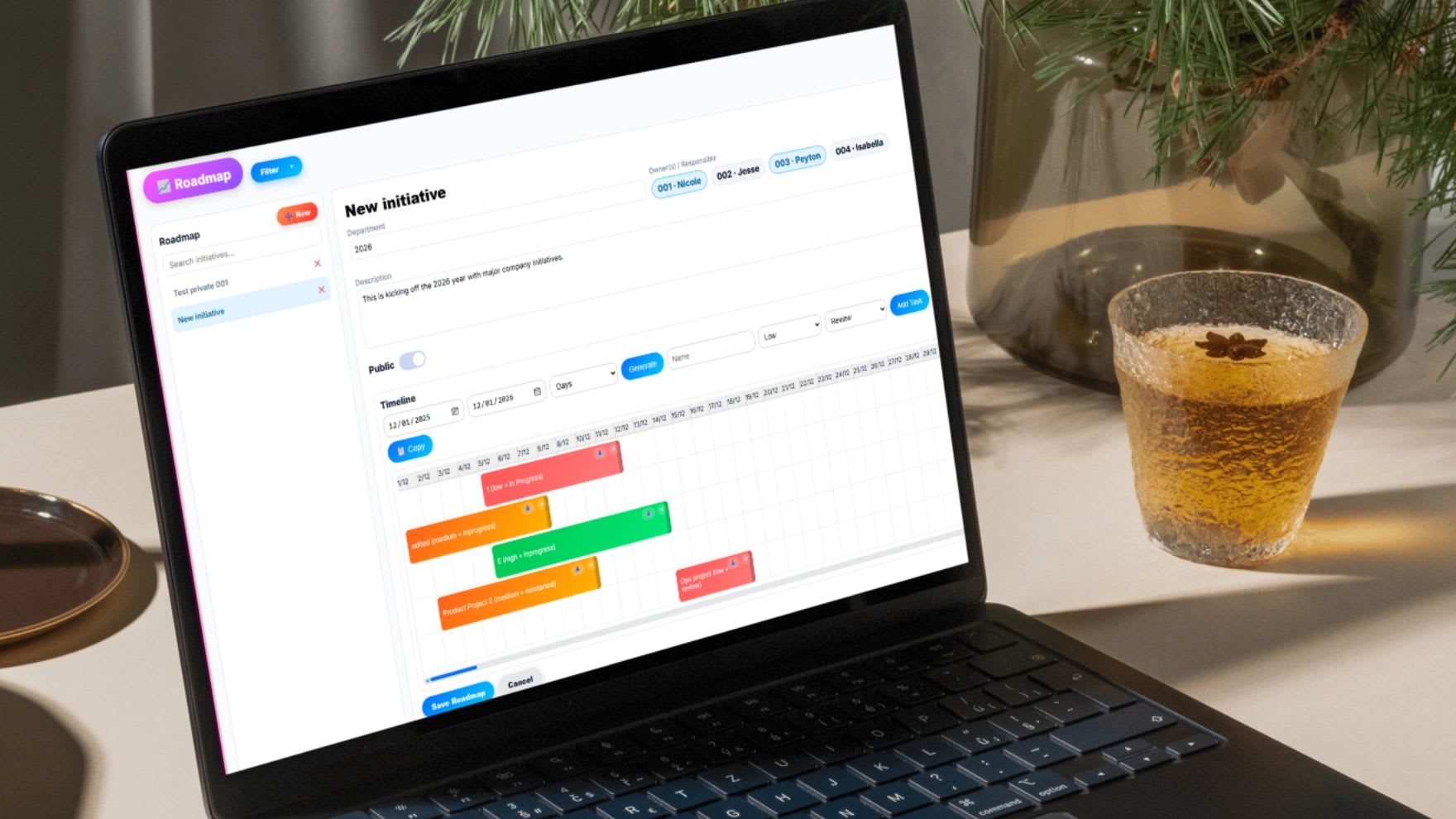
A startup company roadmap is the plan that turns a big idea into the next twelve months of work. It lays out what you will build, who you need to reach, what revenue you are aiming for, and who you will hire, all on one timeline so everyone can see what comes first.
Most startups do not fail for lack of ideas or energy. They stall because too much is happening at once and nobody is sure what matters this month. A good roadmap fixes that by forcing a few hard choices about order and focus.
Here is how to build one that your team will actually use, with a free Gantt-style builder to map your own milestones.
What Is a Startup Company Roadmap?
A startup company roadmap is a time-based plan showing the major milestones a young company needs to hit to move from idea to a working, growing business. It connects product development, customer acquisition, revenue goals, hiring, operations, and fundraising in one view.
What makes it different from a to-do list is sequence. A roadmap shows not just what you plan to do, but when, in what order, and what has to happen first. It answers the question every founder faces each Monday: what happens next?
Why Every Startup Needs a Roadmap
Startups move fast, and speed without direction creates familiar problems: chasing every new idea, constant pivots, a team pulling in different directions, missed deadlines, feature creep, burnout, and cash surprises. A roadmap forces prioritization. It turns ambition into a sequence, and in an early-stage company the right sequence often decides whether you reach the next milestone before the money runs out.
It also keeps everyone aligned. When the team can see the plan, they can make good decisions without waiting for the founder to weigh in on every choice.
Startup Roadmap vs. Business Plan vs. Product Roadmap
| Business Plan | Startup Company Roadmap | Product Roadmap | |
|---|---|---|---|
| Purpose | Explains why the company will succeed | Defines how and when the company will execute | Plans features and releases |
| Audience | Investors, lenders | Founders and the whole team | Product and engineering |
| Scope | Market, model, financials | Product, growth, revenue, hiring, operations, funding | Product only |
| How often it changes | Rarely | Reviewed monthly, adjusted quarterly | Every release cycle |
You need a business plan to raise money and a roadmap to spend it well.
What to Include in a Startup Company Roadmap
1. Product Milestones
MVP completion, beta launch, major feature releases, integrations, and performance improvements. Make each one specific. "Improve the product" is not a milestone. "Ship self-serve onboarding" is.
2. Customer Acquisition Milestones
Campaign launches, content and SEO rollouts, partnerships, paid ad tests, and building a repeatable sales process. Tie each to a number, such as 100 qualified leads, the first 20 paying customers, or a 15% drop in acquisition cost.
3. Revenue Targets
Monthly recurring revenue goals, break-even, pricing changes, and upsell campaigns. Revenue belongs on the roadmap, not in a separate spreadsheet nobody looks at.
4. Hiring and Team Growth
Your first sales hire, first customer success hire, an operations lead, and additional engineers. Hiring too early burns cash. Hiring too late slows growth. The roadmap helps you time each hire to the milestone it supports.
5. Operational Infrastructure
Time tracking, payroll, a CRM, KPI dashboards, and documented processes. These are easy to postpone, but execution systems matter as much as product features once the team grows. See how operations change by team size.
6. Funding Milestones
If you plan to raise, show when the round starts relative to the proof points investors will want to see, such as launch, early revenue, or retention data.
How to Create a Startup Company Roadmap in 5 Steps
Step 1: Define Your 12-Month Target
Start with where the company must be in a year: $50,000 in MRR, 500 paying customers, version 2.0 shipped, or a team of ten. Pick one or two outcomes that matter most.
Step 2: Work Backward
Break the year into quarters, then months. Ask what must be true by the end of each quarter for the annual goal to be reachable. Planning backward makes a big goal feel manageable.
Step 3: Sequence Dependencies
Some milestones cannot start until others finish. You cannot scale ads before conversion works, hire customer success before you have customers, or launch integrations before your API is stable. Put dependent work in order.
Step 4: Limit Work in Progress
Early teams often try to build, sell, hire, and fundraise at the same time, and everything slows down. Cap how many initiatives run in any month. Clarity beats intensity.
Step 5: Assign Owners and Review Monthly
Every milestone needs one owner. Review progress monthly and adjust the plan each quarter as you learn.
Free 12-Month Startup Roadmap Builder
Map your milestones below. The bottom row counts how many initiatives are running each month and turns red when you go over your limit, which is usually the first sign a plan is not realistic.
Free 12-Month Startup Roadmap Builder
Add each milestone with a category, owner, start month, and length. The builder draws a Gantt-style timeline and warns you about months where too much is happening at once.
Add a Milestone
If several months are red, push lower-priority milestones later or break big initiatives into smaller phases. Copy the roadmap to Excel to keep it with your plan.
Why Gantt Charts Work for Startup Roadmaps
Slide decks, documents, whiteboards, and lists describe what you plan to do, but they hide overlap, duration, and dependencies. A Gantt-style timeline shows all of that at a glance: what runs when, what overlaps, where the crunch months are, and how each milestone is progressing. That visibility prevents overcommitment and resource conflicts before they happen.
Example 12-Month Roadmap for a SaaS Startup
| Quarter | Product | Growth and Revenue | Team and Operations |
|---|---|---|---|
| Q1 | Finish MVP, start beta | Recruit 10 beta customers | Set up time tracking, payroll, and a CRM |
| Q2 | Public launch, fix top beta issues | First 25 paying customers, launch content | First sales hire |
| Q3 | Self-serve onboarding, first integration | Paid ads test, $10k MRR | Customer success hire, write core SOPs |
| Q4 | Version 2.0 features | $25k MRR, reduce churn | KPI dashboard, begin seed round |
How to Prioritize What Goes on the Roadmap
Every founder has more ideas than time. Before something earns a place on the roadmap, ask three questions. Does it move the twelve-month target? Does something else depend on it? And what happens if it waits a quarter? Items that move the target and unblock other work go first. Items that can wait without real harm go to a "later" list you revisit each quarter.
A simple impact and effort check helps too. Score each idea from 1 to 5 on impact and on effort. High-impact, low-effort items are quick wins that belong early. High-impact, high-effort items are your major milestones and need careful sequencing. Low-impact items, whatever the effort, usually do not belong on a twelve-month roadmap at all.
How to Run a Monthly Roadmap Review
- Check each milestone: on track, at risk, or late. Ask the owner, not the founder, to report.
- Compare against the numbers. Are revenue, customer, and hiring targets where the roadmap said they would be?
- Decide what moves. If something slipped, choose what gets pushed or dropped rather than piling on more work.
- Update the timeline and share it so the whole team is working from the same plan.
Thirty minutes a month is usually enough. The discipline of looking at the roadmap together is what keeps it alive.
Startup Roadmap Mistakes to Avoid
- No timeframes. A list of goals without dates is a wish list.
- Too many priorities at once. Focus on a few initiatives per month.
- Hidden dependencies. Make the order of work explicit.
- No owners. Shared ownership means nobody owns it.
- Treating it as static. A roadmap that is never updated stops being used.
Sharing the Roadmap With Your Team and Investors
Share the full roadmap with your team so everyone understands how their work fits. With investors and advisors, share a quarterly summary: the milestones hit, the ones that moved and why, and what comes next. Consistent updates build trust long before the next fundraise.
Keep Your Roadmap Inside Your Execution System
Roadmaps built in slides or separate tools drift away from the daily work. When milestones connect to team assignments, KPIs, sales goals, hiring plans, and project dashboards, progress is visible without extra status meetings.
Updoot includes a Gantt-style roadmap where you can set start and end dates, see overlapping initiatives, assign owners, track progress in real time, and connect milestones to KPIs and team workflows. Plans start at $5 per user per month.
Final Thoughts
A startup company roadmap is how vision becomes a schedule. Set a twelve-month target, work backward, sequence the dependencies, limit what runs at once, give every milestone an owner, and review it every month. The founders who do this consistently spend less time firefighting and more time moving forward.
Opens in Google Drive. View and download for free.
Related Reading
Small Business Operations by Team Size →
Frequently Asked Questions About Startup Roadmaps
What is a startup company roadmap?
A startup company roadmap is a time-based plan that shows the milestones a young company must hit across product, customer acquisition, revenue, hiring, operations, and funding, and the order they happen in.
How long should a startup roadmap be?
Most startups use a rolling 12-month roadmap with monthly milestones, reviewed monthly and adjusted each quarter.
What should be included in a startup roadmap?
Include product milestones, customer acquisition goals, revenue targets, hiring plans, operational systems, and any funding milestones, each with dates and an owner.
Is a startup roadmap the same as a business plan?
No. A business plan explains why the company will succeed and is written mainly for investors. A roadmap shows how and when the team will execute and is used every week.
Is a product roadmap the same as a startup roadmap?
No. A product roadmap covers features and releases. A startup roadmap covers product plus growth, revenue, hiring, operations, and funding.
How often should a startup roadmap be updated?
Review progress monthly and adjust the plan quarterly as you learn more about customers, revenue, and capacity.