
Short-Term Goals Examples for Leaders and Employees
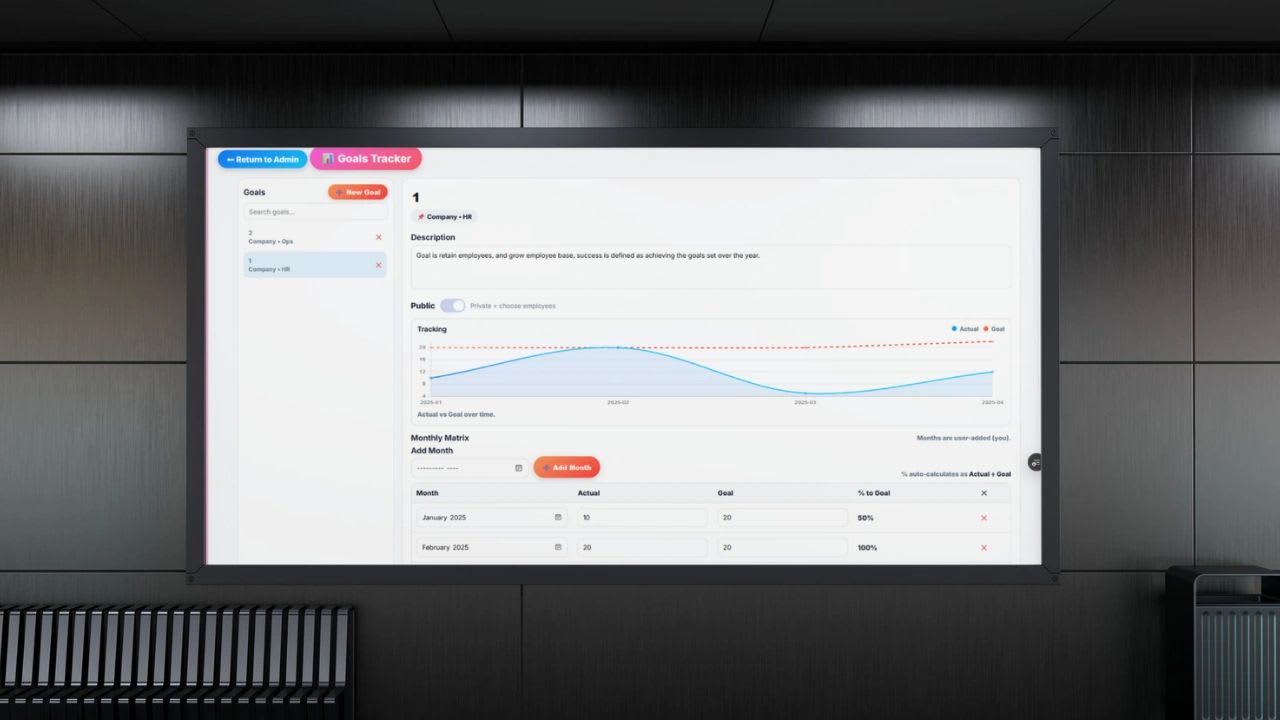
Short-term goals examples are easiest to learn from when you can see how a big ambition turns into something a person can actually do this week. Short-term goals are where strategy becomes reality. They take broad ambitions like "grow revenue" or "improve team performance" and turn them into focused steps that can be carried out today, this week, or this quarter.
Without short-term goals, even the best long-term vision stalls, because nobody knows what to do on Monday morning. With them, progress becomes measurable, momentum builds, and results compound. That is true whether you are a leader driving company-wide performance or an employee trying to stand out and grow your career.
This guide explains what effective short-term goals look like and why they matter, then walks through 42 real-world examples across seven areas for leaders and seven for employees. It closes with a simple framework for setting goals, the mistakes to avoid, and a free goal builder that turns your idea into a measurable goal with weekly checkpoints.
What Are Short-Term Goals?
Short-term goals are objectives designed to be completed within a relatively short window, usually a day, a week, or a period of 30 to 90 days. They are tactical by nature, and each one directly supports a larger strategic outcome. If a long-term goal describes where the business is headed over the next year or two, short-term goals describe the next few steps on the way there.
Good short-term goals share five characteristics. They are specific, meaning clearly defined and easy for anyone to understand. They are measurable, tied to a number, an outcome, or a finished deliverable. They are actionable, within the control of the person responsible. They are relevant, lined up with the priorities of the wider business. And they are time-bound, with a firm deadline. If a goal does not meet all five, it is probably too vague to drive real results. These are the same principles behind SMART goals, and our SMART goals template and generator goes deeper into each one.
Why Short-Term Goals Matter in Business
Short-term goals do five jobs that long-range plans cannot do on their own. First, they drive focus. They cut through the noise and help teams prioritize the work that actually moves the needle instead of whatever landed in the inbox most recently.
Second, they create accountability. When a goal is clear and has a deadline, ownership becomes obvious, and it is easy to see whether the work got done. Third, they allow faster feedback. Because the window is short, you can see quickly what is working and what is not, and adjust before much time or money is wasted.
Fourth, they build momentum. Small wins stack up, and each one adds motivation and confidence across the team. Finally, they connect strategy to execution. Short-term goals are the bridge between leadership's vision and the day-to-day work that makes it real.
Short-Term Goal Examples for Business Leaders
As a leader, your short-term goals should focus on getting results through other people, improving the systems your team works within, and keeping the whole organization aligned. The examples below cover seven areas where leaders most often need quick, measurable progress.
1. Revenue Growth Goals
Revenue goals are the most common place leaders start, and the best ones tie directly to pipeline activity, pricing, or conversion improvements rather than hoping sales simply rise.
One strong example is to increase monthly revenue by 10 percent over the next 60 days, which gives the team a clear number and enough time to change what they are doing. Another is to close five new enterprise clients within the next quarter, which focuses effort on a specific customer segment. A third is to raise average deal size by 15 percent this month, which pushes the team toward bundling, upselling, or better pricing rather than just more volume.
Each of these works because it names a measure, a target, and a deadline, and each one points to a specific lever the team can pull.
2. Operational Efficiency Goals
Leaders often overlook operational bottlenecks because they are buried in daily routine. Short-term goals force you to find and fix them quickly.
You might set a goal to cut order processing time by 20 percent within 30 days, which shows up immediately in customer experience. You could aim to write and roll out three new SOPs for core workflows this quarter, turning tribal knowledge into repeatable processes. Or you could target a 25 percent drop in fulfillment errors this month, which saves both money and customer goodwill.
Operational goals like these pay off twice, once in lower costs and again in a smoother experience for customers and staff.
3. Team Performance Goals
When a team is underperforming, the cause is rarely motivation. Far more often it is a lack of clarity about priorities, expectations, or how success is measured.
A leader might commit to holding weekly one-on-ones with every direct report for the next eight weeks, creating a regular space for coaching and removing obstacles. Another option is to launch a team KPI dashboard within 30 days, so everyone can see how their work connects to results. A third is to improve key productivity measures by 15 percent this quarter, provided those measures are clearly defined first.
Goals like these build the clarity that high-performing teams depend on.
4. Hiring and Talent Goals
Strong teams do not happen by accident. They are built on purpose, and short-term hiring goals keep that work from drifting while everyone is busy.
A leader could aim to fill two critical roles within 45 days, which puts a clear deadline on the most important openings. Another goal is to cut time to hire from 30 days to 20 days, often by tightening the interview process and speeding up decisions. A third is to build a pipeline of ten qualified candidates for future roles, so the next opening does not start from zero.
Hiring goals protect the business from the slow drain of open seats and rushed decisions.
5. Customer Experience Goals
Customer experience is one of the fastest ways to drive growth, or decline, and it responds quickly to focused effort.
A leader might set a goal to raise the customer retention rate by eight percent this quarter, which directly protects revenue. Another is to bring support response time under two hours within 30 days, a change customers notice immediately. A third is to reach a customer satisfaction score of 90 percent or higher this month, with a plan for the specific issues dragging the score down.
Improvements here compound, because satisfied customers stay longer, buy more, and refer others.
6. Strategic Alignment Goals
Misalignment is one of the most expensive problems in business, because it means people are working hard in slightly different directions.
A leader could aim to align every department's KPIs with company objectives within 30 days, so each team knows how its numbers support the bigger picture. Another goal is to hold a company-wide strategy session this quarter, giving everyone the same understanding of where the business is going. A third is to make sure every team member can name the company's top three priorities, a simple test of whether the strategy has actually reached the front line.
Alignment goals make every other goal more effective, because effort stops pulling in competing directions.
7. Financial Management Goals
Short-term financial discipline creates long-term stability, and it gives leaders more room to invest when opportunities appear.
A leader might target a ten percent cut in unnecessary expenses within 60 days, starting with subscriptions and services nobody uses. Another goal is to improve cash flow forecasting accuracy within 30 days, so surprises become rare. A third is to raise gross margin by five percent this quarter, through pricing, supplier negotiations, or reducing waste.
Financial goals like these keep growth sustainable instead of simply busy.
Short-Term Goal Examples for Employees
Employees should focus on goals that improve their own performance, build their skills, and increase their contribution to the team. The best employee goals are within the person's own control and easy to show progress on during a one-on-one or review.
1. Productivity Goals
High performers manage their time deliberately, and productivity goals turn that habit into something measurable.
An employee might commit to completing every assigned task by its deadline for the next 30 days, building a reputation for reliability. Another goal is to cut time spent on repetitive tasks by 20 percent this month, often through templates or simple automation. A third is to start a daily prioritization routine within one week, such as choosing the three most important tasks each morning.
These goals free up time for the higher-value work that gets noticed.
2. Skill Development Goals
Skill growth drives career growth, and short-term goals make learning concrete instead of something that always waits for a quieter month.
An employee could aim to complete one relevant online course within 30 days. Another option is to build three new Excel reports this month to sharpen spreadsheet skills on real work. A third is to learn a new software tool and use it in daily work within two weeks, proving the skill by applying it.
Pairing each learning goal with a real use for the skill is what makes it stick.
3. Communication Goals
Communication is often the difference between being overlooked and being promoted, because good work that nobody knows about rarely gets credit.
An employee might commit to sending the manager a progress update every Friday. Another goal is to cut email back-and-forth by 25 percent through clearer messages, stating the request and deadline up front. A third is to contribute at least once in every team meeting this month, building visibility and confidence at the same time.
These are small habits, but over a quarter they change how colleagues and managers see your work.
4. Sales and Performance Goals
In performance-driven roles, consistency beats talent. Short-term goals keep the daily activity high even when results take time to arrive.
A salesperson might aim to close three deals this month. Another goal is to raise conversion rate by ten percent within 30 days, usually by improving follow-up or qualifying leads better. A third is to follow up with every lead within 24 hours, one of the simplest ways to win more of the opportunities you already have.
Activity goals like the last one are especially useful because they are fully within the employee's control.
5. Collaboration Goals
Strong teams depend on people who reach across departments rather than waiting to be asked.
An employee could commit to supporting at least two cross-functional projects this quarter. Another goal is to give a peer constructive feedback every week, which strengthens the whole team's work. A third is to eliminate project delays caused by miscommunication, for example by confirming handoffs in writing.
Collaboration goals build the kind of reputation that leads to bigger responsibilities.
6. Quality Improvement Goals
Quality builds trust, and trust builds opportunity. Quality goals show that someone can be counted on to get it right the first time.
An employee might target a 30 percent drop in errors in their work within 30 days. Another goal is to double-check every deliverable before submitting it for the next month. A third is to create a personal checklist for recurring tasks, so common mistakes stop recurring.
These goals often have an outsized effect, because fewer errors mean less rework for everyone downstream.
7. Career Advancement Goals
If you are not tracking your progress, you are relying on memory, and memory is a risky basis for a promotion conversation.
An employee could aim to schedule a career development conversation with their manager this month. Another goal is to take on one stretch assignment within 60 days, showing readiness for more responsibility. A third is to record measurable achievements every week, building a ready-made case for the next review.
Career goals turn good work into visible progress that managers can recognize and reward.
How to Set Effective Short-Term Goals
A goal is only as good as the way it is set up. This simple six-step framework works for leaders and employees alike.
Step 1: Start With the Outcome
Begin by asking what result you need in the next 30 to 90 days. Starting with the outcome, rather than a list of activities, keeps the goal focused on what actually matters to the business.
Step 2: Break It Down
Turn that outcome into weekly or daily actions. A quarterly revenue goal becomes a weekly number of sales conversations, and a response-time goal becomes a daily routine for clearing the support queue.
Step 3: Assign Ownership
Every goal needs one clear owner, with no ambiguity about who is responsible. Shared goals are fine, but one person must be accountable for tracking progress and raising problems.
Step 4: Define the Metric
If you cannot measure it, you cannot improve it. Decide exactly which number will show progress and where that number will come from, so there is no debate later about whether the goal was met.
Step 5: Set a Deadline
Without a deadline, goals drift. Pick a specific date, not "this quarter," and put it on the calendar.
Step 6: Track Progress Every Week
Review each goal weekly and adjust quickly if it falls behind. A weekly check turns a missed goal at the end of the quarter into an early warning you can still act on.
Free Short-Term Goal Builder
Use the builder to put the framework into practice. Enter what you are improving, where it stands today, your target, the deadline, the owner, and the main action, and it writes a measurable goal statement and a set of weekly checkpoints you can track in a spreadsheet.
Short-Term Goal Builder
Describe what you want to improve, where it stands today, where you want it to be, and by when. The builder writes a clear, measurable goal statement, breaks it into weekly checkpoints, and warns you if the goal is vague or unrealistic. Nothing you enter is saved or sent anywhere.
Weekly Checkpoints
| Week | Check-in date | Target by then | Actual |
|---|
Common Mistakes to Avoid
Most people do not fail because they set bad goals. They fail because they do not manage them. The most common mistake is setting vague goals such as "improve performance," which give nobody anything specific to do or measure.
The second is setting too many goals at once. Focus beats volume, and most people and teams do best with three to five meaningful goals at a time. The third is having no tracking system, because a goal that is out of sight quickly becomes out of mind. The fourth is a lack of accountability, where no single person owns the result. And the fifth is skipping progress reviews, which means problems are discovered only when it is too late to fix them.
Turning Short-Term Goals Into Long-Term Success
Short-term goals are not isolated wins. When they are aligned correctly, they compound into larger achievements. Weekly sales goals build into monthly revenue growth, which builds into a business that scales year after year. Daily productivity habits improve efficiency, which opens the door to career advancement. Small process improvements stack into operational excellence, which becomes a real competitive advantage.
The key is consistency. One good week does not change a business, but consistent execution week after week does. Our guide to how to set employee goals covers how to connect individual goals to company priorities.
Final Thoughts on Goals
Short-term goals are the difference between intention and execution. They bring clarity to leaders, direction to employees, and momentum to organizations. If your business feels chaotic, it is often because goals are not clearly defined, tracked, or aligned.
Start simple. Pick three to five meaningful goals, make each one measurable, review them weekly, and adjust quickly. Most importantly, track them, because goals that are not tracked do not get achieved.
That is where Updoot goal tracking comes in. A central place to set, monitor, and align goals across your team keeps anything from slipping through the cracks and turns scattered effort into coordinated execution. Whether you are leading a company or contributing as an employee, you always know what matters and how you are progressing. Updoot is business management software with goals, KPIs, and performance reviews for $5 per user per month.
Opens in Google Drive. View and download for free.
Related Reading
Frequently Asked Questions About Short-Term Goals
What are short-term goals in business?
Short-term goals are objectives meant to be completed within a short window, usually daily, weekly, or within 30 to 90 days. They are tactical and directly support larger strategic outcomes by turning big ambitions into focused steps.
What makes a short-term goal effective?
An effective short-term goal is specific, measurable, actionable, relevant to wider priorities, and time-bound with a firm deadline. If it misses any of these, it is probably too vague to drive results.
What is the difference between short-term goals for leaders and employees?
Leaders focus on getting results through others, improving systems, and keeping the organization aligned, in areas like revenue, operations, hiring, and strategy. Employees focus on their own performance, skills, communication, and contribution to the team.
How many short-term goals should a person or team focus on at once?
Most people and teams do best with three to five meaningful goals at a time. Too many goals dilute focus and make it less likely that any of them are achieved.
What are the most common mistakes with short-term goals?
Setting vague goals, setting too many at once, having no tracking system, not assigning a clear owner, and skipping regular progress reviews.
How long is a short-term goal?
Most short-term goals run from a day to 90 days. Anything longer usually works better as a long-term goal broken into 30 to 90 day milestones.
How do short-term goals connect to long-term success?
Short-term goals compound when they are aligned. Weekly sales goals build monthly revenue, daily habits build efficiency, and small process improvements build operational excellence. Consistent execution is what makes the difference.