
Employee Feedback Form Template
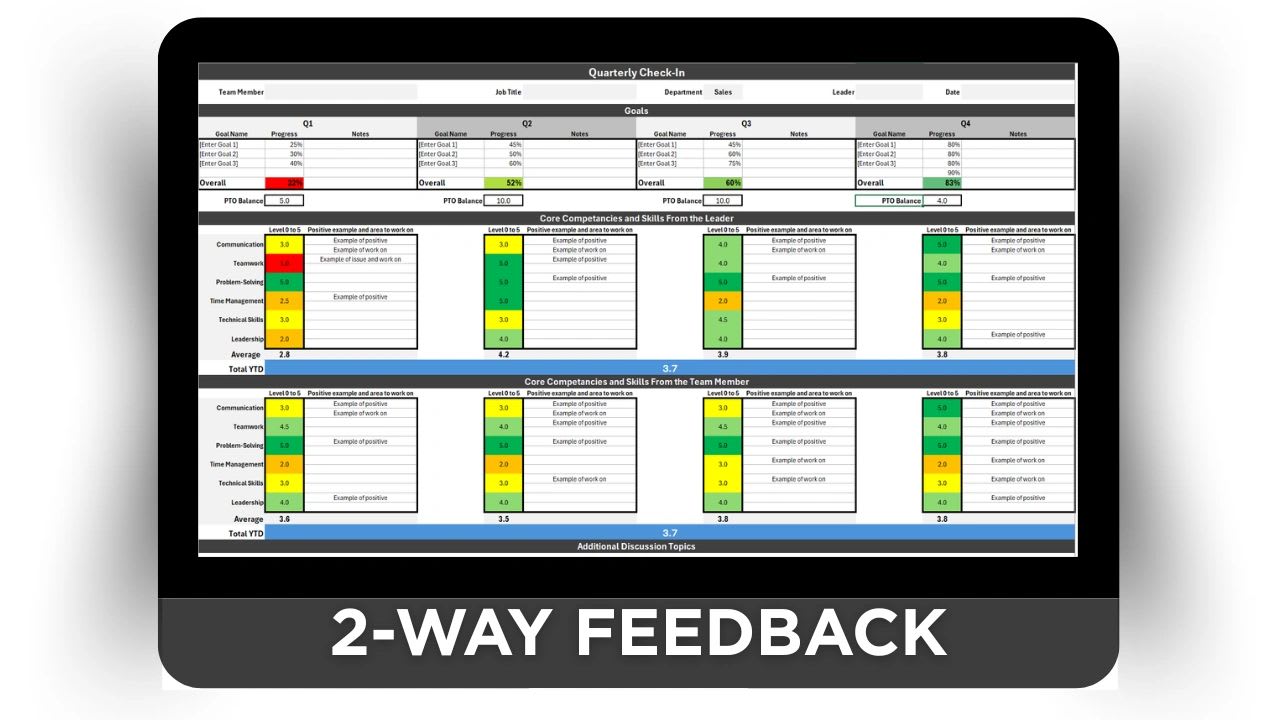
Use our employee feedback form guide and template below. Feedback is one of those workplace concepts that everyone agrees is important and almost no one feels like they are getting right. Managers say they give it. Employees say they rarely receive it in a way that actually helps. HR teams build processes around it. And yet, in organization after organization, feedback remains one of the top complaints in engagement surveys and exit interviews alike.
The problem is rarely that people do not want to give or receive feedback. The problem is that there is no consistent, structured way to do it. And when feedback is unstructured, it tends to be inconsistent, uncomfortable, or so vague that it does not lead to any real change.
That is where an employee feedback form comes in. Not as a bureaucratic checkbox, but as a genuine tool for making feedback clearer, fairer, and more useful for everyone involved.
What Is an Employee Feedback Form?
An employee feedback form is a structured document used to capture, organize, and communicate feedback about an employee's performance, behavior, contributions, or development. It gives the feedback process a consistent shape so that the same kinds of questions get asked across different people, roles, and time periods.
Feedback forms can be used in several different contexts. They show up in formal performance reviews, in mid-year check-ins, in 360-degree feedback processes, in project retrospectives, and in day-to-day one-on-ones. The format and length will vary depending on the context, but the core purpose is always the same: to give feedback a structure so that it is easier to give, easier to receive, and easier to act on.
A good employee feedback form is not just a list of rating scales. It combines qualitative and quantitative elements. It prompts the person giving feedback to be specific. It creates a record that both the employee and the manager can refer back to. And it makes the conversation that follows so much more productive because both parties have already had to think carefully about what they want to say.
Why Structure Makes Feedback Better
Most people find giving feedback genuinely hard. Not because they do not have thoughts, but because translating those thoughts into words that are honest, constructive, and useful is a skill that takes time to develop. And most people are doing it in real time, under pressure, without much of a framework to lean on.
When feedback is unstructured, a few things tend to go wrong.
Recency bias takes over. Without a structured prompt to think across the whole review period, managers tend to focus on what happened most recently and forget about the work that was done six months ago. An employee who had a rough final quarter but a strong first three quarters ends up with a skewed picture.
Feedback becomes personality-driven rather than behavior-driven. Without specific questions to anchor the conversation, feedback drifts toward general impressions. "She is great" or "he is difficult to work with" are not useful. What specifically is she doing well? What specific behaviors are making him hard to collaborate with? A structured form forces the specificity that makes feedback actually actionable.
Consistency goes out the window. When there is no standard format, every manager runs feedback differently. One person gets a thirty-minute deep dive. Another gets a two-sentence email. One person gets detailed written feedback before the meeting. Another walks in with no idea what to expect. That inconsistency is both unfair and corrosive to trust.
A well-designed employee feedback form solves all of these problems at once. It creates a shared process, prompts better thinking, and produces feedback that is specific enough to be genuinely useful.
What a Strong Employee Feedback Form Includes
Not all feedback forms are built equally. A form that is too long gets skimmed. A form that is too vague produces useless responses. The best employee feedback forms are thorough enough to capture real insight and focused enough to actually get filled out well.
Here are the elements that make a feedback form effective.
1. Performance Against Goals
Start with the concrete. What were the employee's goals or priorities for this period, and how did they perform against them? This grounds the feedback in something objective and agreed upon, rather than starting with impressions or feelings. If goals were not set clearly, this section surfaces that gap too, which is useful information for the manager.
2. Core Competencies and Skills
This is where you assess how the employee is performing across the skills and behaviors that matter for their role. Communication, collaboration, problem-solving, ownership, reliability, whatever the relevant competencies are for this person's level and function. A rating scale with room for qualitative notes on each competency is usually the most useful format here.
3. Strengths and Contributions
What is this person genuinely good at? Where have they added clear value? This section is not about being nice. It is about giving the employee an accurate and specific picture of what they should keep doing, lean into, and build on. Strengths-based feedback is some of the most actionable feedback there is, and it is frequently the section that gets rushed or skipped.
4. Areas for Growth
Where does this person have room to develop? What is holding them back from the next level? What patterns of behavior, if changed, would make them significantly more effective? This section should be specific, honest, and tied to examples wherever possible. Vague growth feedback, "could communicate better," is worse than no feedback at all because it feels critical without giving anyone anything to act on.
5. Development and Support
What does this person need to grow? What training, experiences, or resources would help them close the gaps identified? What support can the manager or organization provide? This section shifts the feedback from evaluation to investment, which is a meaningful change in tone that employees notice.
6. Overall Rating or Summary
A summary assessment of the overall performance period. Some organizations use numerical ratings, some use descriptive tiers, and some avoid ratings altogether. Whatever format your organization uses, having a clear summary helps anchor the conversation and ensures that the employee walks away with an unambiguous overall picture.
7. Employee Self-Assessment Section
The best feedback forms include a section for the employee to assess themselves before the review conversation. Self-assessment has two major benefits. First, it encourages the employee to reflect on their own performance, which often surfaces insights the manager would have missed. Second, it reveals gaps between how the employee sees themselves and how the manager sees them, which is often where the most important developmental conversations happen.
Feedback Forms for Different Situations
The right form depends on the context. A full annual performance review form looks different from a quick pulse check after a project wraps up. Here is a brief breakdown of the most common use cases.
Annual or Semi-Annual Performance Reviews: The most comprehensive version. Covers the full range of competencies, goals, and development. Usually includes both manager and self-assessment components.
Mid-Year Check-Ins: A lighter version that checks progress against goals and flags any issues early, before they become performance problems at year-end.
Project-Based Feedback: Used at the end of a specific project or initiative to capture feedback while the work is fresh. Often shorter and more focused on the specific skills relevant to that project.
360-Degree Feedback: Feedback collected from peers, direct reports, and cross-functional partners in addition to the manager. Requires a form that is calibrated for different relationships and levels of familiarity.
New Employee Feedback: Used during onboarding, often at the 30, 60, and 90-day marks, to check in on how a new hire is settling in, what they need, and how the role is matching their expectations.
Making Feedback Forms Part of a Bigger Culture
A feedback form is only as good as the culture around it. If employees expect feedback conversations to be punitive, they will dread the form. If managers treat the form as a bureaucratic obligation rather than a genuine tool, the quality of responses will reflect that.
The organizations that get the most out of structured feedback do a few things consistently. They train managers on how to give feedback well, including how to be specific, how to separate behavior from personality, and how to hold the conversation in a way that feels constructive rather than threatening.
They make feedback a regular occurrence rather than a once-a-year event. When employees only hear formal feedback once a year, it carries enormous weight and often surprises them. When feedback is a regular part of the working relationship, the annual review becomes a summary of conversations that have already happened, not a collection of surprises.
And they take the feedback seriously. Employees stop engaging with feedback processes when nothing ever changes as a result. When the development goals identified in a feedback form translate into real training, real opportunities, and real support, the whole process gains credibility.
FAQ: Employee Feedback Form
What is an employee feedback form?
An employee feedback form is a structured document used to capture and communicate feedback about an employee's performance, strengths, and areas for growth. It gives the feedback process a consistent shape so that the same questions get asked across different employees, managers, and review periods, making feedback fairer, clearer, and more actionable.
What should an employee feedback form include?
A strong employee feedback form includes a review of performance against goals, ratings across core competencies, a section on strengths and contributions, a section on areas for growth, a development and support plan, an overall rating or summary, and a self-assessment section for the employee to complete ahead of the review conversation.
How is an employee feedback form different from a performance review?
A performance review is the overall process and conversation. The employee feedback form is the structured document that supports it. The form provides the framework that makes the review conversation more focused, more consistent, and more useful for both the manager and the employee.
Can an employee feedback form be used for peer feedback?
Yes. With minor adjustments to the language and sections, an employee feedback form works well for peer reviews and 360-degree feedback processes. The key is to calibrate the questions for the relationship, since a peer has a different perspective than a direct manager.
How do you make an employee feedback form actually useful?
The most important factors are specificity and consistency. Vague feedback like "good communicator" or "needs improvement" gives employees nothing to act on. Forms that prompt for specific examples and behaviors produce far better responses. Pairing the form with regular feedback conversations rather than saving everything for an annual review also makes a significant difference.
Where can I get a ready-to-use employee feedback form?
A professionally designed employee feedback form is available as part of the People Pack by Updoot. It covers both the manager review and the employee self-assessment in one clean, customizable format built for HR teams and people leaders.
Get a Template That Is Already Built for You
If you are ready to bring a structured feedback process to your team, the employee feedback form is available as part of the People Pack, a collection of ready-to-use people operations templates built for HR teams and people leaders who are serious about building great cultures.
The feedback form in the People Pack is designed to work for both the manager-led review and the employee self-assessment. It covers the right sections, asks the right questions, and is built to be customized for your organization's competency framework and review process.
For HR professionals and people operations teams managing performance cycles, onboarding, and everything in between, having professional templates ready to go means spending less time building documents from scratch and more time doing the work that actually matters.
XecuteTheVision builds practical, thoughtful templates for the HR and people teams doing this work every day. The People Pack is where to start.
Pick it up today and give your feedback process the structure it deserves.
People operations templates designed and curated by XecutetheVision, built for the HR and people teams scaling culture one document at a time. If you're ready to go beyond spreadsheets, try the real-time feedback in Updoot for free.