
B2B Marketing Budget: How to Build One That Works
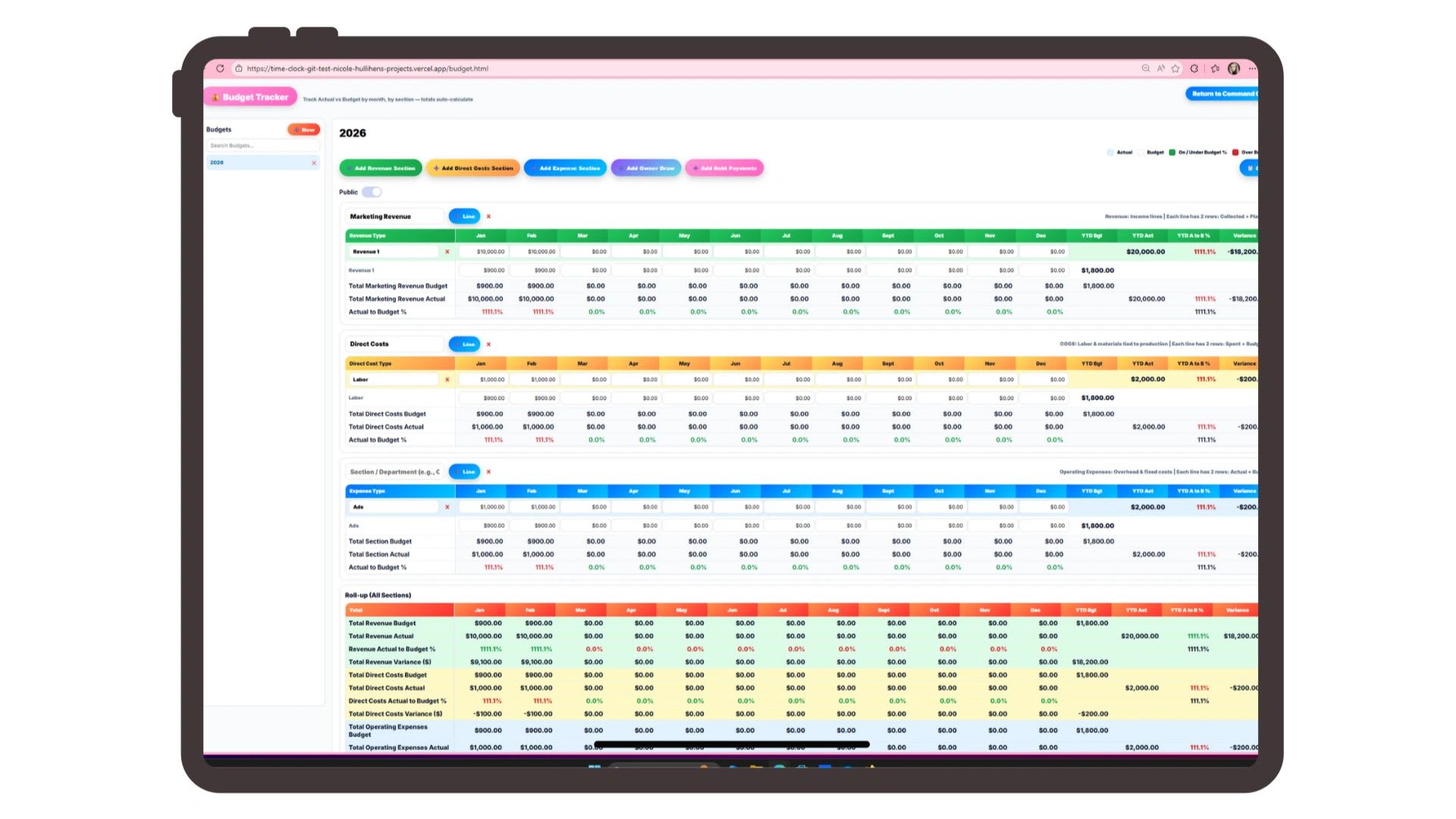
Every B2B company eventually hits the same wall. Sales wants more leads, leadership wants better ROI, and marketing is stuck trying to justify every dollar spent with a spreadsheet that was outdated the moment it was created. Building a B2B marketing budget that actually works is less about finding the perfect number and more about building a system that connects spending to outcomes in a way the whole organization can trust.
A budget is not a spending cap. It is a strategic document that reflects where the business is trying to go and how marketing intends to get it there. This guide covers what a real B2B marketing budget includes, how to set the right number by working backwards from revenue goals, how to allocate across channels, what to measure, and the most common mistakes that cause marketing budgets to either blow out or get cut.
What Is a B2B Marketing Budget
A B2B marketing budget is the planned allocation of financial resources a business uses to attract, engage, and convert other businesses into customers. It typically includes spending across channels like digital advertising, content marketing, SEO, events, email campaigns, CRM tools, and sales enablement. Unlike B2C, B2B budgets are tied closely to longer sales cycles, higher deal values, and measurable pipeline impact -- meaning every dollar is expected to contribute to lead generation, nurturing, and revenue growth.
A strong B2B marketing budget is not just a cost plan. It is a strategic investment aligned with business goals, target audience, and expected return on investment. The distinction matters because how a budget is framed inside an organization determines whether marketing is treated as a function to be managed or a lever to be pulled.
Why Most B2B Marketing Budgets Fail
The most common reason B2B marketing budgets fall apart is that they are built backwards. A finance team assigns a number, marketing tries to fit their plans into it, and nobody agrees on what success looks like. By the end of the quarter the budget is either blown or unspent, and neither outcome leads to a productive conversation about what to do next.
The failure patterns are consistent across companies of all sizes. The budget is assigned top-down with no connection to pipeline goals or channel strategy. Marketing and sales never agree on what a qualified lead looks like so spend is optimized for the wrong thing. There is no mid-year review process so bad investments run too long and good ones are underfunded. Headcount and technology costs are excluded from the marketing budget so nobody knows the true cost of the function. And the budget is treated as fixed when the market is not.
When a marketing budget is treated as a cap instead of a plan, the organization loses the ability to make smart tradeoffs in real time. The most effective marketing teams treat their budget as a living document that is reviewed monthly and reallocated quarterly based on what the data shows about channel performance.
What to Include in a B2B Marketing Budget
A complete B2B marketing budget covers more than just ad spend. Most organizations underestimate the full cost of their marketing function because they only count the obvious line items. A realistic budget should include all of the following categories.
Demand generation covers paid search, paid social, display advertising, and any performance marketing channels where you are directly paying for traffic or leads. This is the category most people think of first and it is usually the largest single line item.
Content and creative covers blog production, video, design, copywriting, case studies, whitepapers, and any asset that supports the buyer journey. Many B2B companies underinvest here and then wonder why their paid campaigns do not convert. Content is what makes demand generation work -- a paid ad that sends traffic to a weak landing page or no useful resource is money wasted.
Technology and tools covers your marketing automation platform, CRM, analytics tools, SEO software, and any other software the marketing team uses to operate. These costs are often buried in IT budgets and not attributed to marketing, which makes it impossible to get an accurate picture of true marketing spend or compare the cost efficiency of different programs.
Events and field marketing covers trade shows, conferences, webinars, and sponsored events. For many B2B companies this is a significant line item and one that is particularly hard to measure -- the ROI of an industry conference is diffuse and long-tailed in ways that paid digital spend is not.
Agency and contractor fees covers any external resources including agencies, freelancers, and consultants. These costs are easy to overlook when budgeting and easy to let creep throughout the year, particularly when internal headcount constraints push work to external resources mid-year.
Headcount is the category most marketing budgets leave out entirely because it lives in the HR budget. But people are a marketing cost. If you want an honest picture of what marketing actually costs the business, fully loaded headcount needs to be part of the conversation -- especially when making decisions about whether to hire versus buy programs or agency services.
| Budget Category | Typical Allocation | Notes |
|---|---|---|
| Demand generation / paid channels | 40-50% | Largest single category for most companies |
| Content, creative, and brand | 20-25% | Underfunded at most companies |
| Technology and tools | 10-15% | Often buried in IT budget |
| Events and field marketing | 10-15% | Hard to measure, often first to cut |
| Agency fees and miscellaneous | 5-10% | Easy to let creep mid-year |
These are starting points, not rules. Your mix will shift based on your stage, your sales cycle, and which channels are actually producing results.
How to Set the Right Number
There is no universal right number for a B2B marketing budget. The most commonly cited benchmark is somewhere between 5 and 12 percent of revenue for established companies, with early-stage companies often spending significantly more as a percentage of revenue to build pipeline from scratch.
The more useful question is not what percentage of revenue to spend but what outcome you need marketing to produce and what it will cost to produce it. Work through this sequence:
- Start with your revenue goal for the year.
- Work backwards through your close rate to determine how many opportunities sales needs.
- Work backwards through your lead-to-opportunity rate to determine how many leads marketing needs to generate.
- Divide that lead volume by your best-performing channel's conversion rate to estimate required traffic or impressions.
- Multiply by your cost per lead in each channel to get a demand generation budget.
- Add content, technology, events, and headcount on top.
This approach forces a conversation about unit economics that the percentage-of-revenue method never does. If your cost per lead is too high relative to your average contract value, no budget number will fix that. You need to either find cheaper channels, improve conversion rates, or raise prices. The budget exercise exposes these problems early -- before the year is committed rather than after Q2 closes short.
Allocating Across Channels
Channel allocation inside a B2B marketing budget should follow the data, not convention. The right mix for a company selling to mid-market software buyers is not the same as the right mix for a company selling industrial equipment to plant managers. Your historical conversion data -- cost per lead, lead-to-opportunity rate, and deal size by source -- is the most important input to allocation decisions.
In the absence of historical data, common starting allocations for B2B companies with a 30 to 90-day sales cycle lean heavily toward paid search and content SEO for top-of-funnel, LinkedIn and targeted outbound for mid-funnel, and events and account-based programs for late-stage. Companies with longer cycles, enterprise deal sizes, or complex buying committees typically weight more heavily toward field events, account-based marketing, and sales enablement content.
The most important allocation principle is to protect the channels with the strongest pipeline attribution even when overall budget pressure hits. The first instinct in a budget reduction is to cut top-of-funnel programs because they feel furthest from revenue. But cutting top-of-funnel reduces pipeline three to six months later, when the company is already in a worse position. Protect channels that are measurably producing opportunities. Cut or pause channels that cannot demonstrate pipeline contribution.
Reserve 10 to 15 percent for testing. A B2B marketing budget with no experimentation budget is a budget that cannot adapt. New channels, new messaging frameworks, and new audience segments require small, time-boxed tests before they can be fairly evaluated. Without a dedicated testing budget, every channel in the plan has to justify itself immediately, which means you never discover what works before you commit to scale.
Measuring What Matters
The metrics that actually connect marketing spend to business outcomes are different from the metrics that appear in most marketing reports. Impressions, clicks, open rates, and follower counts are activity metrics. The metrics leadership cares about are pipeline metrics.
Cost per lead by channel tells you the efficiency of each acquisition channel and allows you to compare the real cost of paid search traffic versus content organic traffic versus event leads. Without this, channel allocation is a guess.
Lead-to-opportunity conversion rate tells you the quality of the leads marketing is generating. A channel that produces cheap leads that never convert to opportunities is a waste of budget. A channel that produces expensive leads that convert at high rates may be the most cost-efficient path to pipeline.
Marketing-sourced pipeline and revenue are the metrics that connect marketing directly to business outcomes. Marketing-sourced pipeline shows the dollar value of opportunities that originated from a marketing touchpoint. Marketing-influenced revenue extends this to include any deal where marketing had a touchpoint, even if sales sourced the initial contact.
Customer acquisition cost and CAC payback period tell you how expensive it is to acquire a customer and how long it takes for a new customer to generate enough revenue to offset the cost of acquiring them. These metrics connect marketing efficiency to financial performance in terms every function understands.
Reporting these metrics monthly -- not quarterly -- is what enables the mid-period reallocations that prevent budget waste from running all year.
Common Mistakes to Avoid
Building the budget before setting goals. A marketing budget that is not anchored to specific pipeline and revenue targets is a spending plan, not a strategy. Start with outcomes, work backwards to inputs, then determine the cost of those inputs. Any other sequence produces a budget that does not have a clear rationale when it is challenged.
Optimizing for lead volume instead of lead quality. The most common consequence of a top-down budget process where marketing is evaluated on the number of leads delivered is that marketing optimizes for cheap, high-volume leads that sales cannot close. When the cost per lead metric is more visible than the cost per opportunity or cost per customer metric, the incentive is to generate as many leads as possible regardless of quality.
Leaving technology and headcount out of the budget. A marketing function that reports a $200K budget but has $600K in fully loaded headcount and $150K in technology subscriptions that live in other budget lines does not have a $200K budget. It has a $950K budget with most of the cost hidden from the ROI analysis. Including all costs in the marketing budget makes it possible to have an honest conversation about marketing efficiency.
Not building in a reallocation process. Treating the annual budget as fixed is the decision that makes every other mistake worse. Channel performance changes throughout the year. New opportunities emerge. Some programs underperform. Without a formal quarterly reallocation process, budget stays in underperforming programs because reallocation requires an uncomfortable conversation that nobody has built time for.
Related Reading
Marketing Budget Optimization: How to Get More From Spend →